I was not expecting the One Moto show would happen this year. In February 2020, the 2020 One Moto Show was the last public event I attended in 2020. And now, end of April 2021, the 2021 One Moto Show is the first public event I’ve attended since then. Perfect book ends to this gap I’ll keep nameless here.
2021 One Moto Show at the Zidell Yards Building, Portland, Oregon
I received a press invite from SeeSee on April 8th and immediately confirmed my presence. Having press credentials allows me access to the exhibits at specific times when the general public is not present yet. In regular years, that’s great for photographing motorcycles from all angles without worrying about who could be in the background. This year it afforded me the extra benefit to exercise social distancing. Much appreciated, organizers, thank you.
2021 One Moto Show
One element of the One Moto Show I always enjoyed were the locations of the event. Up until last year, the show would rotate locations around the Portland area, using buildings that once were part of the industry that once existed in the area.
The 2016 One Moto Show
Last year it was different, though. The event took place at the Veterans Memorial building, a large box building, but it had an indoors arena, and flat track racing had become a key part of the show. Although I missed that perfect match between crafted machines and industrial, derelict buildings, I have to say I spent the greatest amount of my time during the 2020 One Moto Show at the race track, enjoying the action-packed races.
The 2020 One Moto Show included an arena for flat track racing. No races this year. Lose some, gain some.
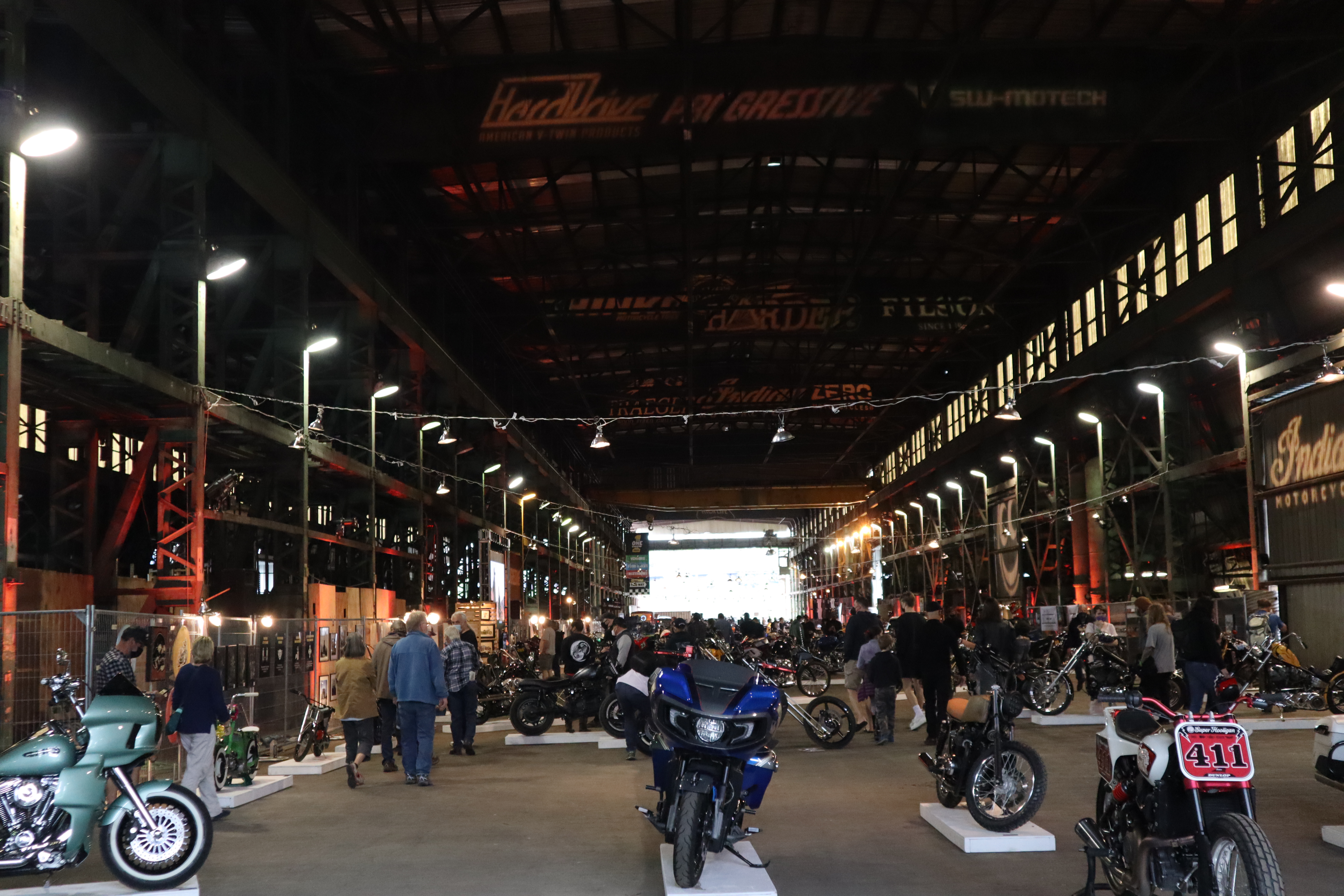
You lose some, you gain some. 2021 was a much smaller event, but back at old, repurposed buildings. The Zidell Yards building was perfect for the event at a time when we transition back to some level of normalcy. For what it was designed, to build river barges, the building was a gigantic corridor with two very wide openings on both ends, which allowed great air circulation, and when matched with the high ceilings and side openings, was just perfect for the current times. It offered great air circulation.
The Zidell Yards Building, perfect setting for this year’s show
Although the number of exhibitors was smaller this year, who wouldn’t expect that, right?, the quality of the machines was great. Of course, I’m biased towards Italian machines, and my favorite bike of the show was a 1975 Laverda 750 SFC.
1975 Laverda 750 SFC
Some say this bike was once the famous Elettronica (electric ignition) version, but this once had carburetors. Either version is great, in my humble, semi-ignorant opinion about these bikes.
The same Laverda
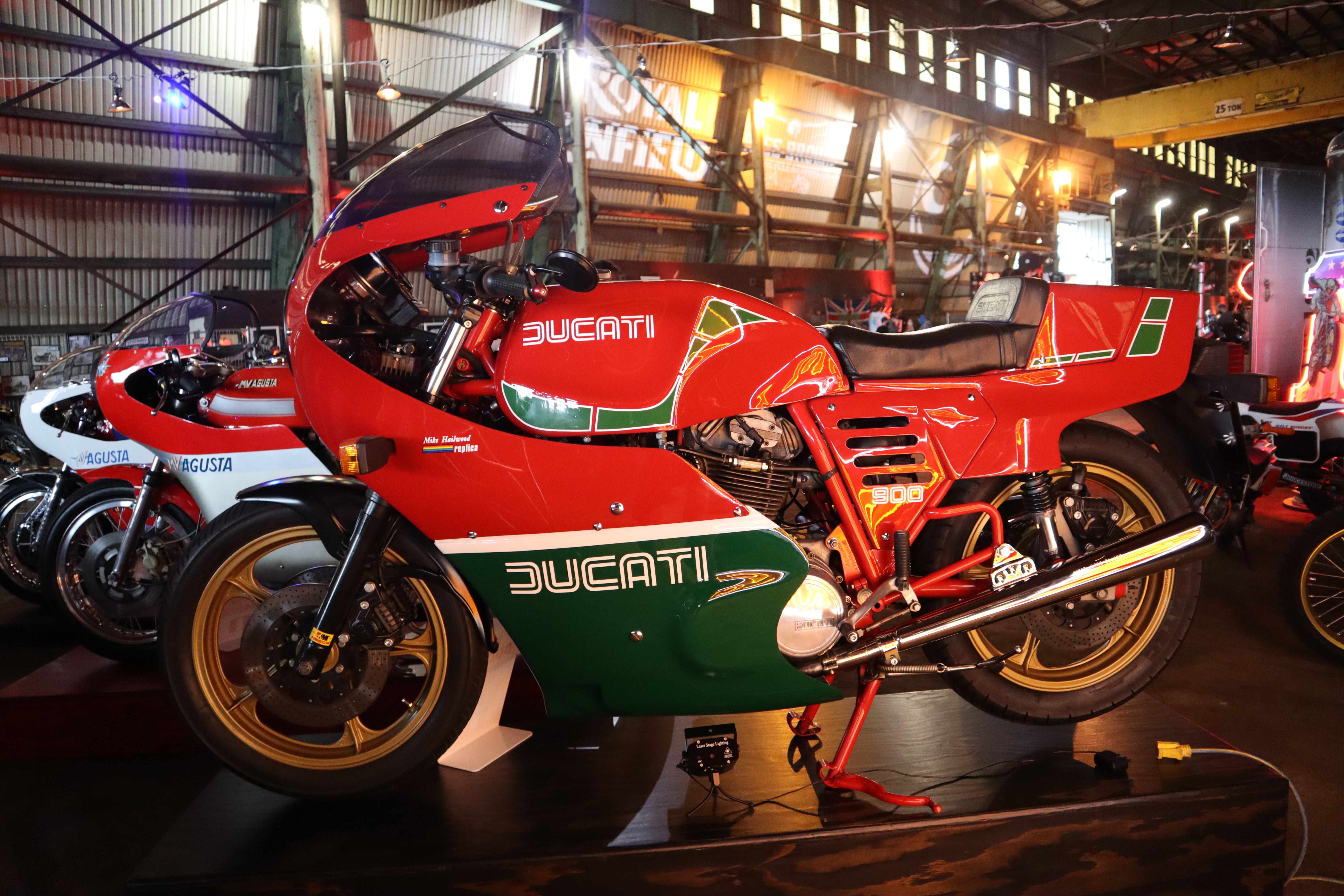
And of course, talking about Italian machines, we gotta have that special Ducati on the show. There were some nice ones, including this one below, a Mike Hailwood replica. I was told from Google, that Mike Hailwood had retired from racing and at almost 40 years-old returned to race the legendary Island of Man TT race in 1978. He chose a Ducati 900SS for the event. At that age (from my point of view, very young age, mind you), people were not expecting much from him, neither from his non-factory supported machine. At that time, the machines expected to win such races were factory-sponsored Honda, Kawasaki and Suzuki motorcycles. Against the odds, Mike Hailwood won the race (and again the the following year, by the way).
1985 Ducati Mike Hailwood Replica
Ducati was quick to capitalize on the situation and put together this replica that was produced from 1979 to 1986, this one being a 1985 model.
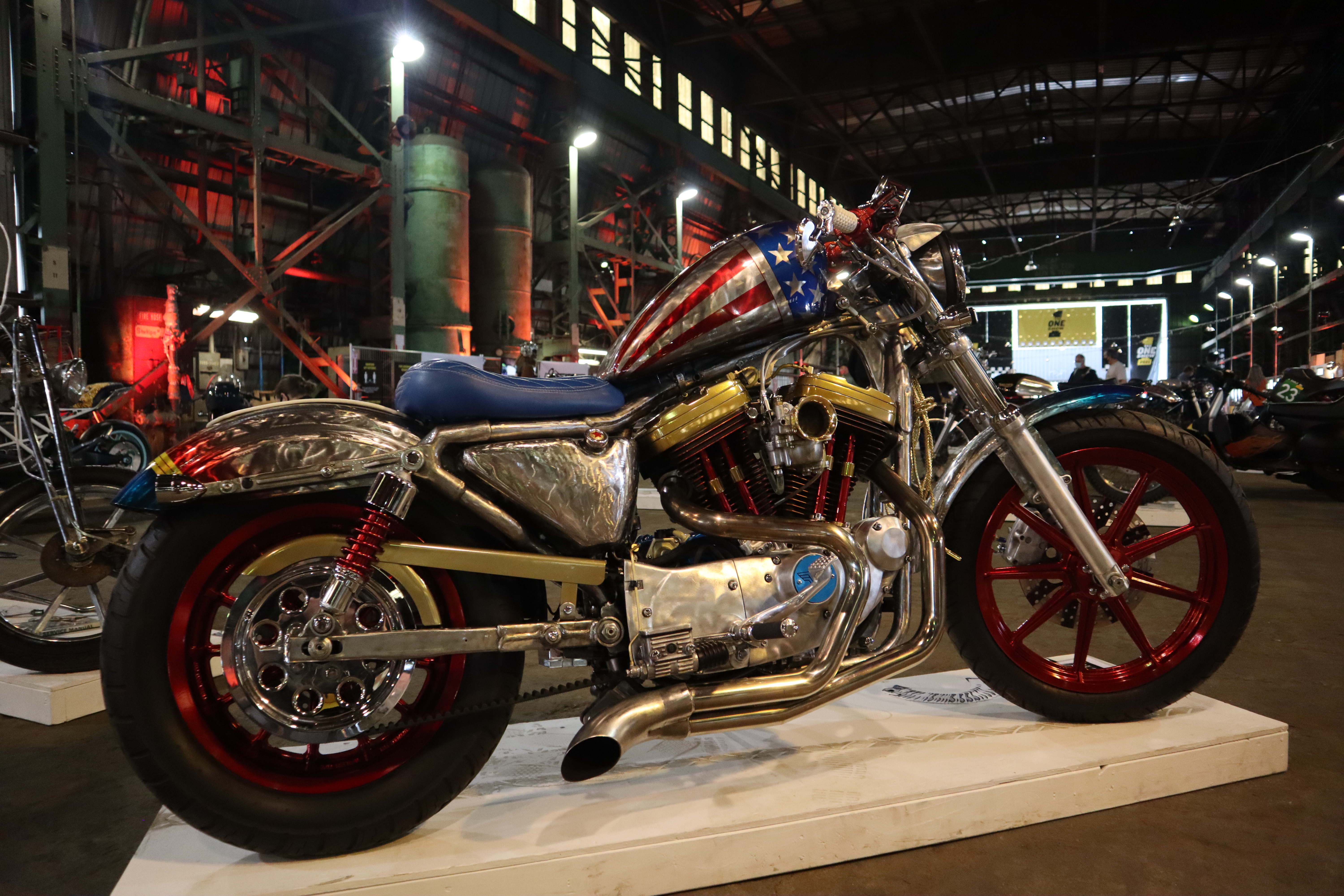
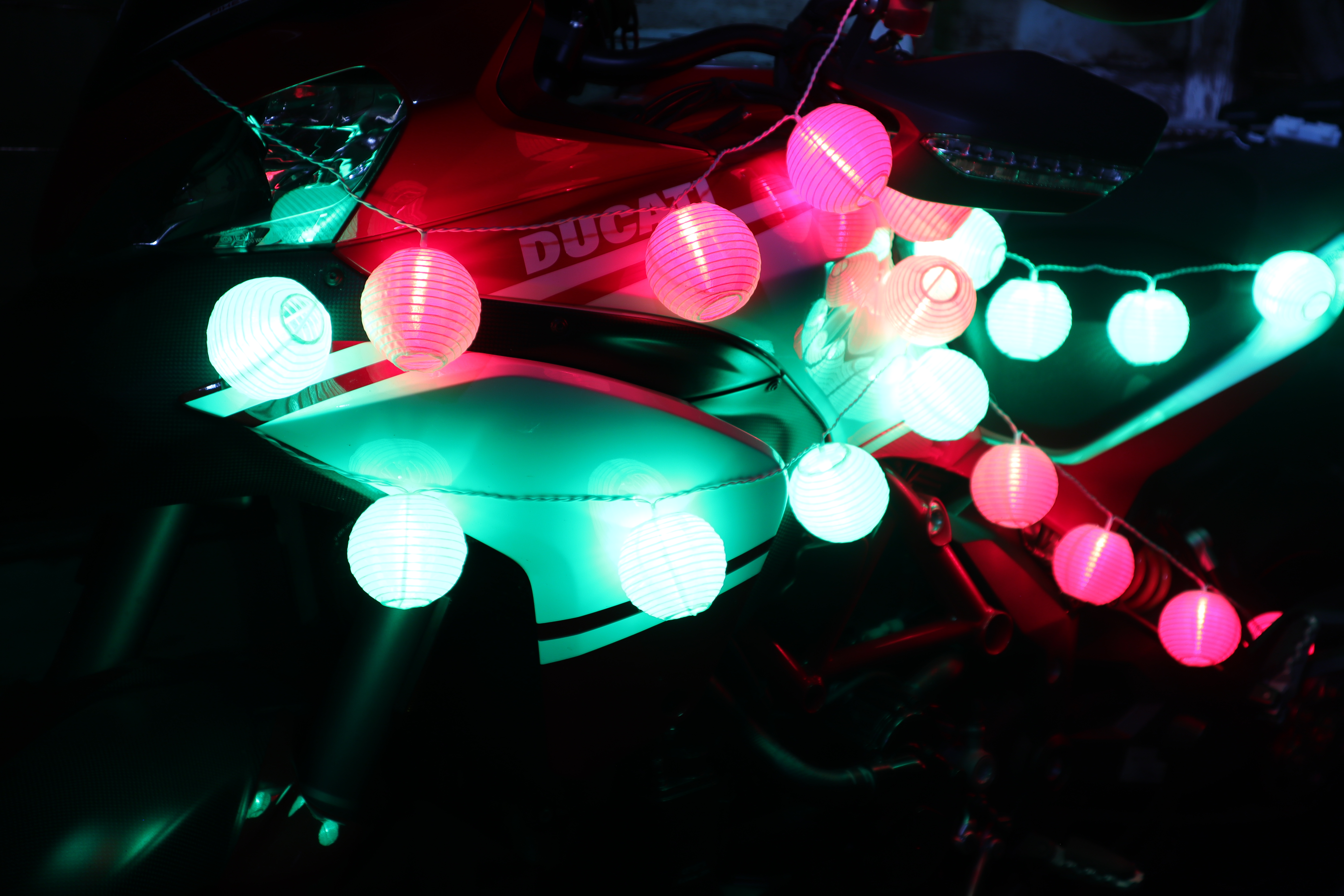
There were plenty of other beautiful Italian machines at the show this year. Here are a few of them.
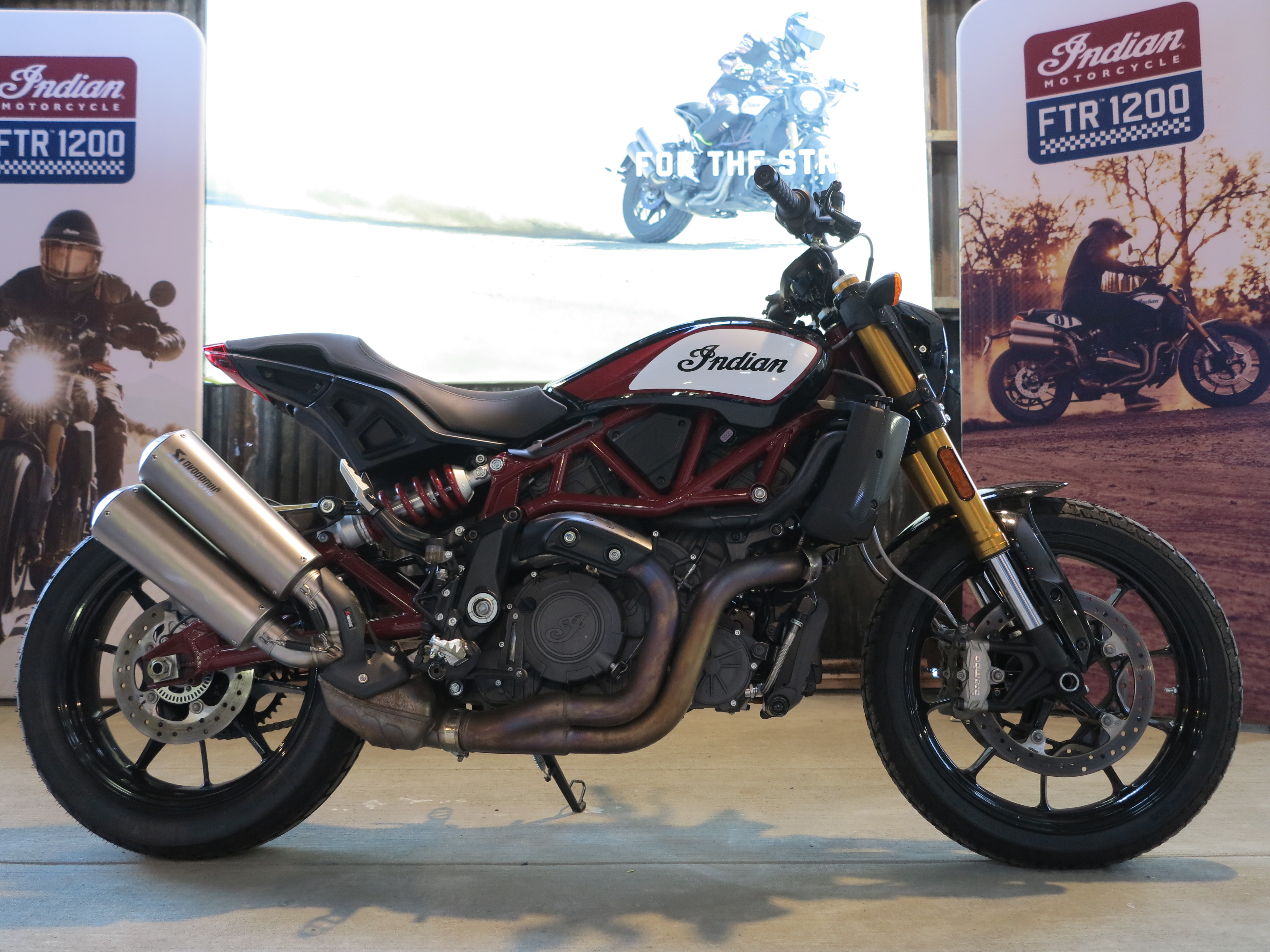
The event had, once again, Indian Motorcycles as one of the sponsors. Great to see the 2022 Carbon FTR.
2022 Carbon 1200 FTR
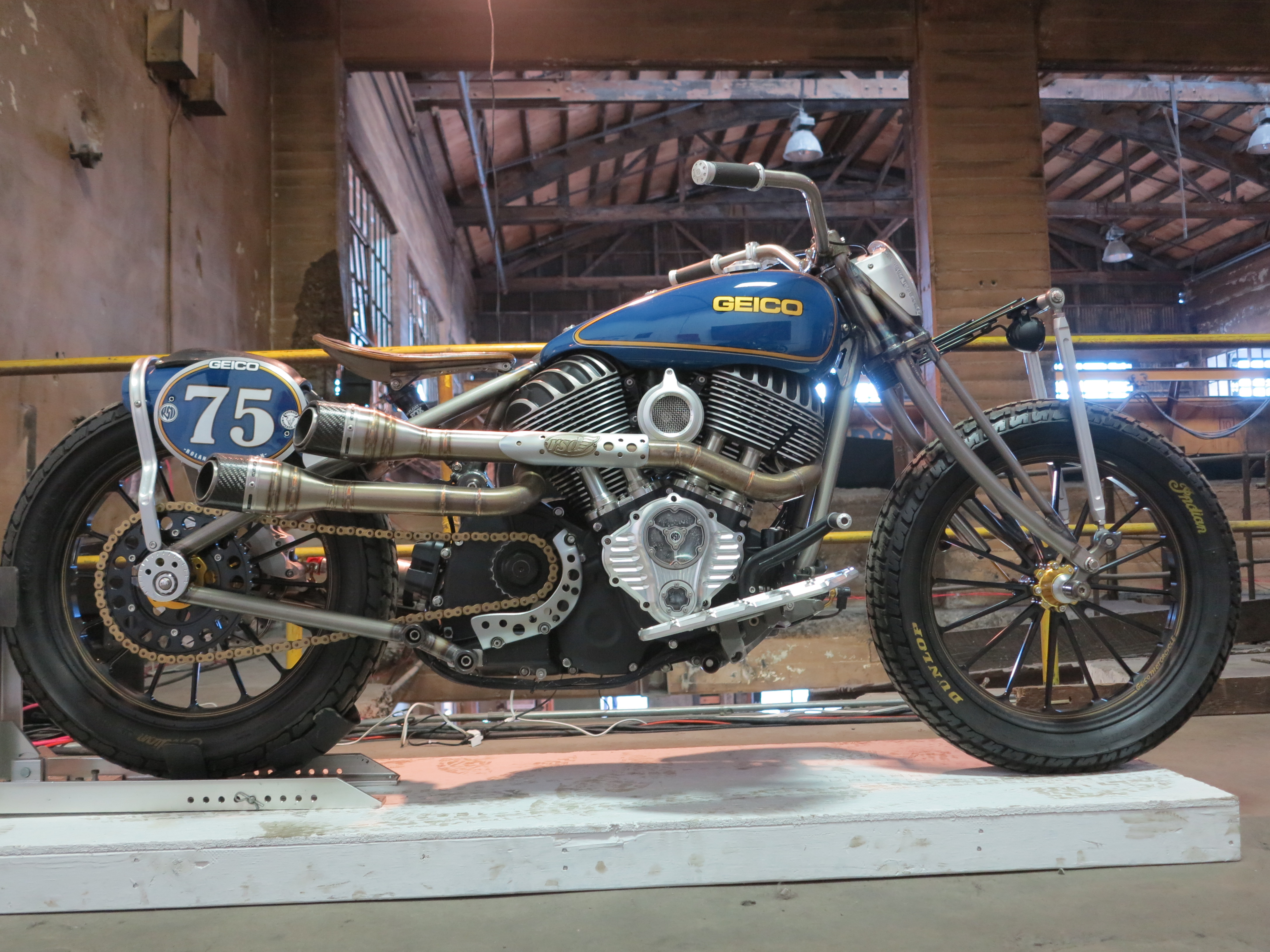
And a few other Indian motorcycles were on display.
There were plenty of other beautiful machines on display. But to me, what was most important was that the show must go on. The SeeSee folks made it happen with what was possible.
Hello everyone! A friend of mine is auctioning his 1931 Moto Guzzi Sport 15 on the Bring a Trailer site. It is for charity. So, if you are interested in this beautiful, pristine, and working (running and riding) motorcycle, please head to Bring a Trailer.
1931 Moto Guzzi Sport 15
Information about this motorcycle from the current owner: This 1931 Moto Guzzi Sport 15 is a first-year example that is said to have been refurbished in Italy in the 1990s before being imported to the US in 1999, and spent time in Colorado and Louisiana prior to the seller’s acquisition in 2003.
Exposed Flywheel!
Power is from an air-cooled 498cc single paired with a three-speed transmission, and the bike is finished in maroon with black and gold accents. Features include rider and passenger seats, an exposed flywheel, a Dell’Orto carburetor, 19″ wire-spoke wheels, a luggage rack, and a girder front end.
What a beautiful machine! It would only be a piece of art of it weren’t a running and riding machine.
The magneto was refurbished, the babbitt material on the connecting rod renewed, and the seat covers and taillight replaced under current ownership. Service in November 2020 included setting the valves and timing, replacement of the ignition points, and an oil change.
All proceeds from the sale, including the BaT buyer’s fee, will go to Community Supported Shelters, a 501(c)(3) non-profit in Eugene, Oregon that provides supervised transitional shelter and services to homeless community members.
This Sport 15 is offered with owner’s literature, spare parts, and a clean Oregon title in the seller’s name.
1931 Moto Guzzi Sport 15
Thank you everyone! I didn’t get to photograph it until yesterday, therefore I apologize for the late timing for the auction.
It has been more than a year since my last post! My plans to translate written content into video has not happened.
2019 Indian FTR 1200S
The problem was not lack of content or video footage. The problem was that video editing takes a lot of time, if you want to do a good enough job.
2019 KTM 790 Adventure R
The real problem is what I defined to be “good enough”, setting the bar too high for my own capacity, ultimately undermining my own good as a video editor.
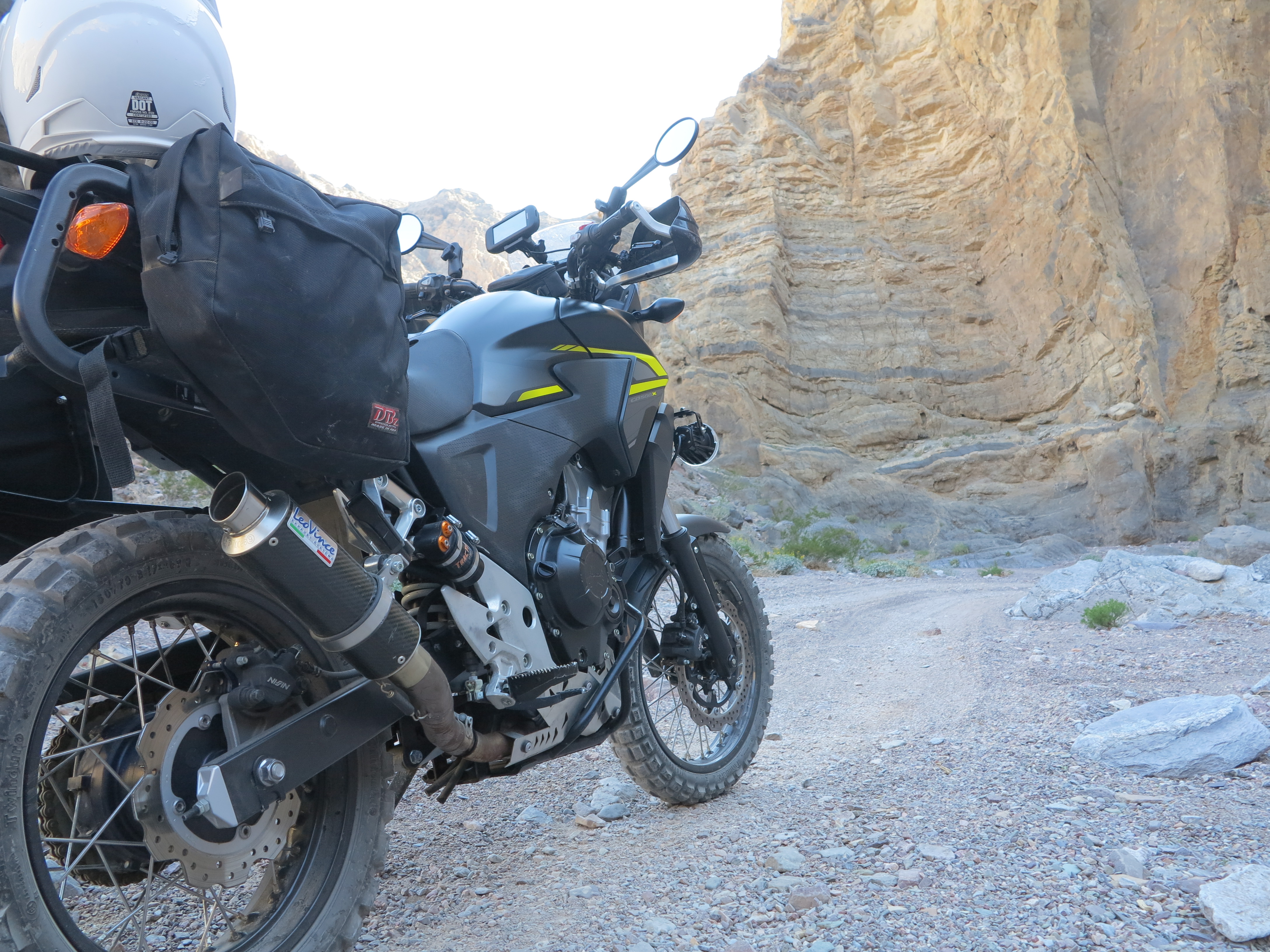
2015 CB500X – Rally Raid
On the other hand, I’ve been posting on Instagram, which is much easier and I can manage keeping things up to date with short posts with even a single photo. The easy route won.
2013 Ducati Multistrada 1200S Pikes Peak
But since 2020 has been quite a year, with all sorts of challenges, here I am posting again.
1980 Honda CX500
No matter if it is about missing closer contact with family and friends, or how your business or work performed, or what politics you follow, or maybe in personal health, we’ve certainly lost something this year.
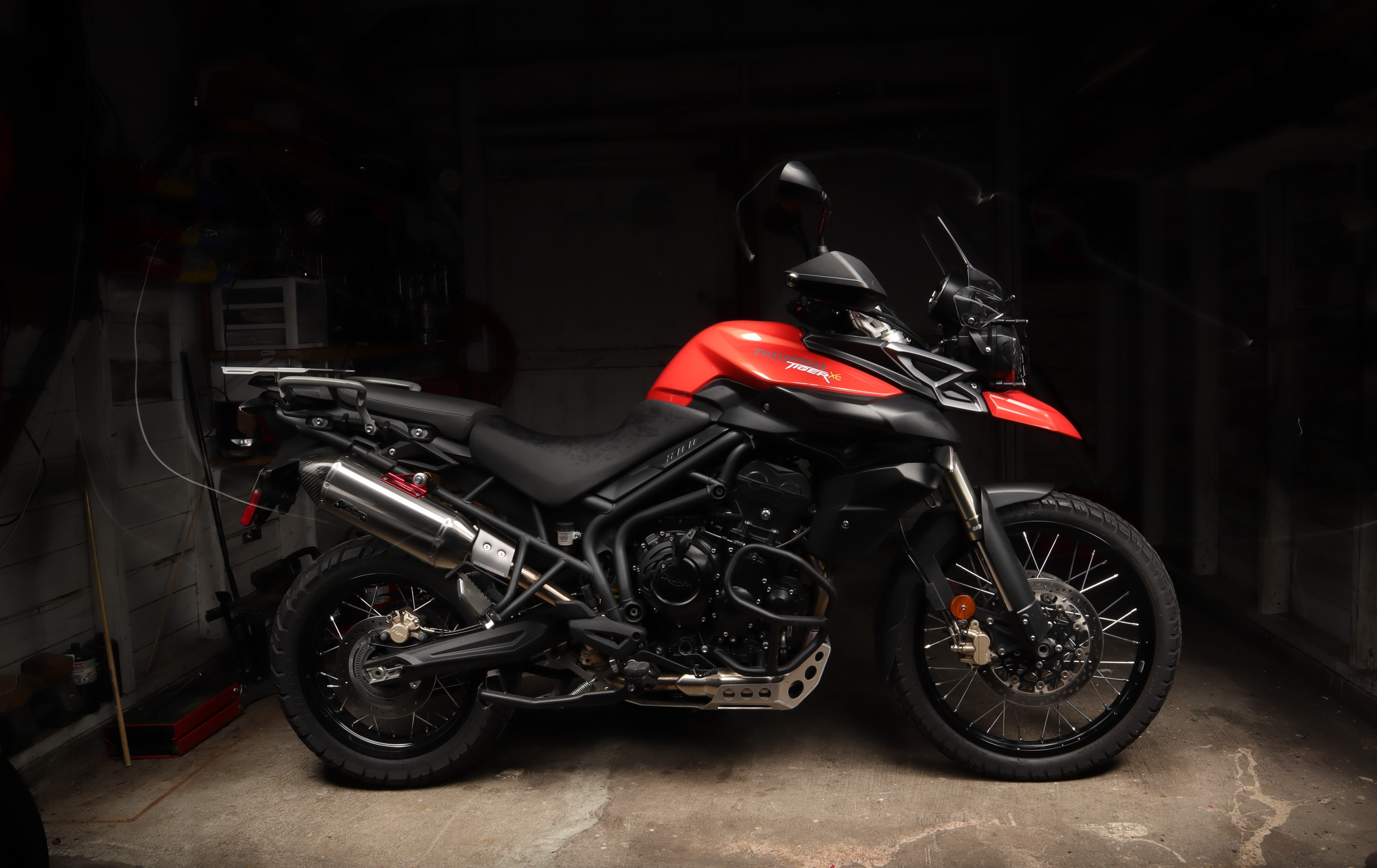
2012 Triumph Tiger 800XC
Therefore, here are my wishes for better days for all of us in 2021. Happy Holidays and Happy New Year for all of us!
An annual February trip to Portland, Oregon to visit the One Moto Show has become a fixture in my calendar. This year’s show, its 10th anniversary, was sponsored by Indian Motorcycles and did not disappoint, although it seems the show has reached a new standard.
What do I mean by that? The show has become national in its scope and has grown into a somewhat professional scene, offering a platform for manufacturers’ of large and micro scale products to market their halo or production motorcycles. Can someone criticize the the organizers for that? Certainly. Can someone appreciate the evolving nature of the show? No question. I appreciate both sides of the equation.
In my opinion, as long as its central premise to offer an arena for motorcycle artisans (how else would you call these geniuses?) to show their unique creations while encouraging riders, motorcycle enthusiasts, and the public in general to appreciate these creations, it is a success.
Overall, we need more opportunities to get out of our social media screens and more into seeing actual motorcycles and for that, the show did not disappoint. I hope this show continues into the future, and evolve as needed while maintaining its initial premise. I appreciate See See Café for their continued work on promoting motorcycle enthusiasts and their creations.
On these series of posts I will depict the motorcycles that called my attention and which I was able to photograph, which is a hard task, mind you, requiring plenty of patience to wait for the right moment when I could have a clear shot of a bike without anyone around it. I will organize a few posts by themes (something like Indian, Roland Sands Design, Italian bikes, Honda’s inline-four motorcycles from the 70’s and a couple of other themes), to keep posts short and to the point.
Very few motorcycles have caught my attention lately. The ones that do call my attention are the ones that are breaking old molds, venturing in new terrain, such as the Indian FTR 1200, inspired on flat track racing bikes. This Indian will have the courage to show up in 19-inch wheels, similar to the proportions of motorcycles from past years. I just think this bike is gorgeous, and will probably have a traditional motorcycle feel to it in terms of v-twin motor vibrations, sound, and how torque is delivered. Good, I hope, for a relaxed ride, and yes, with compromises on performance, limitations that take it away from the sports naked world, which I don’t really mind, that’s not my cup of tea. If its looks are kept somewhat close to what this prototype shows, it will be a sweet and different machine.
Indian FTR 1200, supposed to be launched in a few months and available for sale next year
Outside of that, it is about game-changers in the area of adventure riding, and bikes with the latest technology in terms of riding aids including cornering ABS, cruise control, and improved suspension and riding modes.
Before we get into them, let’s talk about my current motorcycles. I’ve settled with my current five choices, my newest motorcycle, the 2015 Honda CB500X, will already be turning four years old next year. My oldest motorcycle, not counting the 1980 Honda CX500, is the Yamaha WR250R, which will turn 10 years old next year. Then I have the 2012 Triumph Tiger 800XC and the 2013 Ducati Multistrada Pikes Peak.
So many toys, so little time…
One day will be time to start a slow renewal of the fleet. I said slow. But if money was not an impediment, say if I win the lottery which I don’t play (in other words, it’s not gonna happen), these are the five motorcycles I would like to own in 2019.
Starting from the top, I would upgrade my Multistrada for a newer model of the same. I really like this bike. It is effortless on long journeys with full travel gear, and still delivers a sports bike performance. The Multistrada and all other similar bikes from other brands are the best touring machines available, in my opinion. And the Multistrada, as one of the first in this segment, remains, again in my opinion, one of the best of the bunch.
My 2013 Multistrada Pikes Peak.
My brief stint with sports naked machines, my Ducati Streetfighter, taught me that while those bikes look great, and are built for going fast, that’s not where I want to be in terms of comfort or at speed. The Multistrada goes almost as fast, if not faster, but does it while offering comfort and with its wide handlebars and height, still provide quick turn-ins when it reacts fast from minimal and effortless counter steering inputs. And still, because your body is on a relaxed position, it allows you more control and great vision for street riding. No wonder such machines outsell sports bikes.
2018 Ducati Multistrada 1260 Pikes Peak
The reasons I would upgrade to the 1260 Pikes Peak are very specific. First and foremost, it has more torque on low end of the RPM band without sacrificing its presence on higher RPM levels (HP has increased as well). Second, it has key electronic improvements when compared to my 2013, especially cornering ABS and cruise control. Some of you complain about the nanny electronic aids, I celebrate them in feeling safer when riding and in paying less for insurance. Third, the Pikes Peak comes with Ohlins suspension, it provides a much better feel from the front end when pushing the bike on corners. Fourth, it has a lower seat position than my 2013, which is always good for someone like me, who maneuvers my current 2013 on tip toes due to my long torso on shorter legs body type (30-inch inseam). And fifth, the TFT display is much easier to visualize important information when riding, the menus are easier to navigate when making changes, and offers a better interface to connect with smart phones.
Next, there is my 2012 Triumph Tiger 800XC. This bike has never quite been a favorite of mine. The sound of its three-cylinder motor under acceleration is great, the feel is not, it made me realize, despite liking some characteristics of it, that I’m much more into twin cylinder motors. Overall, this bike does everything well, it does not excel in anything particularly. I like the looks, its bright orange color from the launch model, and the fact that Triumph had the courage to offer it in the first place. I remember following those first spy shots of this bike when on development tour in Greece, then the first official video of it, where images were too dark to see the bike, or the bike was only shown in split second images, but the full sound of the three cylinder motor being driven in anger was there.
My 2012 Triumph Tiger 800XC
This bike was meant to be my true adventure riding machine, the bike to ride when long distance riding including all types of roads, including gravel, were part of the course. The bike to go to Alaska and down to Tierra Del Fuego. This bike could still do it, but, if one day I would really get into a trip to Alaska, I would much rather be riding the BMW R1200GS Rallye.
2018 BMW R1200GS Rallye
This BMW GS has a nice TFT display, you can have integrated GPS, electronic suspension, riding modes, cruise control, cornering ABS and the BMW R1200GS, since the 2013 changes, is the best adventure bike when it comes to managing air flow for the rider in its system of screens. It is not like the Multistrada in terms of power, but it offers more than enough power on a well balanced combination of torque and HP for adventure touring and for some fun on the curves when it comes to that. I always say, if I had to have only one motorcycle, this is probably it. But I’m not ready for a trip to Alaska yet and not at a point that I have to sell my motorcycles, hence the purchase of a BMW R1200GS will have to wait.
Next, let’s talk about my Honda CB500X, with the Rally Raid kit. This bike is probably one of my favorite bikes ever. It is the perfect size, and not too heavy, and delivers just the power one really needs.
My 2015 Honda CB500X with Rally Raid kit, on Echo Canyon, Death Valley
The problem is that I use it as my rally machine, and while its size and weight work on its favor when compared to larger adventure machines, its 19 inch front wheel paired with a traditional fork are its Achilles heel. Although much improved from its original fork, thanks to Rally Raid, with its improved valving, spring, and an additional two inches of travel, it works but up to a point. The result is that this machine is perfect for everything, except when you want to go fast, rally style, on rocky terrain. The front wheel has a tendency to crash before skipping over rocks protruding more than three or four inches on the gravel and dirt surface. Slow down and it is a perfect machine.
My 2015 CB500X in Lippincott Pass, in the Death Valley, March 2018
The major problem with the CB500X, though, is not related to how it performs, but how it looks at the proverbial Starbucks. Even the large KTM adventure machines have their place under the sun with the poser crowd these days, although no one cares or wants to admit it. The CB500X disappears on that virtual scenario of larger displacement bikes.
The Honda CB500X proudly parked in front of Starbucks for no one to see
At the end of the day I’m not offended when someone thinks my bike is not macho enough. I prefer to think it takes more to ride a bike that is the under dog, and that’s what makes me like this little Honda the best: the fact that it is an under dog in the adventure motorcycle world, one that actually performs well. And I like it that I built it myself!
However, the moto industry is threatening to be courageous and seems ready to offer real midsize rally/adventure machines, emphasis on rally, soon. Yamaha has the 700 World Raid Super Tenere in the works, they’ve been teasing us with this bike for far too long in my opinion. First it was the concept in 2016, than the prototype in 2017, then the world raid tour in 2018, it seems they are not convinced this bike in its concept or prototype shape, which both look great, is what we, the consumers want. I fear it will be downgraded too much when a consumer version is put to market, and who knows when it will come to market.
Yamaha, will it be the first to deliver a true adventure-rally machine?
On the other hand, KTM is also readying a new beast for this new segment, the 790 Adventure. Coming from behind on this two-horse race, they’ve gone past the Yamaha and seem ready to present it at this year’s EICMA motorcycle show in Milan. The engine was developed two years ago, shown on a 790 Duke prototype in 2016, which was then introduced in 2017, and that motor moved to the 790 Adventure with a few changes for the application, which was on its turn shown in prototype shape in 2017 and will be introduced this year and for sale in 2019.
KTM 790 Adventure, available in 2019 according to KTM sources
If one of these two bikes, the Yamaha Tenere 700 or KTM 790 Adventure weights about the same as my Honda CB500X, then we will know they will deliver better off-road performance than my little Honda. Time will tell. Meanwhile the KTM has moved to front line on my list as a possible bike to replace my Honda CB500X Rally Raid.
My Yamaha WR250R is the oldest of my regularly run motorcycles. It will turn 10 years old next year and has been my go to bike for when riding becomes more challenging. It has been flawless until this last trip to Death Valley when its fuel pump started showing problems when we were in the middle of Mengel Pass.
The 2009 Yamaha WR250R at the moment the fuel pump started acting up almost at the highest point of Mengel Pass in the Death Valley
I imagined having to walk down all the way back to Ballarat… thank goodness we learned that once it cooled off, some 5 to 15 minutes after a stop, depending on how hot it got and how hot was the time of the day, the pump would prime again and the bike would start. Still, this bike at the time of its launch in 2008 was a unique offering from manufacturers, and there were not direct competitors for many years, as no one put together a reliable, smooth operating, well geared dual sport that is light enough, has suspension travel for good times when off road, and it is not so bad on the road. Now we see more offerings from several other brands, and of those, the KTM 500 EXC or its sibling, the Husqvarna 501 are on top of my list. I will fix the fuel pump on my WR250R and ride it one more season before I think about upgrading it, though.
Husqvarna 501S
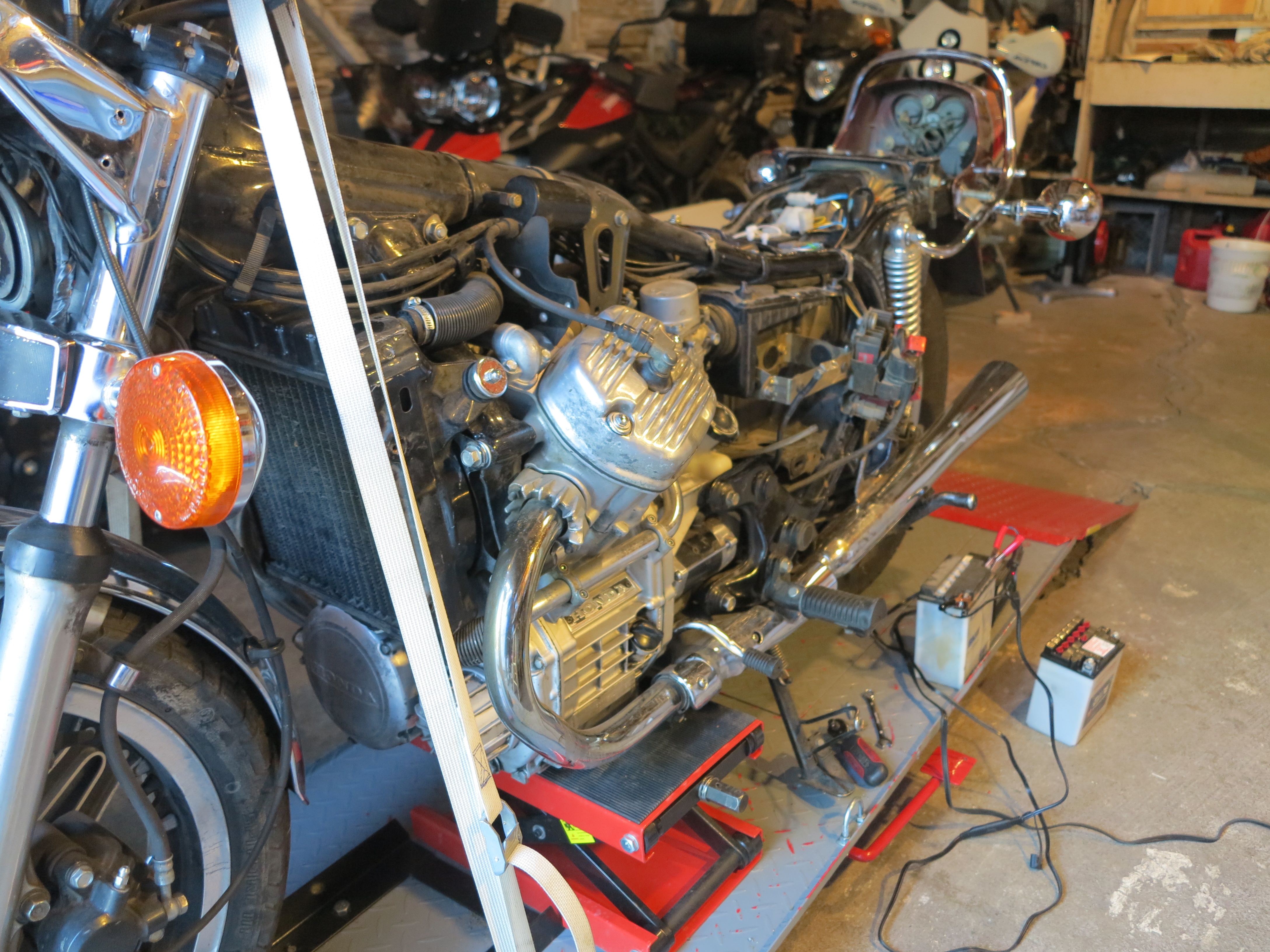
Finally, let’s talk about my 1980 Honda CX500. This is the bike I bought to build into a flat tracker or scrambler.
1980 Honda CX500
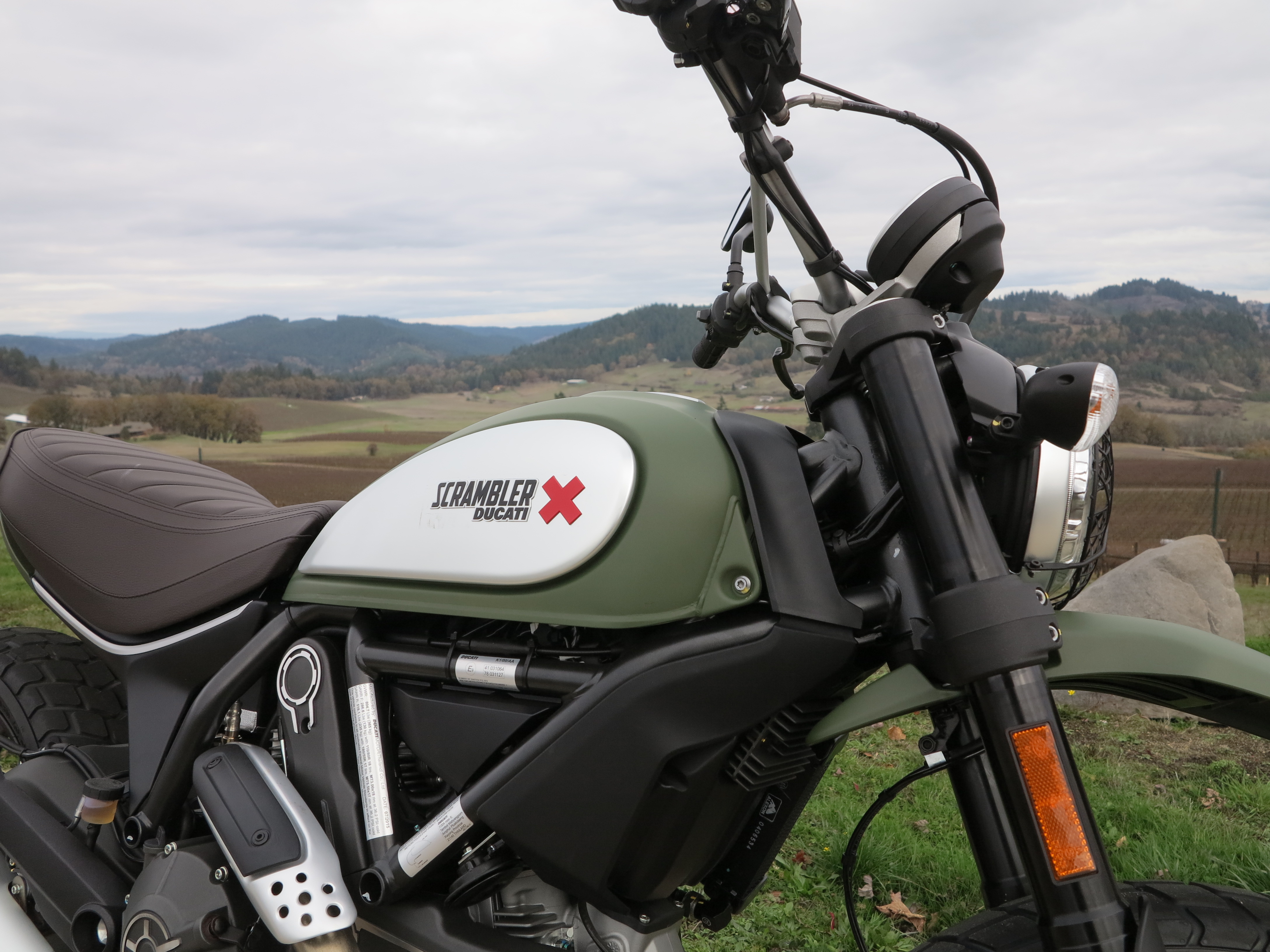
I like that it has a V-twin motor, transversely mounted like on Moto Guzzis, but it turned out working on it to be more than what my interest could lead me to make it happen. Lack of time is what we say when something is not a priority in our lives. And hence this bike became something that I push around when I rearrange bikes and cars to make room for work or storage in my garage. One of my original ideas before purchasing such a bike was inspired on retro looking machines, like the Ducati Scrambler.
2016 Scrambler Ducati
One has to congratulate Ducati for investing on such a line of products and for definitely expanding a segment that had been moving at a slow pace. But the bike just failed to deliver the feel I was looking for. The BMW R NineT line, on the other hand, checked a lot more of the boxes of what I wanted for this space in my shed.
BMW R NineT Scrambler
However, when I started hearing about Indian making a street version of their 750 flat tracker, I decided to wait and see what this was going to be all about. The prototype has a 1200 cc motor, derived from the Scout with some modifications to bias the balance more into HP rather than torque, but still keeping enough of a V-twin character to it. The looks are awesome, with the 19-inch wheels.
How much of this prototype will turned up on a street version of this machine?
Let’s wait and see what the street version of this bike will look like. Certainly the fiber fairings will be turned into plastic, the Roland Sands wheels will be gone, and the exhaust will likely be generic. Let’s see. If it comes to look as close as possible to this prototype, I’m in.
That was it for now folks, these are my favorite five bikes that I would like to own today. Hope all are enjoying a great summer, like we have it here in the south Willamette valley in Oregon, albeit a bit warmer than normal.
I’ve been looking for a while for the ideal vehicle for running my weekend, in town errands during the summer. I thought about a scrambler type of motorcycle, but I’ve settled for classic 4×4’s. They are perfect vehicles to drive without the top on a small town where traffic is light, slow, and usually non-aggressive. It has been difficult to find one that was not restored, re-painted, modified, or that was not too rusty to bring back to life. Then I came across this 1967 Jeepster Commando.
I’ll talk briefly about it on this post, mostly showing some of its key characteristics, and its state of conservation after 51 years of existence. If instead of reading about it you just want to see it, I have a 4-minute video about it, the YouTube link is here (below). If I might say so, it is a great short video, by far the best video I’ve ever made (which may not mean anything since the bar is set very low).
My short list for searching this type of vehicle included four main types of classic 4×4’s: Ford Broncos; Toyota FJ40s; International Scout 80s (I considered the 800’s as well); and older Jeeps (CJ5, CJ7 and Jeepster Commandos). Ford Broncos have mostly been restored or are simply too expensive. Thanks to Jonathan Ward (Icon) and others, such as Classic Ford Bronco, old Broncos in original state are hard to be found, since these companies locate bodies across the country and turn them into expensive, but gorgeous builds. I’m not criticizing them, by the way, as I admire their gorgeous creations. Just that their work has certainly inflated the market.
Ford Bronco Aspen – built by Ford Bronco Classics
FJ40 Land Cruisers in general are too expensive as well, when they are not rusted through. They are also part of Jonathan Wards builds under the Icon brand. The below version is not one of the Icon FJ40’s, but it shows the lengths people go in rebuilding these vehicles with the highest standards of quality, because enough people are willing to pay top dollars for these vehicles.
1967 Toyota FJ40 Land Cruiser
Then we go into the classic 4×4’s that have not reached the stratospheric prices yet, the ones that are within my limited budget, which are the International Scout 80s and the Jeeps (CJ5, CJ7, and Jeepster Commandos). Although their prices are not as high as Broncos and FJ40’s, Scout 80’s in good running order and not restored, repainted, or modified are rare.
I found this repainted one (photo below) near me in 2015 and almost made an offer. The repaint job was fresh and nice, but the owner, who claimed the vehicle to be a barn find, did not share any pictures of it before the body work. To me, it would had been more valuable in its barn find patina. So I passed on this vehicle after several days of back and forth on the pros and cons of a repainted classic. It was a really good vehicle and I did look back as I walked away from it.
1963 or 64 International Scout 80
So lets go to Jeeps in general, they are less rare, lots were made. CJ5s and CJ7s are but difficult to be found in unmolested state. I’m not against modifications, mind you, but they are mostly modified toward a direction with which I do not quite agree, and to an extent that makes it almost impossible to bring them back to their natural beauty. Jeepsters, on the other hand, still can be found with a good price, and you still can find some good, mostly original examples, as is the case for my 1967. So, when I came across this one, and the previous owner was nice, very frank about its shortcomings, and clearly someone who understands the value of such classic vehicles, and who wanted to be sure the next owner was not going to cut it out into something else, it was difficult not to settle the case and make an offer and ship it back home.
Shipping the 1967 Jeepster Commando
It is not without little problems here and there, what do you expect from a 51 year-old vehicle, right? But overall, I consider it perfect for what I wanted and it drives good. I will start making some improvements here and there, mostly to keep it in good and safe running order. The Buick 225 (3.7 liters) V6 Dauntless engine is one of the highlights of these vintage of Jeep vehicles.
Buick 225 V6 Dauntless
It has 160hp and 235 ft/lb of torque. It starts right up but it needs a tune up. It seems to be running rich, the idle is a bit high, and it backfires. I will look into the carburetor, it might need a rebuild, will also look at possible vacuum leaks. I will check the alternator, points, and the timing. And I will review its somewhat recent brake job.
It has an airpump to recirculate engine gases
The transmission is a manual three-speed. It is more like first, second and fifth, as there is a large gap between the second and third gears. This large gap between 2nd and 3rd allows the Jeepster to cruise effortlessly on the highway at 60 mph. But if you encounter steep hills, steep enough where 3rd gear might be too tall, you will have to substantially slow it down to be able to operate on the much lower second gear. All in all, this gear box is not perfect, but it works and makes for a great experience, I consider it to be the source of fun and adventure when driving around town.
Dog leg set up: first down, two up on the other side
And it is a 4 x 4, with Warn manually locking hubs.
Warn Locking Hubs
In terms of the body, it looks pretty good. Of course, it has surface rust, but I actually like it the way it is. Some people go through the effort of creating fake patina. This Jeepster has it naturally.
Nothing matches natural patina!
The frame and floors only have surface rust as well. All is good!
Only surface rust on the interior (you can see the 4 high and 4 low lever)
The previous owner had gotten an estimate to repaint the entire Jeepster, I can still see the markings made by the body shop as they located areas that needed more attention before it could be painted. Thank goodness he did not go through with it, as, in my opinion, it would have devalued this Jeepster, like it devalued the Scout 80 I almost bought, in my humble opinion.
Body shop marks for areas where body needed repairs before a repaint
I removed the top with the help of a friend. We managed it, but it was heavy for two folks, when the time comes to put it back on I think the operation will need at least one more person.
Topless beauty
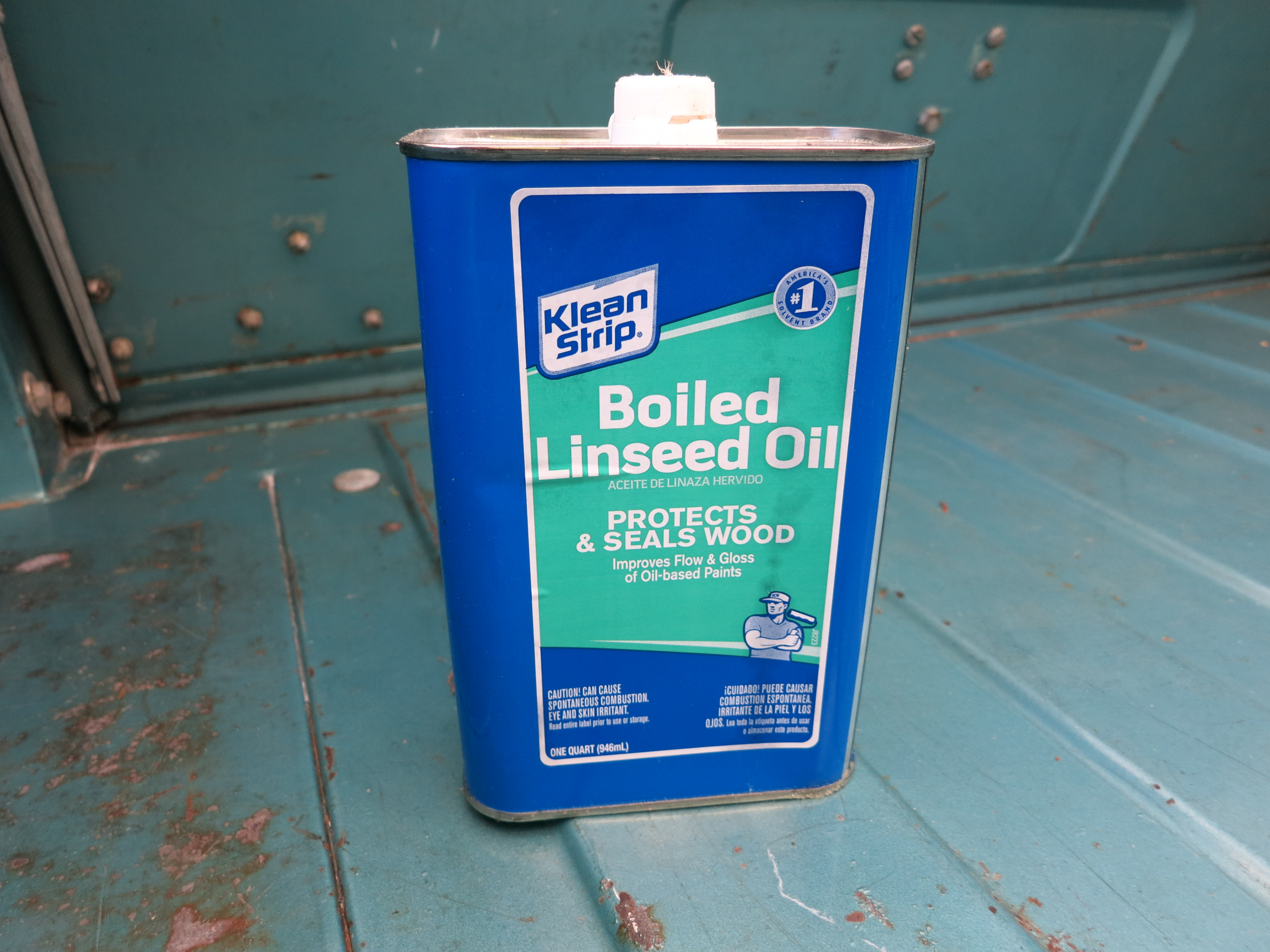
To preserve the patina, there are a few methods discussed in the “internets”. Some people just wax and polish their vehicles, others lay a clear coat on top of everything, making it very shiny. I opted for treating the body with boiled linseed oil. According to the few people who used this method, each coat lasts about six months, so I will treat it again before retiring it for the season at some point this fall.
Boiled linseed oil: Although designed for wood surfaces, it works with painted metal as well. Be warned, the rags you use to spread linseed oil on a surface (wood or metal) may self combust as linseed oil evaporates! Read the instructions if you decide to use this type of product.
Boiled linseed oil will leave the surface somewhat shiny and oily, especially right after application. But it will also give a bit more depth to the color of both painted and rusty surfaces.
Oily shine right after the application of boiled linseed oil
Anyway, this is my classic 4 x 4 for summer drives in town, my 1967 Jeepster Commando.
It is quite the vehicle, full of character, lots of fun especially when topless, and gets the attention, many waves, thumbs up, and curious looks from people the that come across it.
This blog is about motorcycles, though, so the next post will be about my new short list of motorcycles, the five motorcycles I would like to have in 2019. Maybe this one below is a hint for one of the five bikes I would like to have…
If you are one of the few regular readers of this blog you must be wondering what happened to my posts, as we now reach almost one year without a new post. I don’t have an answer, except that I did try to start making YouTube videos, and I actually made a few videos, and will likely make some more, but not sure about making it a regular thing. It takes time, something that is difficult to find these days.
The Multistrada and the newcomer, the 1967 Jeepster Commando
I like to communicate, though, so I figure writing is still the best alternative for now, if making videos challenges the communication process. Meanwhile, I did slow down on my riding, partly due to work, partly due to enjoying other things other than riding, like a 1967 Jeepster Commando, basically all original.
The Jeepster being delivered
Before the Jeepster, though, I did get a 1980 Honda CBX500 that would be a flat-track or urban scrambler project, and is now semi-abandoned. Well, I did give up on that build.
Meanwhile, I’ve been riding and I’ve been attending moto events as much as possible. I did attend the Portland One Moto show, for example. Nice motos!
One moto show 2018
One moto show 2018
One moto show 2018
I did go to a fourth visit to the Death Valley, that adventure-riding Disneyland.
The CB500X on Echo Canyon, Death Valley
The CB500X continues to impress, this time it conquered the Lippincott trail.
The CB500X just before getting on the infamous Lippincott trail.
And I did take my Multistrada to the coast just recently.
The Multistrada, back to the Oregon Coast
Finally, I did attend the 7th Annual Giant Loop ride, two weeks ago, which was the 10th anniversary of this adventure riding brand.
Somewhere on the East Steens, during the 2018 Giant Loop annual ride
With so many toys and so little time, it should be time to start re-thinking the garage.
Today, September 17th, as I’m finalizing this post, it is raining outside. This is the first real rainfall since June, marking the end of summer in the south Willamette valley. This post describes a motorcycle ride I’ve taken back in June, at the beginning of the summer.
Riding down from the coastal range towards the coast
That was a long time ago, so much has happened since then. There is a new-to-me (=old) motorcycle, a 1980 Honda CX500 which I may turn into something else. A tracker? Cafe Racer? Who knows. And then there was the eclipse in “totality” form just north of Eugene. Then we’ve had lots of forest fires, some are still burning as of this morning, let’s hope this rain will end all these fires. It has been an unseasonably hot summer for our region. Then there were several work-related trips. Then there are the unfinished Death Valley reports, which I still plan to complete. And then the summer is over.
Although summer is over, there is plenty more to happen, the riding season is not over. But let’s get back to the present time and complete this post, we can talk about the rest later. Also, please note that I have a video at the end of this post, which matches this ride.
A trip to the coast, June of 2017:
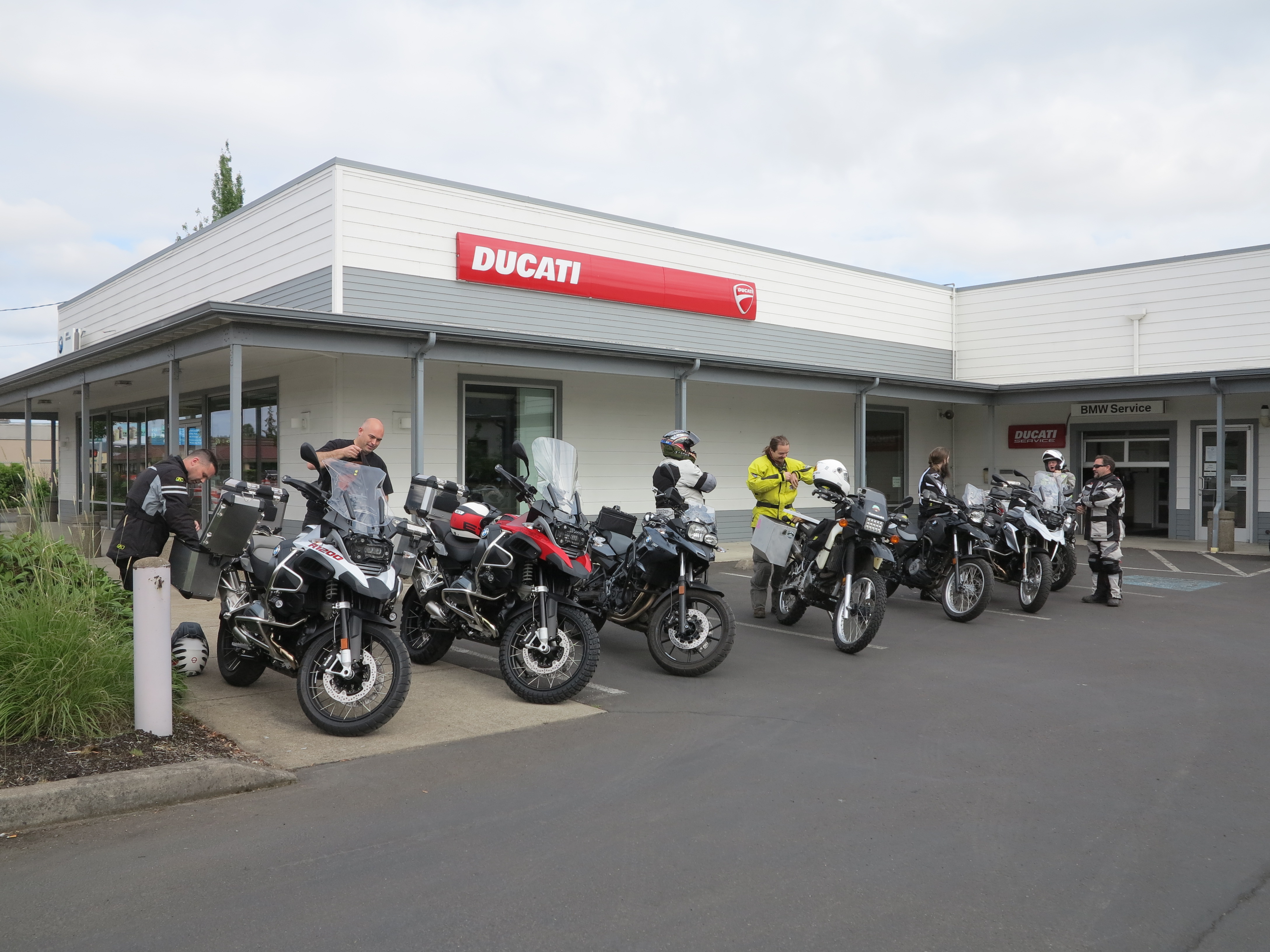
Our local BMW shop, together with its sister shop in Tigard, organized a motorcycle ride to the coast. The announcement mentioned a shrimp boil to be served, free of charge, to all riders at the destination on Fogarty Creek State Park. Free food? I’ll be there! The ride was well organized with four group rides, four options to reach the destination, one street and one adventure route starting from each shop.
Rest stop at northwest side of Table Mountain: Adventure route from Eugene store
I opted for the adventure route and volunteered to assist with the ride starting from the Eugene store. EMCWOR‘s Scott asked me to be a sweeper for the ride. Besides being the sweeper, I was doing my regular self-assigned job as photographer, videographer, drone-operator and story-teller.
View of the Pacific from Table Mountain
The sweeper on a ride is the guy who makes sure no one is left behind, makes sure everyone arrives safely at the destination. It is not an easy job on a motorcycle ride and it gets yet more difficult when it is a dirt ride where there is more chance for things to go wrong, or for people to get lost. The complexity increases yet some more when there is a larger number of riders involved, which was our case, with a group of 13 riders.
Upfront I can report that despite one flat tire, a small crash, and a fumble here and there on my job as a sweep, we all made it to the coast. We were the last of the four groups to arrive at the beach, but we had great fun on the way, it became a real adventure route, that’s what adventure riding is all about, right? On top of that, we rode through some great roads over the coastal range with great views. It was a great selection of roads, Scott!
Riders getting ready!
I was busy with work that week, lots of complex document analyses and report summaries to be completed and which spilled over to the weekend. Determined to make it to this ride, though, I woke up very early Sunday morning to complete my reports and upload my last files. I managed to get the bike ready and made it to the shop as Scott was half-way through the ride briefing.
More riders getting ready
However, I had a problem. I was not able to upload the route on my GPS, as my Garmin Oregon 400 expired, so I used my street GPS, which cannot upload tracks (I just purchased a Montana 680T, more on that later as well). I did manage to see the route on my computer, I learned about its major intersections, the total distance, but on a dirt road there are many minor intersections. As a sweeper, I should have had a GPS with the track of the route we would be riding on. This, together with a communication problem, would delay us a bit later on.
Honda CB500X, my choice for the ride
There were 12 riders at the shop when I arrived, I was number 13. I knew a couple of the riders from seeing them at the shop, but I’d never had a chance to meet them or have a conversation with them, let alone ride with them. Practically all of them were riding BMW GS’s (besides me, there were only two other riders on non-BMW motorcycles).
From a quick observation, however, I noticed most of the bikes had seen their fair share of dirt, they had that wear and tear patina you only see on adventure bikes that have been used properly, you know it when you see one. That was a very good sign, and I hoped this would make my sweeper job easy. It turned out to be the case, even the riders who were on dirt for the first time did an awesome job at it! It was a great group for an adventure ride!
The route was 129 miles long. We left Eugene via River Road and from there we took back roads going past Junction City, to 99W towards Monroe from where we got to Alpine road.
From Eugene to Fogarty Park with some dirt roads on the way
If you are from this area and ride motorcycles, you know Alpine Road. This is a short but great road, especially when it becomes a single-lane road, with great pavement and lots of nice tight curves with mild elevation changes at the east side of the coastal range.
Enjoying Alpine Road
After having some fun on Alpine Road’s tight curves we had our first planned stop at the Alsea Falls, still on Alpine road.
Quick stop at Aslea Falls.
From there we went towards Alsea and got on 34 towards the coast for a short while until we would make a right on a dirt road to start the adventure portion of the route. During these section of 34, however, the group split into two. I’m there, the last man on the line, patiently going at the speed this last group was comfortable riding. This was not a problem at all, I was enjoying the ride and the road at the end of the string of riders.
When we arrived at the Cr-714, also known as Fall Creek road, when we would hit the dirt and gravel roads, the first group had been waiting for us at that cross of roads for a while already and as soon as they saw us coming, and verified we were all there, they took off immediately, and so did everyone on my slower group as well. I had to change a battery on my helmet cam and did not have a chance to tell anyone I had to do it…
It took me what, some 5-10 minutes to do the job, which included removing the helmet, so I rushed to get to the group, but they had already sent someone looking for me because there was a fork on the road in less than a couple of miles already. That was the result of a conflict between being a sweeper and trying to capture video as well, the group had to wait for me.
Group waiting for me on a Fall Creek bridge
These roads were great. Well, I love gravel and dirt roads, so I’m biased in thinking very gravel road is good. From Cr-714 we got into SF52, got on the Siuslaw National Forest and started climbing towards Table Mountain. During this climb we got into two situations.
The first was when we had a quick stop to re-group. As we were there chatting, we realized one of the bikes had a flat tire. So here goes a question for you: how many BMW riders does it take to fix a tubeless flat tire? I’ll let you do the count…
How many BMW riders does it take to fix a flat, tubeless, tire? (can you imagine how many it would take if it was a tubed tire?)
Nonetheless we had a great amount of laughs while fixing this tire, plenty of electric tire pumps were made available, for example (each one claimed to be more powerful than the previous). We also got a lesson on using plugs when Scott came to the rescue with the right tools for the job and the right technique to fix it in one try, a fix that lasted the entire ride (as far as I know).
Scott showing how to get it done
The second issue happened right after we started going again, when the last rider of the group, the rider just ahead of me, lost connection with the rest of the group on one of the many forks on the road.
The fork on the road… that little speck of light on the left is the rider waiting for me
When I got to this fork he was waiting for me, some 50 yards into one of the roads, and told me he had not seen anyone when he got to the fork. Because I did not have the track on my GPS, I was relying on motorcycle tire tracks to find the right way on these seldom traveled roads. I did not see motorcycle tire tracks on the road he was in, so I told him I was going to “check for tracks” on the other road and turned around, back towards the fork.
In retrospective, I should had been more clear with him. I should had said “wait here, I will check for tire tracks on the other road”. I say this because as I turned around and started going down the road back to the fork I saw him taking off on the other direction, continuing on the road he was in. I wrongly assumed he was going to find a spot to turn around. I got to the other road and very quickly saw the motorcycle tire tracks and knew this was the right road.
Clear, fresh motorcycle tire tracks on the other road
I waited for the rider… and nothing. Maybe he is waiting where I saw him last time? So turned around again and went back to tell him what was the right road and… and where was the guy? I couldn’t believe he would continue on his own, and to summarize my reaction to this, when I kept going and not finding him, hill after hill, when I topped a larger hill about half a mile into this other road and there was no sign of him I heard myself exclaiming out loud “puta que o pariu” in Portuguese, which, loosely translating to English, means “oh dear”.
I rode about another mile until I found him stopped at the next intersection. I helped him turn his bike around and we got to the right road just when we encountered someone coming back looking for us. That was a failure on my job as a sweeper. At the same time, one thing that happened a few times on this ride was that riders failed to use the important rule of group rides which is to wait for the following rider, make sure they see you, at all intersections. Well, we were on an adventure route, right? This is what makes a ride interesting, but certainly it is something that can be avoided.
Lost rider waiting for me at intersection
We got back with the group and continued climbing, traveling around the west side of Table Mountain and arrived at a clearing on the northwest side of the mountain, where we had a stop to enjoy the nice vistas.
We could see the Pacific Ocean from there, always a nice and welcome view in my book.
Nice view of the coast range and the Pacific Ocean
From there we continued our way down towards the coast.
Group leaving, going down towards the coast
That’s when we had a small incident, when Scott stopped to check something on his bike, one of the riders did not manage to stop on the gravel road. It was a steep descent, and this rider’s bike had street biased tires. The good thing is that it only caused minor material damage, the rider was okay!
Picking up fallen motorcycle
After picking the bike up, checking the rider for his well being, certifying that all was good with rider and bike, we continued our way down towards Toledo. At some point we got into some nicer and wider gravel roads, those roads that are perfect for throttle sliding, and we finally hit pavement very close to Toledo.
Going through downtown Toledo
On the other side of Toledo, instead of traveling to Newport and taking 101 we continued north along the Siletz river, on a road that goes parallel to 101 until the Siletz river turns west toward the Pacific, where we reached 101 a few miles north of the Fogarty Creek park. At this point I considered my job done. I waited for some riders at the entrance of the Fogarty Creek park, and a few other riders were taking a long time to arrive. I figured they knew where to turn. I did check that they arrived.
Many riders from the other three groups had already left by the time I got there
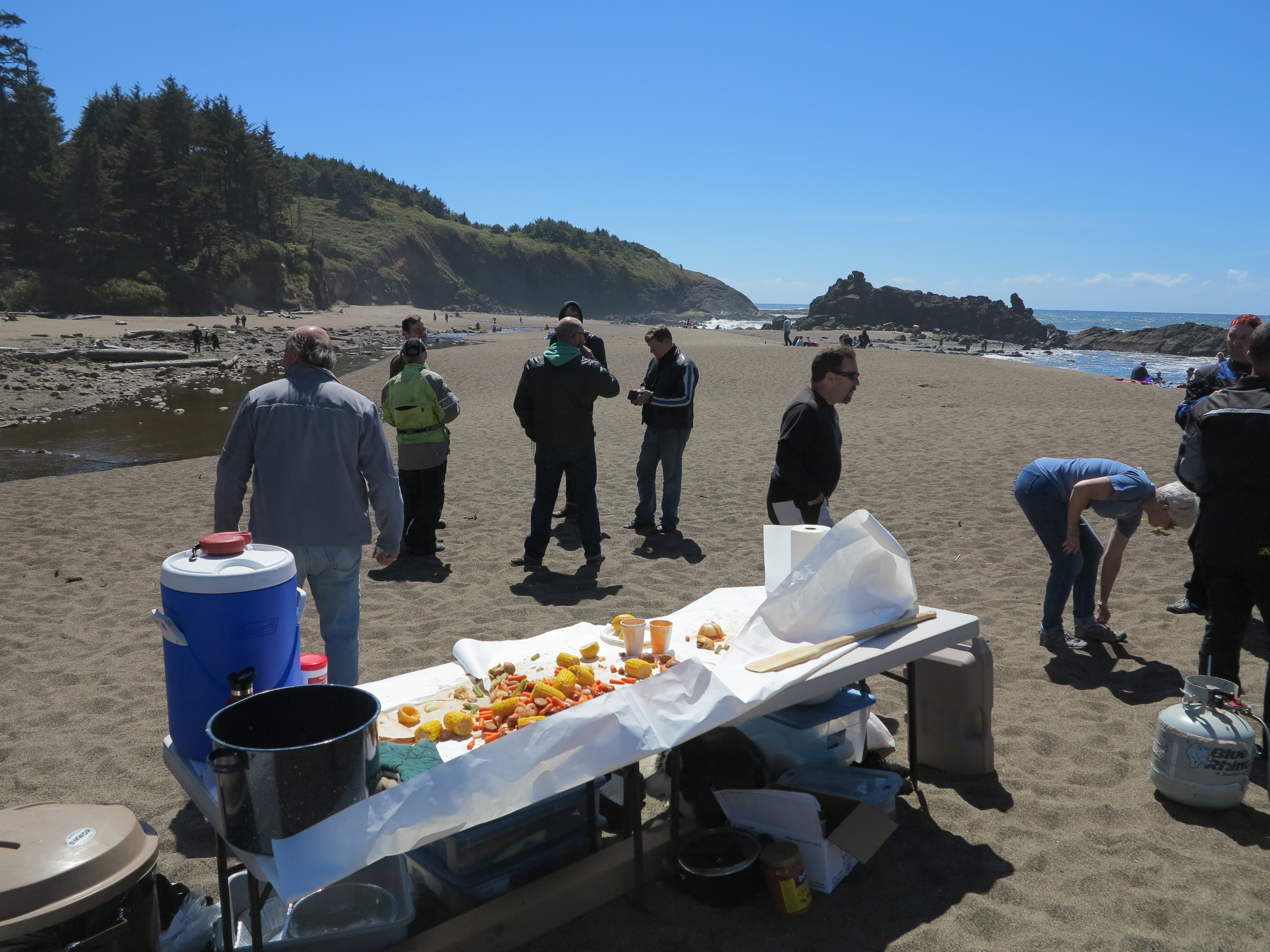
And that was it, when I got to the parking lot, many riders had already left, going back to Portland or Eugene, or whatever was their home base. The good thing is that, despite being the last group to arrive we had had a great adventure and, most importantly, there was still plenty of food left. Thanks Madelyn!
Plenty of food left for us, the last group to arrive
I didn’t stay long on the beach, soon after eating I got back on my bike and rode home, going south on 101 to Florence and from there taking my old friend, highway 36. About my job as a sweeper, well, what can I say, I would give myself a low grade.
Mostly our group, enjoying the food
I realized this was my first time taking the Honda to the coast. I will need to take it back there for a more adequate introduction. The bike performed really well on this trip, it did about 260 miles on this loop, it sipped fuel, and it showed it can play with the big guys.
Back home, another mission accomplished (I need to tidy up this shop!)
However, no matter how much I like this little Honda, from my experience riding BMW R1200GS’s, from what I saw on this ride, and what I’ve seen on other rides with friends of mine on these bikes on all sorts of terrains (Mengel Pass comes to mind), I can see how these BMW’s do everything very well.
Yes, they are heavy beasts, riders may need some help maneuvering their bikes on tight trail spots, or lifting them from the ground when they drop them. But once they get going, they basically traverse any terrain with ease. They have that strong down low torque offering great tractability at slow speeds, they are engaging on pavement, and they tour well offering great comfort and pack all sorts of riding technology.
My Honda does not try to do all of that, and I have other motorcycles for when power or comfort are required. However, if I had to have only one motorcycle, and it needed to do it all, I have no doubt, it would be a water-cooled BMW R1200GS. It remains top of the heap for touring and adventure riding. In 2020 I may go on a trip to Alaska, a BMW Rallye could be the ideal motorcycle (if it will still be made by then).
I know, sentences should not end with prepositions. Would you prefer if it read “a motorcycle with whom to have a beer?” No, right? And second, I know motorcycles are inane objects, and hence have no “soul” and no capacity for empathy, let alone the capacity to have a beer. And third, yes, the beer is only for me.
2015 Honda CB500X Rally Raid
The point is that this motorcycle is unique in many respects, especially when adding the Rally Raid adventure kit. It is reliable and it is light enough to be picked up should/when I drop it on solo rides. It manages traffic speed on two-lane roads well, it likes curves with very light and fast response on turn ins, it is comfortable and it does not vibrate too much with its parallel twin motor at cruising speeds (60-75 mph). You can travel long distances with it. It can basically do everything other adventure bikes do in terms of travel and conquering rough terrain, and it sounds good and is enjoyable to ride on top of that. And it does all of this without breaking your bank account.
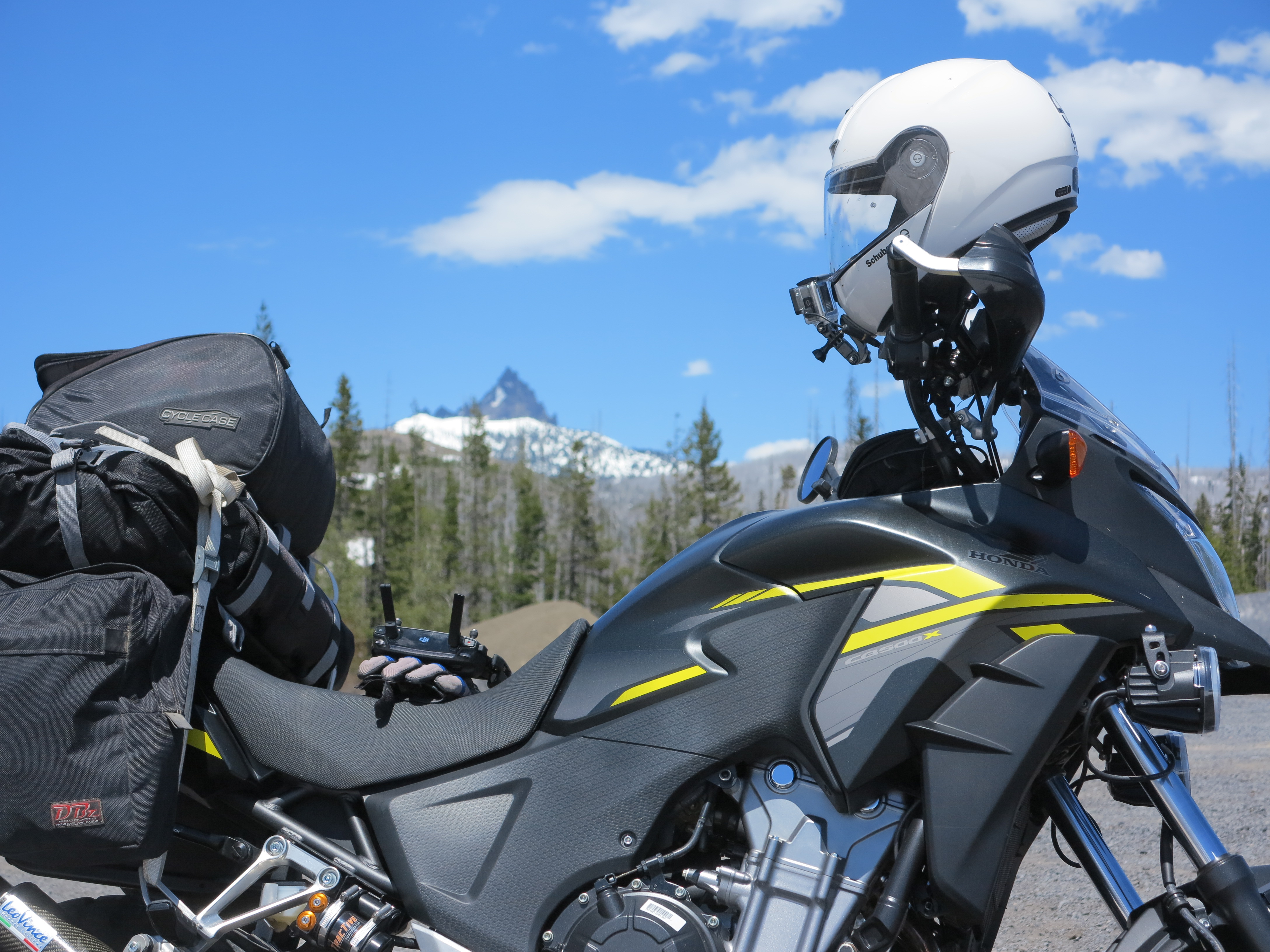
2015 CB500X at Santiam Pass
If you want to find faults, yes they are there. One of them is that it is not too engaging on pavement. With its 48 hp it can manage speed, but it won’t taunt you to go faster. And travel on free-ways could be a problem, if traffic is flowing at 75-80 mph. It will do it, but the motor becomes a bit strained past 75 mph if that is the desired cruising speed. And if you want to travel two-up, well, than it will depend on your size how much you both weigh to see if the bike can manage it. It will be cramped especially if that includes travel gear. But its real downfall, let’s face it, is that it won’t score you any points when you park it in front of your local Starbucks. I like it exactly because of that, it is an underdog in the adventure riding world.
CB500X at the Santiam Pass, Oregon
This post is about a trip I took to a campground in the middle or nowhere, the Barnhouse Campground, a few miles east of Mitchell in the middle of the state of Oregon. A beautiful location, close to several historical and geologically important areas, but on itself the area of the campground is just a patch of woods on the side of a tall hill, surrounded by miles of beautiful nothing.
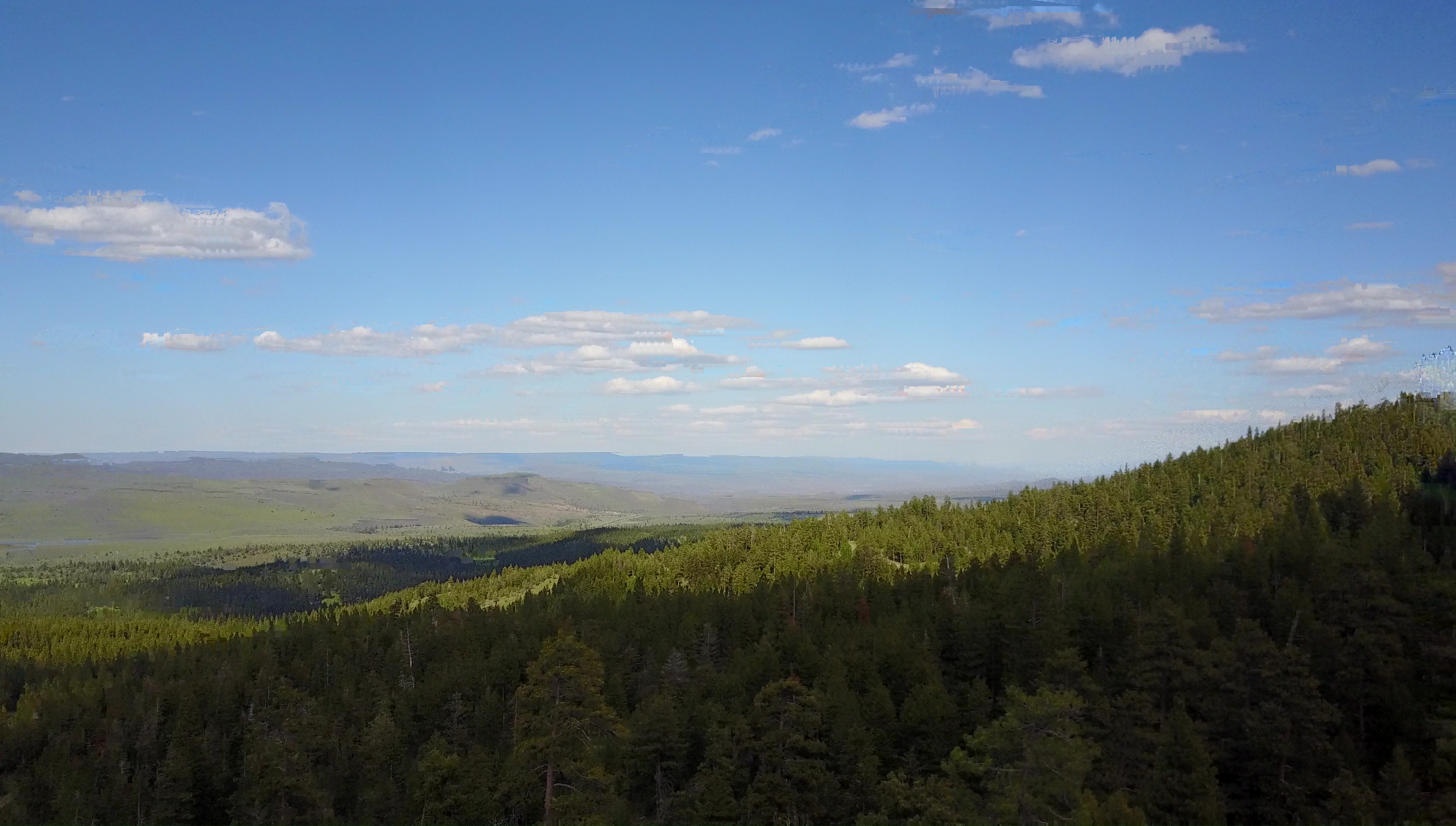
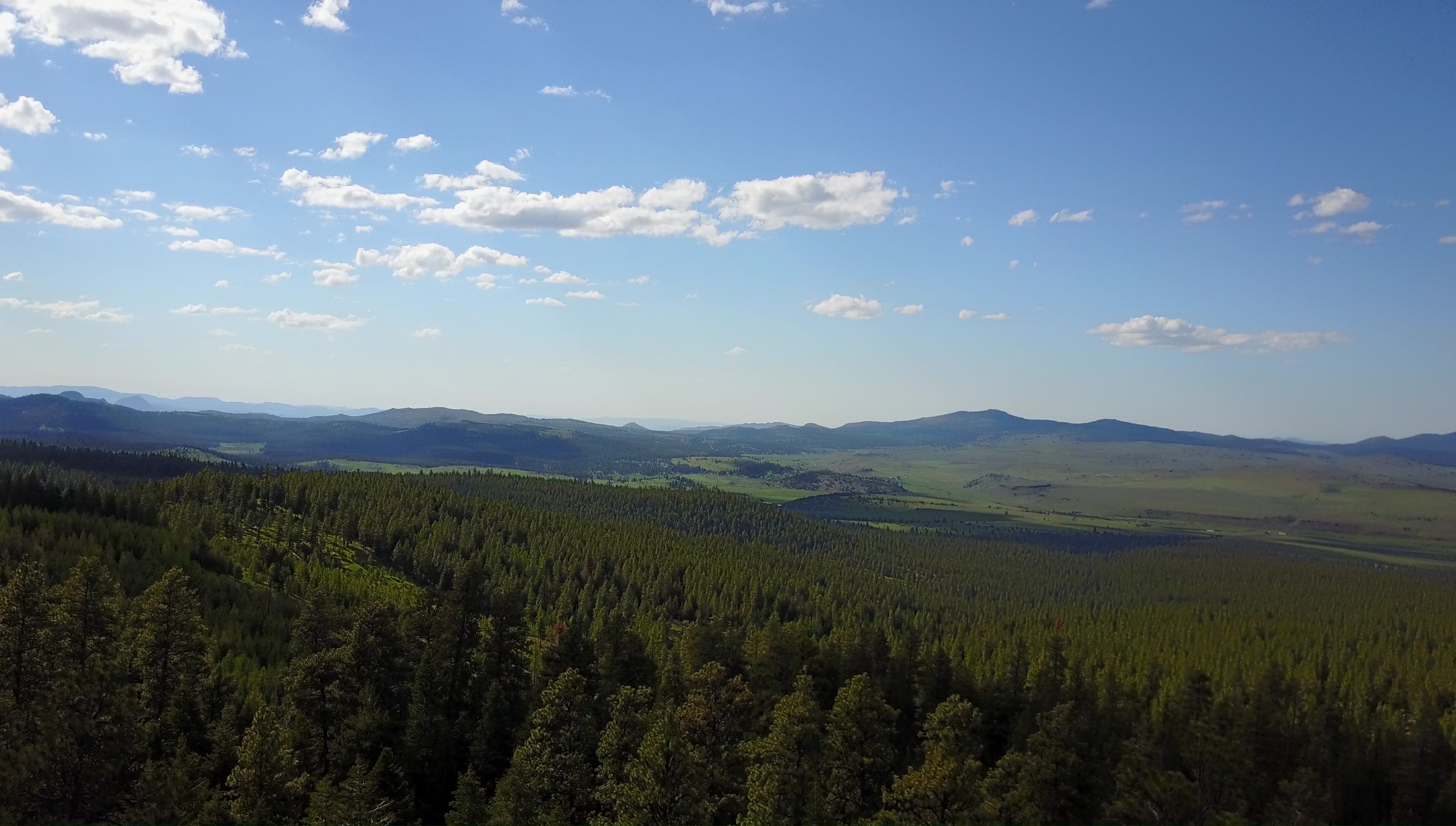
View from 100feet above the Barnhouse campground, looking north
This trip served as one missing test on the CB500X: how will the CB500X behave on a long riding days when loaded with full camping gear?
At the Barnhouse Campground, near Mitchell, Oregon.
Aside from an opportunity to ride the CB500X, the inspiration for this trip was to meet friends of mine, from the time I lived in Ohio, on a campground location somewhere in Oregon. This is something we’ve been doing every year since we moved to Oregon in 2005. The plan for this year was to camp somewhere in the Snake River but after we learned some areas would be closed due to snow we moved the meeting to the Ochocos area.
Bird’s eye view of the area, from the campsite.
The last time I’ve been on this area was in 2008 when I used to ride the BMW F650GS Dakar. I had forgotten how beautiful this area was, with plenty of nice vistas with the scale that gives that perspective of big sky. Any deviation from the main roads of the region will give you the sensation of being in the middle of nowhere.
Beautiful nothing for miles and miles
The round trip total was 457 miles in two days of travel. This was a reasonable distance to test this motorcycle’s capacity to handle 200+ miles daily distances with varied sets of roads and carrying camping gear. On the way in I mostly took regular two-lane highways (126 and then 26) and on the way back I picked some gravel roads and one-lane country roads (forest roads 12 and 42 before returning to 26 and then 126). The bike handled everything very well.
Traveling on Highway 26, close to Mitchell
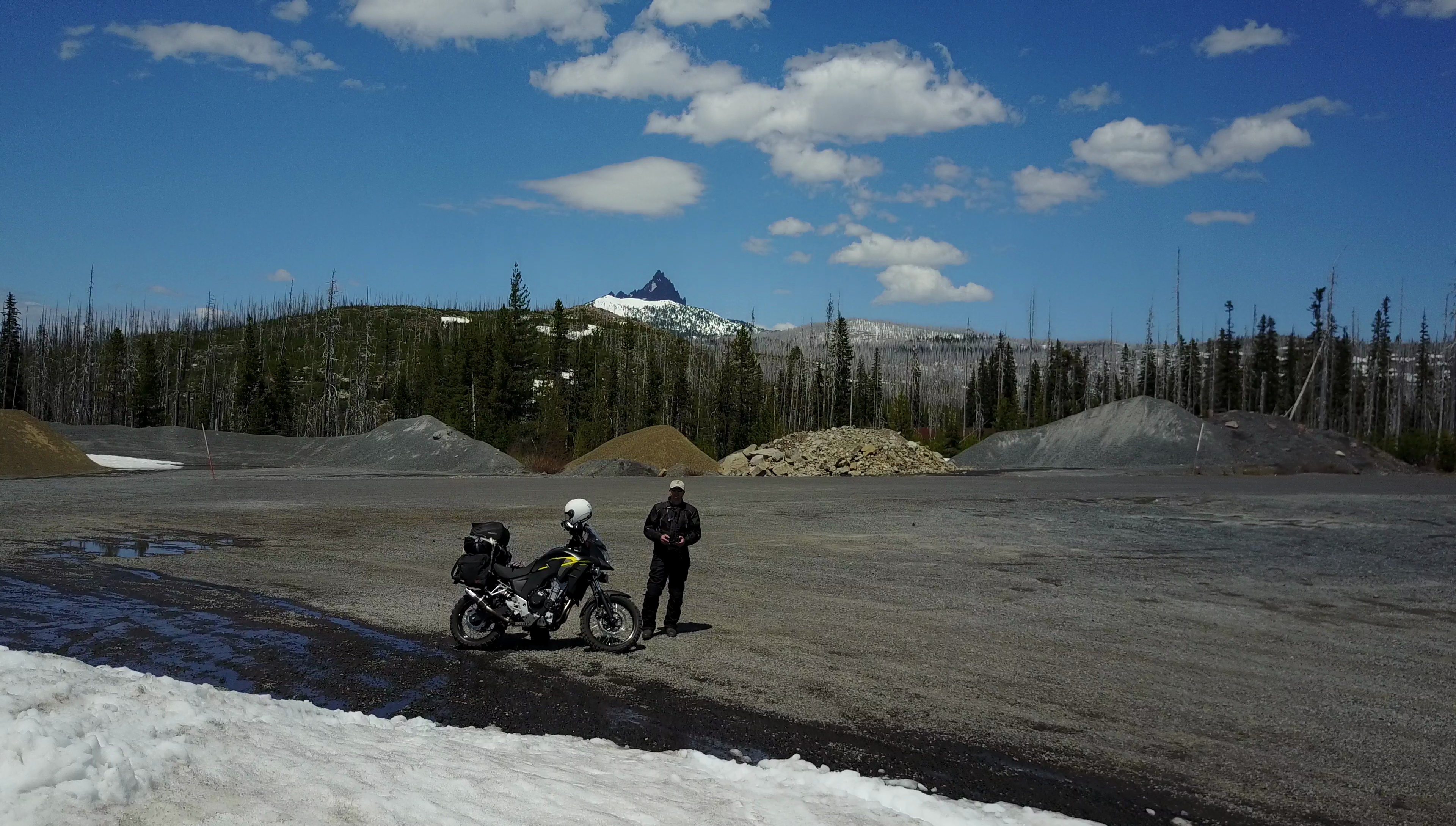
I wanted to take Highway 242 but it wasn’t open for the season yet. Later on in the Summer I will have have to go back that way with this bike for the traditional shots I take with my bikes with the Sisters mountains on the background. The alternative was to stop at the Santiam pass for some snow capped mountain shots. Not the same thing, but it will do for now.
At Santiam pass
I left the house at 11am with about half tank of gas, and at more than 200 miles ridden with one tank of gas I stopped to re-fuel in Sisters. The bike took 4 gallons of gasoline averaging more than 50 mpg. Not bad for the mountain climb. Speeds were between 60 and 70 mph, mostly 65 mph. I continued the trip and arrived at the campsite at 4pm, just about time to have a nice cold beer which I carried on a small ice box on the left pannier.
Will the beer be good after 200 miles of travel on this bike?
See, I had to test this important capacity as well (will the beer arrive in good condition for drinking)? The answer is yes!
Just perfect!
I set the tent, and enjoyed a great time with my friends. By sunset we walked to the edge of the hill, to capture some images.
Drone shot of the sunset
I didn’t realize until the sunset that Mount Hood was visible more than 100 miles away.
Mt Hood visible more than 100 miles away
That was a short visit. The next morning I started my travel back to Eugene. I went back using country roads per recommendations of a riding friend who had been on this area before, following state forest road 12 south from the campground until I hit 42 from where I turned west towards Prineville. I was surprised by the beauty of the area, the road follows a ridge and goes through open fields alternating with areas of sparse trees and areas of forests.
State Forest Road 12
When still on gravel roads, I was basically by myself the entire time. The road was well groomed allowing good speeds. I went past a few patches of snow on the sides of the road, at about 5,700 feet of elevation, which worried me a bit. If it turned to be impassable I would have to return and go back via 26.
Patches of snow on the side of the road at 5,700feet elevation
It turned out not to be a problem, travel went on very smoothly. Once I hit 42 I turned west, toward Prineville.
State forest road 42
Pavement started on 42, first as a single-lave road, as we descended from the ridge. Always nice landscapes.
Windy road, with good portions rated G1 on Butler maps (“steep climbs, tight switchbacks, deep canyons and million dollar views”).
State route 42 is rated G1, G2 and G3 on Butler maps, which are considered best roads for riding motorcycles.
Still on state route 42
From single-lane it turned to two-lane, I started seeing more traffic, bu the road was still nice and surrounding beautiful landscapes.
On 42, at this point perhaps straight south of Mitchell
Continuing on this road, as some traffic appeared, the motorcycle had not problems overtaking slower vehicles.
Overtaking slower traffic No problems.
In no time I was back on 26, then Prineville, Redmond and Sisters, where I refueled again, after 222 miles with one tank and 3.8 gallons of fuel.
The bike and the three sisters.
Because it was the end of the Memorial Day weekend, I found a lot of traffic leaving Sisters, when all roads converge for about 30 miles into one road to go over Santiam pass. It took quite a while for traffic to move freely, and once again one has to think why, oh why lane filtering (splitting lanes) is not allowed in Oregon. I had to constantly check my mirrors for who was following me, worried about the sudden stops of traffic, with fear of being run over by a distracted driver on those highway stop and go moments.
Heavy traffic leaving Sisters
Anyway, we made it home. The bike proved to be very nice for these long trips. It was loaded with camping gear, photo equipment, including a drone.
Made it home!
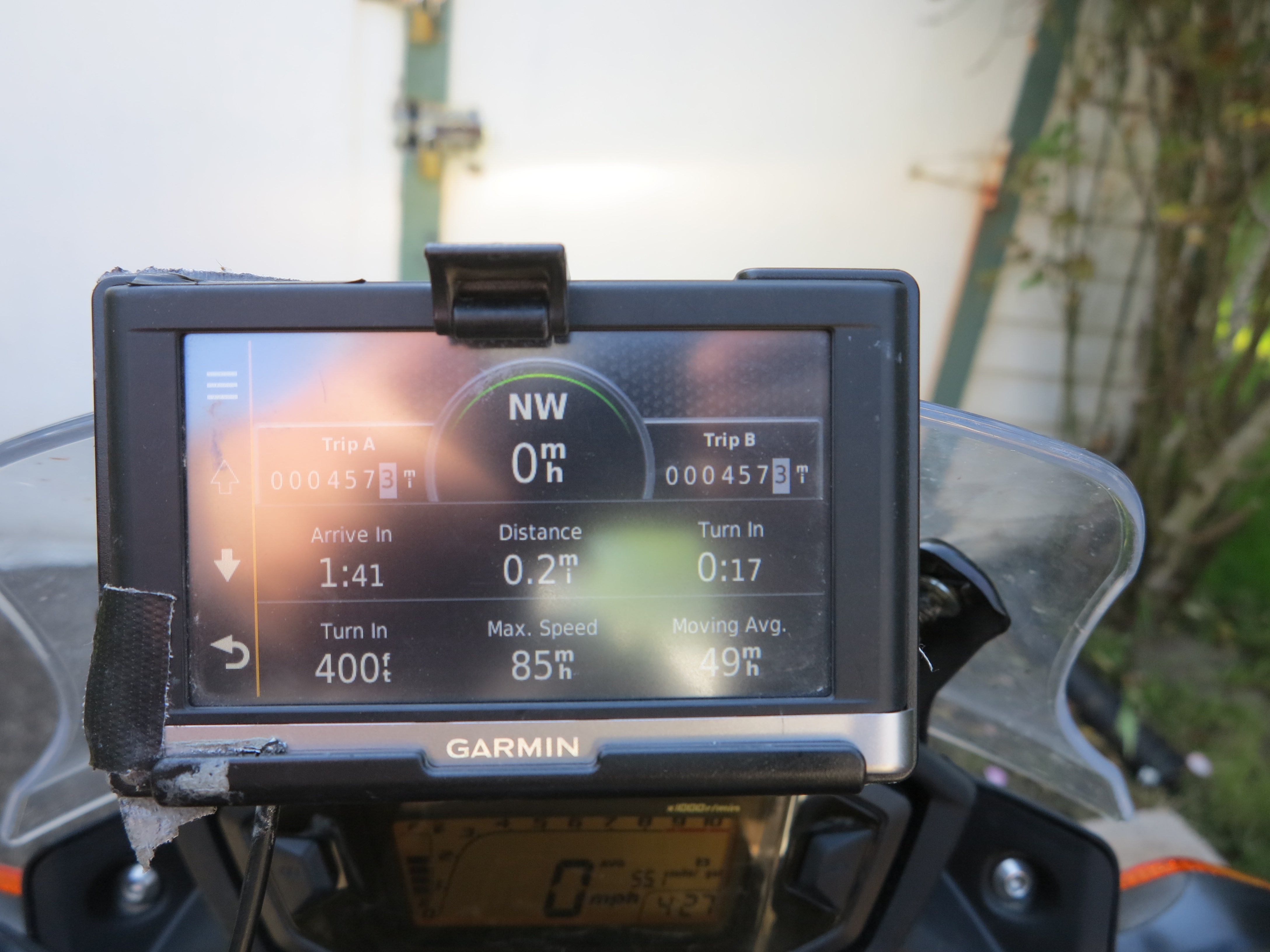
In total, we traveled 457 miles (730 km), with an average of 49 mph moving speed. Maximum speed was 85 mph, when passing a row of cars on the climb to the Santiam pass on a passing lane (that was the speed of all cars that were on the passing lane – I was just following traffic, officer, either that or they would run me over).
457 miles
Before unloading the bike, and firing the grill for a celebratory barbecue, I served a cold beer to review video and photos from the trip.
Having a beer “with the bike”
As the bike, still seating outside the shed, still with all gear on, appeared to be looking on, I cheered it for the great adventured it had taken me on. This little bike, an underdog of sorts in the adventure world, is a great machine, like a good friend with whom you want to have a beer after an adventure.
Yes, it is small and yes, it would be great to have some 20 extra horse power… If it were to be my only motorcycle, I would consider 48 hp to be a problem. For now, should the urge for HP come knocking, I have two options at an extra 30-something on the Triumph or an extra 100 hp on the Ducati.
In the middle of nowhere with the CB500X!
Outside of that, and for the time being, this is the bike I look forward to riding when the idea is to have some fun around town or on a camping trip in the middle of nowhere. Meanwhile we keep and eye on Yamaha and KTM, should they deliver something special (as light as the CB500, but with about 26 and 45 more hp respectively).
I’ve been researching and writing about motorcycles for years and I’m still a newbie when it comes to general motorcycle knowledge and history. Last weekend was perfect to remind me of how much I don’t know about motorcycles when I attended the Oregon Vintage Motorcyclists (OVM) show in Corvallis.
Oregon Vintage Motorcyclists Show – May 2017
Last Sunday was also a perfect day for riding, the warmest day of the year so far around here, and it turned out to be a perfect opportunity for me to learn more about Indian motorcycles, the featured marque at this year’s OVM show.
OVM Featuring Indian Motorcycles in 2017
I’m privileged to have met very knowledgeable motorcyclists from whom I’ve been learning about motorcycles. Last weekend I spent time with Doug and Carl as they prepared and loaded two very special and rare Indian motorcycles to take to the OVM show in Corvallis. Besides talking motorcycles, spending time with them gave me an inside perspective on what it means to own an older motorcycle.
OVM 2017
My participation in the action started Saturday, when I helped them load their motorcycles to take to Corvallis.
Loading the 1921 Indian
We took Doug’s 1921 Indian to Carl’s, where he was setting up his 1958 Royal Enfield Indian for the show. Every load and unload of the bikes followed a lot of conversation about motorcycles. Just to unload the Indian it took us about 30 minutes. It was one minute of actual moving the bike and 29 minutes of story telling. Great stuff, my friends.
Doug and Carl unloading the Indian took 30 minutes: 1 minute to unload, 29 minutes of stories
This 1921 Indian is quite a piece of machinery. It was great to take a closer look at this bike, learn how builders took care, in the 1910’s and 1920’s, of mechanical challenges we take for granted today. There was a time we worried about how manual chokes on cars and motorcycles operated. New riders and drivers of today probably don’t even know what a choke is, let alone what it does, as the basic concept of managing fuel and air on a cold start motor is managed by computers. And to think that on this 1921 motor, where you manually injected a dab of fuel in each cylinder head on cold starts, a manual choke would had been a high-tech, luxury item?
What about the oil pump? It is manual. Chain adjustment? Move the transmission or the rear wheel, depending on what chain you need to adjust and adjusting the one that goes from the engine to the transmission will require you adjust the one going to the wheel. A distributor? The bike requires manual adjustment to advance or retard the spark. Brakes? Only rear brakes, and then it is not much better than what we used to find on bicycles 20 years ago.
Side valves
Riding skills at the time guys were racing these bikes were of a different sort than today’s. It required the rider knew enough mechanical knowledge to keep the engine running, and knowledge to make it perform at its best, a heavy dose of courage mixed with high levels of insanity, and then, yes some riding skills as well.
In contrast, today’s riders often complain about bikes with traction control, ABS, “too many nanny features” they say, as they ride motorcycles with excellent and linear acceleration, sticky tires, and disk brakes that can stop the motorcycle with a one finger operation. They should be riding a motorcycle with no front brakes, to adjust their feel to what really are “nanny” features on today’s bikes. Where do you draw your line?
1921 Indian: a race motorcycle of the time, power plus motor on a Scout frame
The bottom line is that innovation is inevitable and we all ride safer today and require lower insanity levels to conquer the hills. What we take for granted today (or complain about today) is exactly what gives especial value to these older motorcycles and the riders of that time.
This 1921 Indian, which actually is not a production motorcycle but a motorcycle built for racing, can be considered very primitive, but everything that made it run fast was well thought out. Today it is a working piece of art, a quick study of its details will teach you a lesson in motor operation, and I bet you will find beauty on the solutions they invented to made it work. It is a photograph, a frozen image, documenting where we were in technological development 100 years ago.
Carl’s 1958 Royal Enfield Indian is on another level of innovation, it is another picture of technological development of another era. Motorcycles by this time were more popular and when compared to the 1921 Indian they are high-tech what with the manually operated choke, drum brakes, front forks with integrated springs and shock absorbers.
1958 Royal Enfield Indian
One of the interesting aspects about this motorcycle was to learn the marketing strategies of those days were not too different than what we see today. Royal Enfield badged their motorcycles with the Indian brand as a strategy to expand its presence in the American market.
The Indian badge
Royal Enfield Indians were exported with the Indian badges beginning in 1955 and through 1960, from what I learned, although Royal Enfield motorcycles were being sold by Indian dealerships already before that time.
21K miles, very low miles!
Carl’s motorcycle is a 500cc twin, built on the Royal Enfield Constellation frame.
1958 Royal Enfield Indian
On my internet search to find out more about these bikes I came across a slightly different model, a 1958 Indian Woodsman, which was an American dealers request for a scrambler version of the Royal Enfield Indian. Although this is also a 500 cc parallel twin, there are many differences between this bike (photo below) and Carl’s bike.
1958 Royal Enfield Indian Woodsman (photo from “Bring-a-trailer” site
These bikes are part of the “scrambler” movement of that time, which included Triumph, Ducati, and Honda motorcycles among others during that time. Ducati’s Scrambler line was also an American dealership request, brought to market in 1962. Which reminds us of how much power dealers had, during those days, in shaping what the motorcycles looked like. Today motorcycle companies have marketing departments, design teams, it is a much more sophisticated operation.
Anyway several hours of story telling later we managed to spare 10 minutes of time to load the two bikes into the trailer.
Bikes loaded, ready to go!
Sunday morning Carl drove the bikes to Corvallis. I joined Doug, riding to the OVM in Corvallis. Because Doug was going to ride his 1000 3C Laverda, a triple cylinder motorcycle, I decided to take my triple as well, so the Triumph Tiger 800XC was prepped for the trip.
Getting the Triumph Tiger ready, first ride of the year: check oil, chain lube, tire pressure
I met with Doug at the Friendly’s market.
At Friendly’s market, the Laverda 1000 C3 (looks great, sounds great)
Soon other riders showed up, the Friendly’s market is a gathering point for Sunday rides in Eugene, and we became a group of five riders going to Corvallis.
Leaving Friendly’s market
On the way I worked with the guys to take some drone shots but I failed miserably. The drone was reading a “magnetic proximity” error when I tried to start it from the motorcycle, and did not operate properly. I managed to untangle the drone issues in Corvallis.
On the way to Corvallis – stop to film with the Drone, fail!
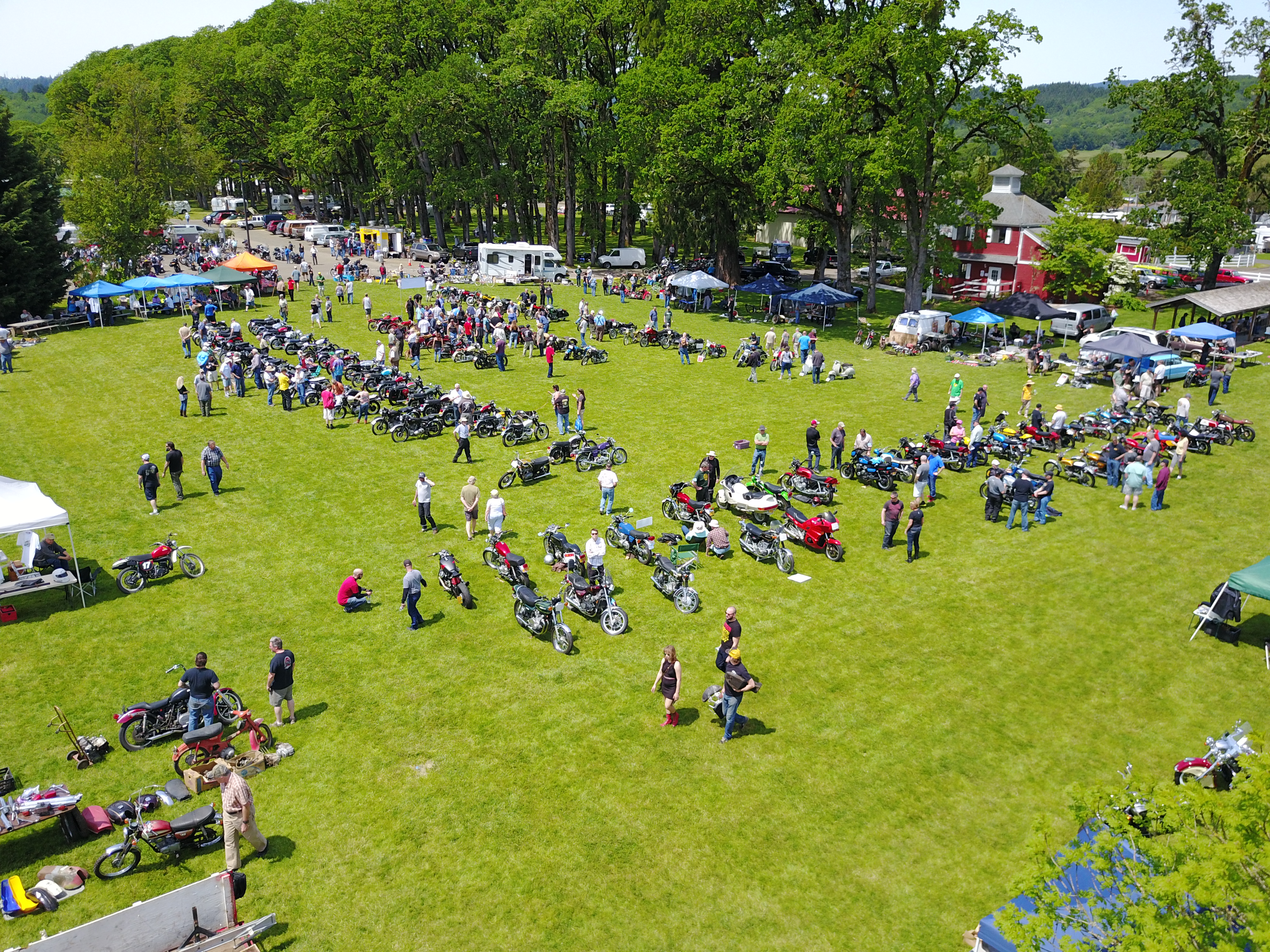
At the Oregon Vintage Motorcyclists Show
We made it to Corvallis after the drone fiasco. This was my second time attending this event, great to see so many nice motorcycles available for display, bump into old friends, and enjoy the overall atmosphere. Here are a few photos.
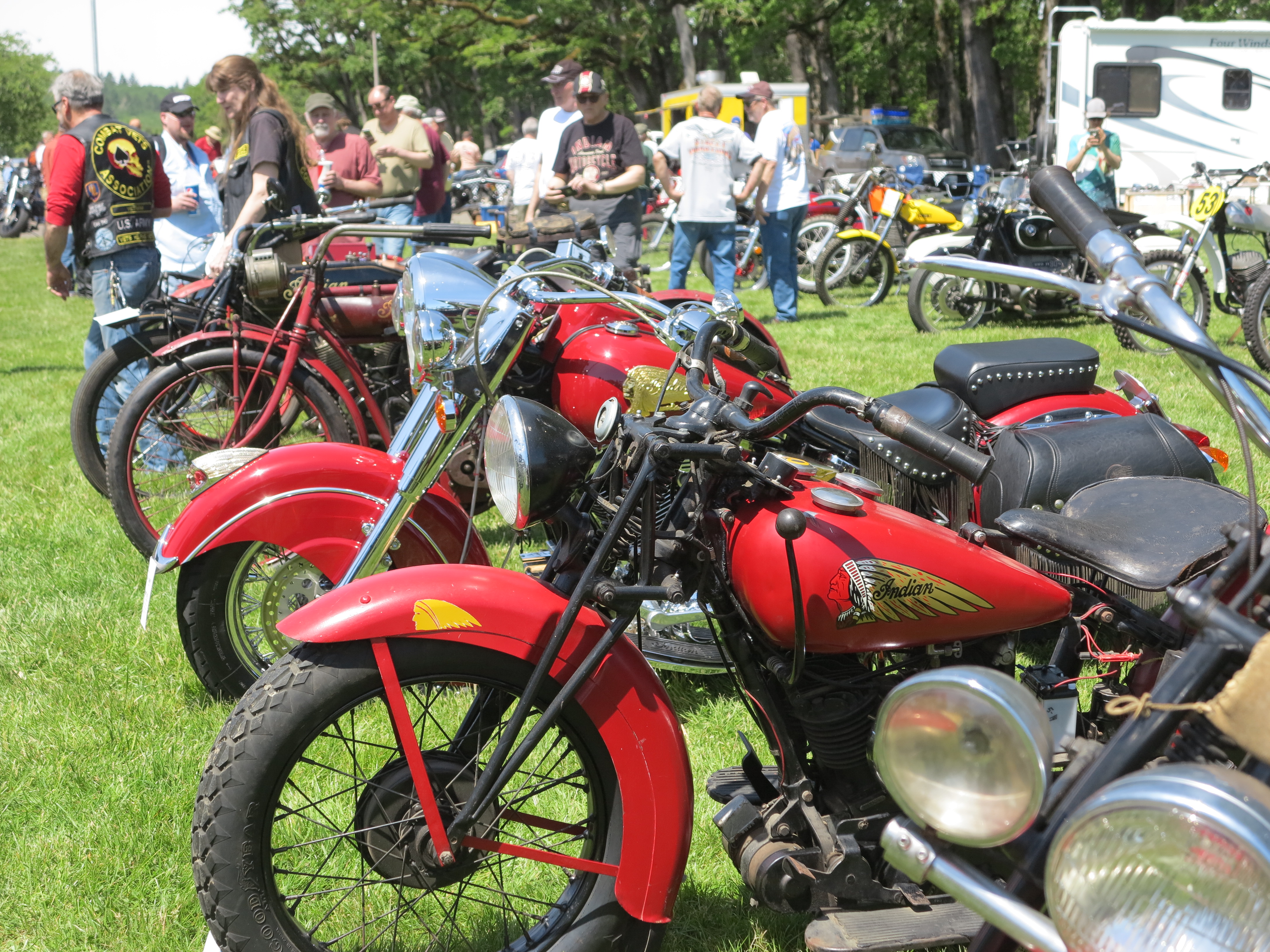
The Indians
.
.
.
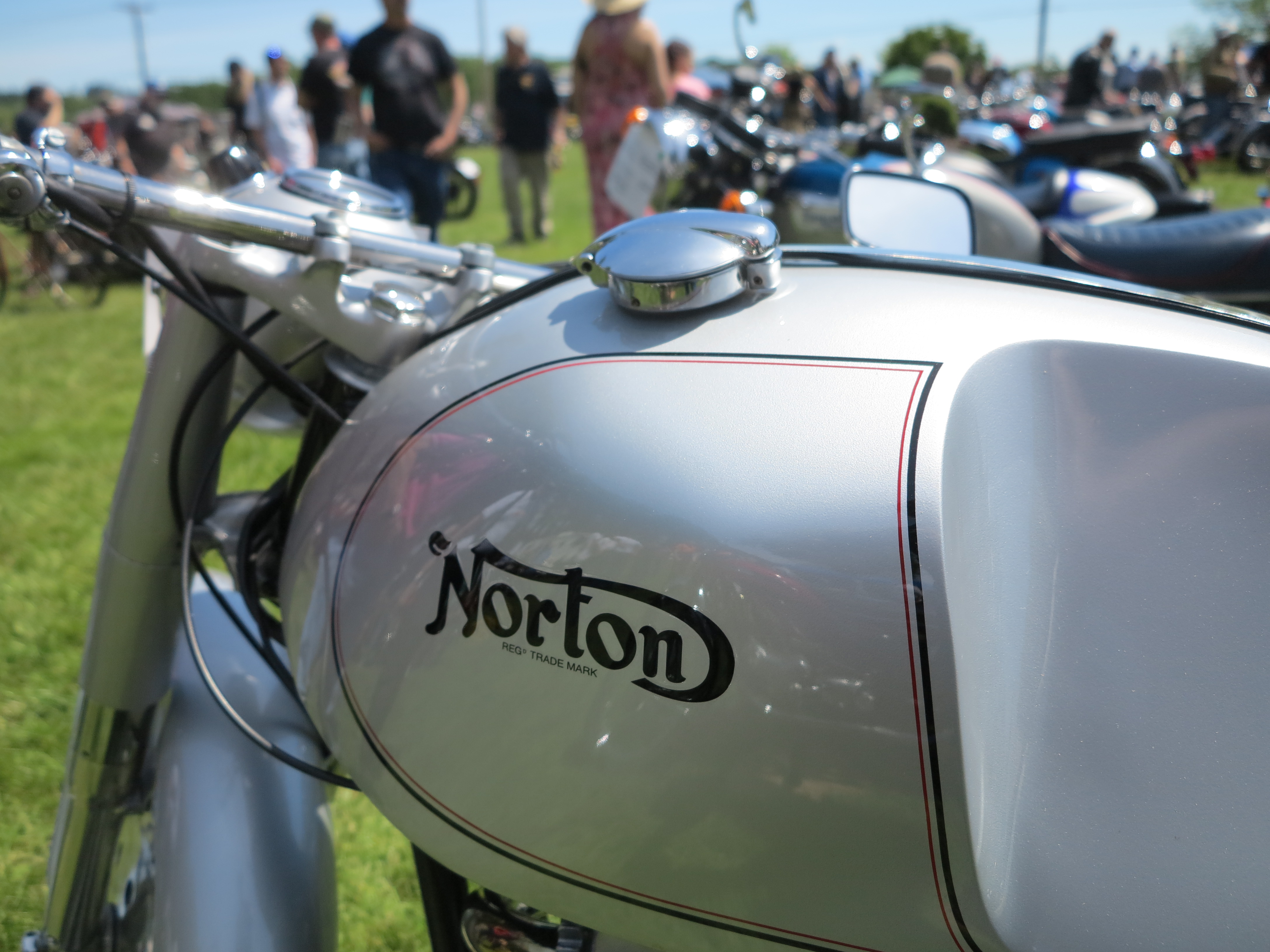
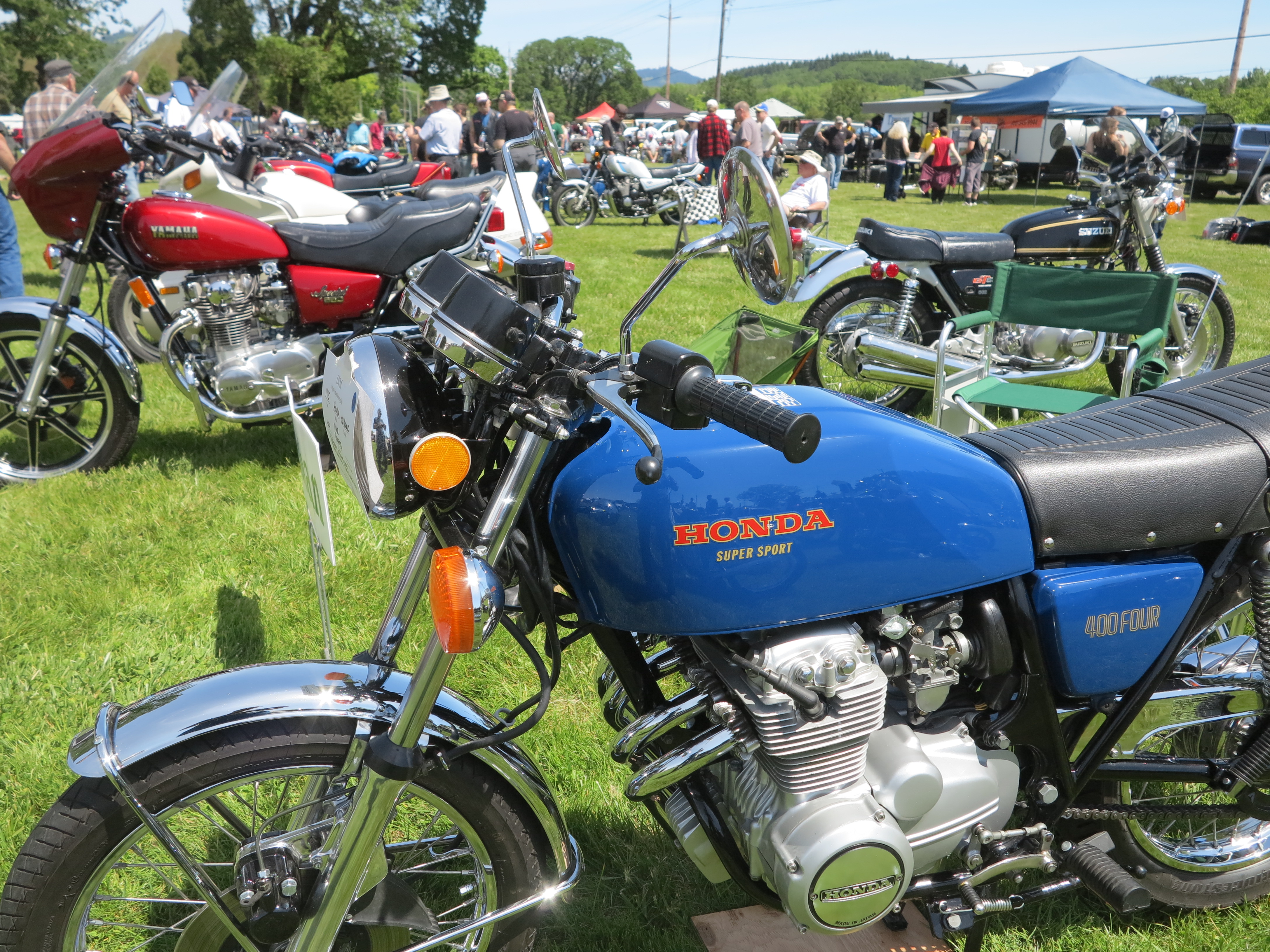
Various other motorcycles
.
.
.
.
.
.
.
.
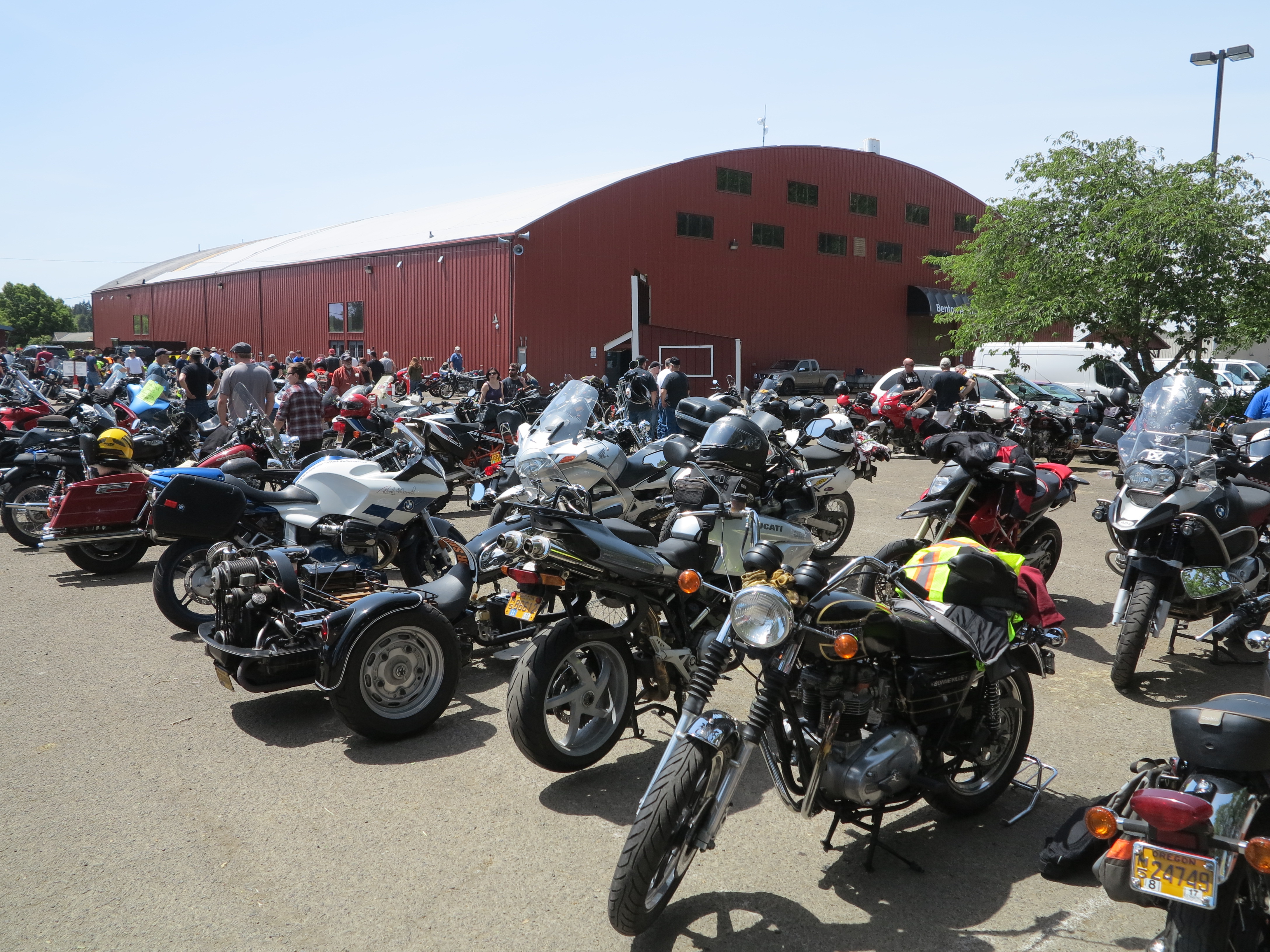
These are just a sample of the many interesting motorcycles that were shown at this year’s OVM. It was well attended, as always, which makes the parking area an interesting area to look at bikes as well.
The president’s choice for this year’s OVM was the 1912 Indian.
1912 Indian, President’s Choice for this year’s show
And Doug’s bike got the popular vote for best in the featured marque for this year’s show.
Doug’s 1921 Indian was voted best motorcycle of the featured Indians
And that was it. We rode back home and went through a similar process to unload the bikes: a few minutes of action, lots of minutes of motorcycle stories.
Unloading the motorcycles: More story telling, little action.
It was a perfect day, including an Indian Pale Ale and a nice burger at Meiji’s with great friends after all bikes were unloaded, the trailer was parked, and all gear was put away.
IPA at Meiji’s
And I concluded the action with a walk back home, crossing the train tracks into the wrong side of town.


















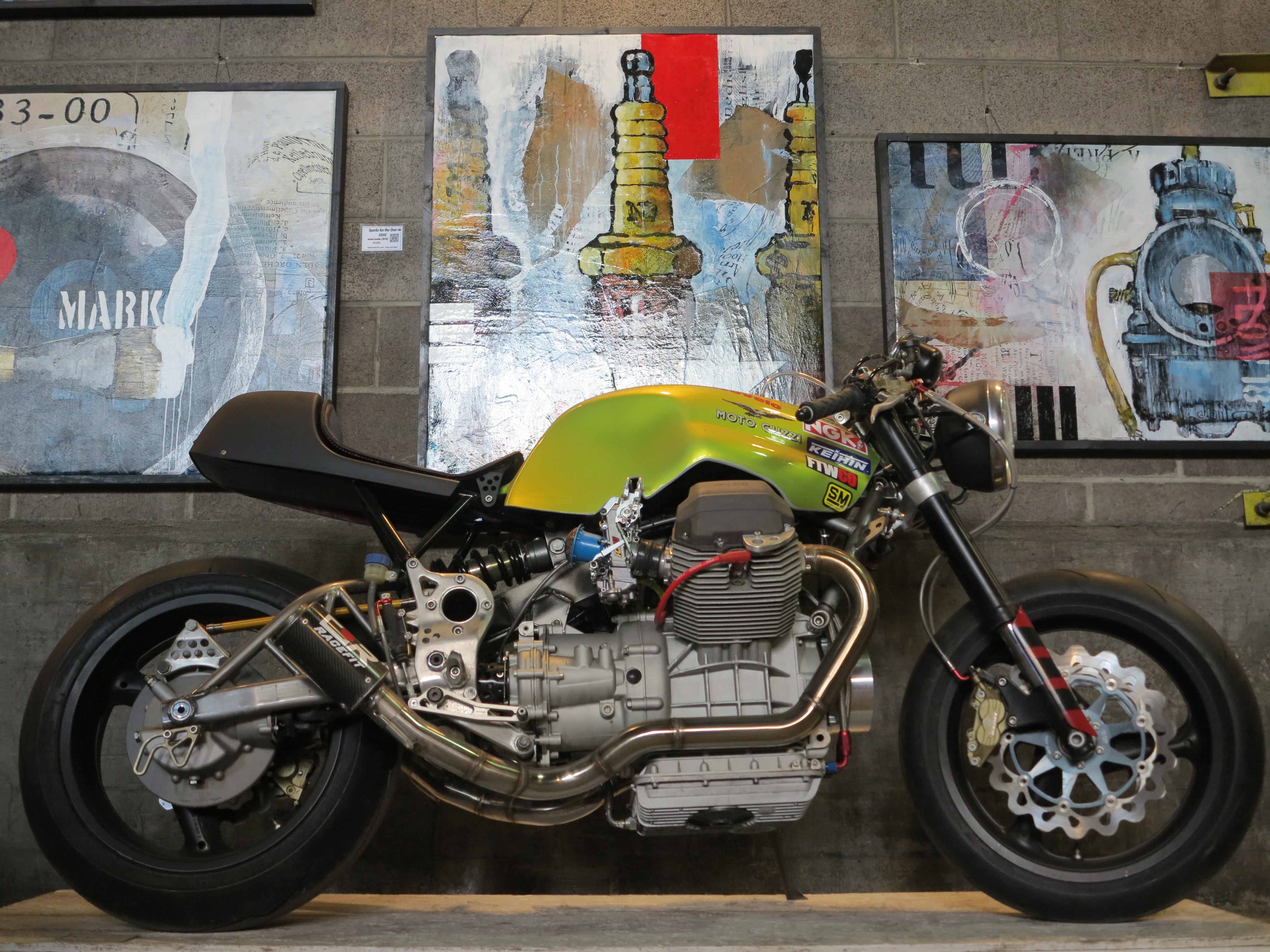



















 .
.

 .
. .
. .
. .
.



 I'd rather be riding...