I enjoyed seeing so many unique motorcycles, or should I call them creations, last year at the One Moto Show, so I went back this year for more. And I was not disappointed. The One Moto show continues to be the place to go to see motorcycle art, get inspired for your own projects, marvel at other people’s creativity.
One Moto Sow – Portland 2016 – Same building as last year
Right by the entrance door I was surprised to find this beauty. A pre-production, 2017 BMW R nineT Scrambler. According to BMW Motorrad news, this bike should be out at the dealers by Q3 2016 as a 2017 model. I will have a separate post just for this bike, with more photos and more information… just because this bike deserves it.
Pre-production 2017 BMW R nineT Scrambler.
BMW was again the marque of the show with some interesting creations, like the K bike below.
Or this R nineT modified to look like the original R 90 S in its sunburst orange version and dressed with some good Roland Sands Designs pieces.
Another view of this beauty.
And then you could find the most outrageous creations, just like last year. Check this turbo-charged 1982 Harley Davidson beast. By the way, notice the crowds, I could see see some beards and some flannel shirts, but less of them together. I suppose we are past the peak of the flannel and bearded hipster movement.
Another view of this turbo creation.
There were a few flat trackers on display. Flat trackers, together with scramblers, are my favorite motorcycles. in terms of looks. Hence my preference to Scrambler Ducati in its Full Throttle version.
This one below is probably not the most functional design, but what beautiful lines. I like the covered forks with a wide tube, covering the lower triple clamp and tapering to the top. And what about the shape of the very short handlebars? It is art for the sake of art, I believe. Until someone tells me it rides very nicely as well.
This Honda reminded me of my 250XL. At least the tank, the front fender, the red color, and the yellow and white Honda wings logo matched my humble and never forgotten 250.
What about a 1965 Ducati 250 from before the L-twin motors.
Motorcycles having this old building as a backdrop, a perfect match.
Whatever this building was, this new temporary use seems perfect.
Good crowds too. I arrived Saturday, at about 11am, and got in right away – no lines. By the time I left, about an hour later or so, there was a line going around the block.
Great sense of humor on this for sale sign.
I thought last year they had more motorcycles, more exhibits, but it could only be my impression. I’m looking forward to being to the One Moto show again next year.
The next post will be about the BMW R nineT Scrambler. My next bike? Stay tuned.
It was only this last February in 2016 when I finally had a chance to ride the Multistrada DVT. Launched in 2014 as a 2015 Model, the substantially revised Ducati Multistrada with its Desmodromic Variable Timing (DVT) motor is already a well known machine. Several reviews have already covered this bike in detail, I will not repeat that information here. Instead I’m going to describe my observations about what this bike represents to the motorcycle industry, especially the adventure segment. I will summarize my thoughts whether this bike is still top of the heap in its own established sub-category of adventure bikes. Of course, I will also describe my riding impressions of the DVT machine, and it will be from the perspective of the owner of a 2013 Multistrada Pikes Peak.
Multistrada DVT: Still top of the heap?
What the Ducati Multistrada represents to the motorcycle industry
When the Multistrada 1200 was launched in 2010, the notion of adventure motorcycles was just being consolidated as a category. At that time, and still today, the BMW R1200GS was the lead of the category, number one in sales volume around the world, the yard stick to which others are measured, the icon of adventure riding. The success story of BMW has led other motorcycle manufacturers to bring large adventure motorcycles to market. Today most every brand has a large adventure motorcycle in their line up.
The 2010 Ducati Multistrada 1200.
In 2010, perhaps we could call it the early years of large adventure motorcycles, the launch of the adventure-styled Multistrada with its superbike motor, four riding modes (urban, touring, sport and enduro), electronically adjusted suspension, and three engine maps (100HP, 150 HP low and 150 HP high) created quite the stir. People didn’t quite know what to make of this very powerful yet versatile machine with enduro ergonomics. Was Ducati after the BMW R1200GS market? Well, it had an “enduro” riding mode, good suspension travel and certainly there was a demand for adventure motorcycles then, as there is now. It was something different, though.
2016 Ducati Multistrada DVT
When we look at the large adventure motorcycle category today, only six years after its 2010 launch, we see plenty of options, with at least one new model being launched every year since that time. When we compare 2010 to 2016 and see what patterns emerged from all the new large adventure motorcycles launched since 2010, the Multistrada clearly shows up as the leader of a new segment. The sport bike motor, the high level of electronics and riding aids, a glossy bike on an enduro platform have influenced many manufacturers which since have followed suit. Including BMW and KTM. Overall one can say two new segments within adventure motorcycles, which incidentally have already been observed and discussed by many, are now consolidated, especially when we consider the launch of two key new products in 2015.
Leaders of their own packs: The Multistrada and the GS
The S1000XR is one of these products, a clear attempt by BMW to cash in on what is now being called the sport touring category or some variation on the theme (in Italy they like to call it “cross-over”). I call it adventure-inspired sport touring motorcycles. What else, right? While the other new product, Ducati’s Multistrada Enduro, makes it clear the original Multistrada was, in fact, a road version of an adventure motorcycle, it was a new segment within the adventure motorcycle segment. The Multistrada Enduro is clearly eyeing the R1200GS market, a more dirt oriented machine, if you dare. While the S1000XR goes after the Multistrada market, the adventure-inspired sport touring market, with an emphasis on the sport side of it.
Yes, I know, and I haven’t forgotten, other manufacturers have already been sorting themselves out on this branching field. Aprilia has its Caponord in a “regular” and a Rally version, Moto Guzzi has several years of its NTX version of the Stelvio. KTM launched its 1200 Adventure line in two models, one a bit more road oriented than the other, although both can be placed more towards the real adventure side of this equation. Of course, BMW has been offering the GS in Adventure and in regular trim, and the regular trim can be bought with alloy or spoke wheels. There are plenty of other examples to mention.
2016 Ducati Multistrada DVT
The important point here is that not unlike what the BMW R1200GS has done to the industry, the Ducati Multistrada has established itself as a product leader within this segment. In fact, it has created its own segment. You call it what makes most sense to you. As mentioned before, I currently call it the adventure-styled sport touring segment. They are bikes built around superbike motors with an adventure flavor with their enduro ergonomics, reasonable suspension travel, as ready for the long haul as they are for spirited canyon riding or track days. These are enduring descriptors, not unlike what people used in 2010 to describe the 1200 Multistrada at is launch. The question is: does the 2016 variant of the Multistrada still deliver the goods in this increasingly competitive market?
It still has a beak: angrier bird!
Top of the Heap
With leadership comes responsibility. At some point in the early 2000’s I traveled to Oakland, California for a professional development training on “Scenario Planning” offered by Global Business Network. I was the low profile guy sitting side by side with executives from giants such as Coca-Cola and Procter and Gamble. As part of the Scenario Planning activities I learned from these executives, the biggest fear of their organizations was to one day no longer be number one in their industry.
2016 Ducati Multistrada DVT – a handsome machine.
Ducati must feel the same about the Multistrada. The Multistrada has been its best seller product until the Scrambler came along. It remains a strong seller in its segment, despite its getting crowded. I can only assume Ducati has been working hard to keep itself on top of the sales sheet for the Multistrada. Or at least keep a strong presence and maintain the Multistrada status as the yard stick against which others measure their products.
The specific case of the BMW S1000XR comes to attention, because when BMW enters a market, you pay attention. Arguably perhaps, I see it as the most direct competitor Ducati has ever had for the Multistrada, despite Aprilia’s Caponord being much more of a fac-simile to the Multistrada. Aprilia products do not show the sales volume BMW products do. It seems to me there was no question Ducati knew what was coming and got ready for it in two fronts. The DVT bike is the third generation of the Multistrada 1200 in six years of production, now seven years. That’s quite a quick evolution process, clearly denoting the need to stay fresh, incorporate the newest technology, stay ahead of the game. In its Multistrada Enduro version, Ducati opens a second front of attack, but that is not the bike we are depicting here.
BMW S1000 XR and the Multistrada DVT
I had a chance to ride the BMW S1000XR and learned from that experience that it is clearly a top notch product. It has more actual horse power than the Ducati, a nicer and smoother gear box, quick-shifter assist, and it perhaps shows a greater appeal to a younger crowd especially the four-inline motor lovers. Is it enough, though, to take the top post away from the Multistrada? Several comparisons have been made by journalists pitching these bikes against each other. The results have been consistent, with most of them pointing their preference to the BMW. I can see their point. Until touring comes to mind, that is.
The Ducati still has a motor with longer legs for touring. The twin motor revs effortless at higher speeds, it seems it is relaxed at cruising speeds, and it is always ready for more, if you so want. And the DVT makes that an even greater experience by making it work smoothly. On my Multistrada, 500-mile days are easy days. With the DVT, I project this is an even better experience.
The revised seat height, which is lower than the previous Multistrada, and I believe is lower than the S1000XR, will make this bike available to people who may have felt Mjltistradas were too tall for them. The DVT motor offers more throttle stability for low speed riding while offering an unparalleled V-twin rush of power past 6,000 RPM. And the throttle by wire of the Ducati seems a lot more direct, it resembles more of a traditional cable-operated throttle than the BMW’s toned down (even on dynamic mode) twist-to-power ratio. Well, some people may prefer the tamer throttle actuation BMW offers in its S1000XR. Not my case, I’m a sucker for instant but manageable power delivery. The Ducati Multistrada, both in DVT and pre=DVT versions does it very well, in my opinion, at its highest performance engine map.
2016 Ducati Multistrada DVT
The one area the BMW notably lacks is the touring capability. Not that it can’t do it, just that its motor seems to always be over-exerting itself (it is not overexerting itself, obviously, it is just how its 4-inline motors behave), and most people complain about a buzzing vibration at the handlebars which kicks in exactly at cruising speeds (between 5 and 6 K RPM). I did experience the vibration when I rode it and although it didn’t bother me on spirited riding and just tooling around town, I can imagine how much of a problem it could be on long average speed journeys. When riding fast on mountain roads the BMW shows its edge by offering more gear options (more gears are the “right” gear for each circumstance), better riding aids (shift assist), and overall more of a sport bike feel.
Overall, though, the Multistrada remains a more complete motorcycle, it remains top of the heap in my opinion. I have a feeling this is not the conventional wisdom about this bike, unless longer journeys are in the planning, when the Multistrada edges the S1000XR. It makes, in my opinion, the Multistrada DVT a more complete package considering urban, canyon carving, and touring riding options.
Having said that, we need to keep things in perspective here. We are talking here about two motorcycles that are clearly above the rest of offerings in this field. One can’t go wrong going either way.
How does it compare to my 2013 Pikes Peak?
The Multistrada DVT is better than my 2013 Pikes Peak in all aspects. It is more powerful (160 HP compared to 150, 100 ft-lb of torque compared to 90), it has better technology (Bosch’s latest ABS product, the so called “cornering” ABS), the motor is smoother, suspension has been improved (Skyhook “Evo”), seat height is lower (better reach to ground), it sounds better, it has color TFT dash, cornering lights, better fuel consumption, more intuitive navigation of menus for riding options. Did I miss anything?
Revised information display. More information, more intuitive navigation of menus. Base model depicted (monochrome display – other versions have a color TFT display)
Turning the motor on you immediately notice the lower pitched growl of the motor. Releasing the clutch and it is smoother than my 2013. I started it on touring mode and as soon as I got to the country roads I got a taste about how it behaves on the upper range of the RPM. On touring mode you clearly notice a flat spot on the RPM band, from about 4,000 to 6,000 RPM. But once you hit the 6K mark, if you keep on the throttle you will experience a rush of power that has been unequaled on my riding experience. What an awesome sensation. It sounds great and it delivers instant response to throttle input.
Soon I was changing to Sport mode, which by the way is now much easier to execute while on the move with better menu navigation. On sport mode the 4-6K flat portion of the torque curve is less noticeable, diminishing a bit the impact you experience once you hit the 6K RPM. But the greater power delivery of sport mode is there. The engine is smoother under heavy acceleration when compared to my 2013 model. You clearly perceive the overall greater power delivery of the DVT motor. It is a new motorcycle.
Most salient update: The Testastretta Ducati Variable Timing (DVT) motor
The bike I tested was the standard version, with no Skyhook suspension (it comes with fully adjustable Marzochi/Sachs mechanical forks/shock front to back respectively). And the dashboard was not the color TFT version. Other than that, it is the same bike with cornering ABS, DVT and all the fun bits that comes with the revised motor. The suspension was a bit on the soft side and I noticed front dive under braking. Suspension adjustments could probably take care of its softness and perhaps some of the brake dive. I would definitely the S version, though.
Further on the list of improvements, the windscreen is taller and wider than the previous models. It has the same easy to operate adjustment – you can move it up or down while in motion.
Taller, wider adjustable windscreen
The DVT bikes have two height adjustments for the seat. The bike I tested had the seat positioned on the highest level and I still had a better reach to the ground than what I have on my Multistrada. The bike looks better as well, more upscale, although this is obviously subjective.
Seat can be adjusted to two positions- shown on high setting (check the trim under the seat)
So here comes the question you might be wondering: will I update my 2013 Pikes Peak with a DVT? There is no question this bike is better than my 2013 Pikes Peak. Having said that, my 2013 is practically still new to me. I still like its performance, I still like its look, and I’m happy with its reliability. Furthermore, the new Pikes Peak, comes with Ohlins forks and a rear TTX shock. It is a great option, but I’m not sure I’m ready to go back to mechanical suspension after enjoying the Skyhook. Second, the new Pikes Peak does not come with the lighter weight, forged Marchesini wheels I have on my 2013 Pikes Peak. Even if the new Pikes Peak was a straight improvement across all options, I still would keep my 2013 for now.
Eventually the time will come for me to upgrade the Pikes Peak. When that time comes the DVT Multistrada, in Pikes Peak form if available, will certainly be on top of my very short list.
2016 Pikes Peak DVT. Looks great, love the short carbon fiber vented screen
If you are in west/central Oregon stop by the European Motorcycles of Western Oregon and talk with Mickey to organize a test ride of this great motorcycle. You don’t want to miss this opportunity! Last time I checked they had a few Multistradas on the floor (Pikes Peak, Red S Touring, White S Touring, and the base Touring model I tested).
Thank you for reading… and hang on to your wallet if you take this bike for a test ride or this bike may follow you home. You’ve been warned.
Frequent travel for work, then holiday vacation, and the Pacific Northwest winter weather all conspired to keep me away from my motorcycle shed in the last few months. I like traveling and I like flying, so I will not complain about that part of my absence from here. When you fly frequently enough you get a few passenger perks here and there and I’m still smiling from what was the ultimate, for me, flying perk which I got last week. A complete surprise, an awesome service. Also important to note, you might say, during this time away from posting I acquired a new (to me) motorcycle. Lastly, I did create a logo for this site.
Traveling the Columbia River Gorge in early January to see a motorcycle
VIP for 15 minutes
Flying out of Eugene you have to stop somewhere to change planes if your destination is anywhere outside a 2-hour flight distance from here. Last week I was on a flight to Washington DC, which included a layover and change of planes in Denver. I bought the ticket from United and did not pay much attention to it. My bottom line was that it has a reasonable price with the earliest possible arrival in DC (flights going east typically leave Eugene at around 6am Pacific Standard Time to arrive on the east cost at about 4pm Eastern Standard Time with at least one connecting stop in between).
When the plane landed in Denver I checked my United app and realized I would only have about 18 minutes to walk between my arrival gate and the departure gate of my next flight, Denver to Baltimore’s BWI airport. A hint here: when flying to DC, and you want to get good deals on tickets, select airport code WAS and it will search flights to the three main airports serving DC (DCA – National (yes, I still call it National), IAD – Dulles, and BWI – Baltimore.
Washington DC under a layer of snow
Of course, WAS will only work if you have the time and the disposition to take public transportation, as a cab or Uber ride from BWI, for example, might eat your lower price advantage quickly. In my case, my final destination was Alexandria, Virginia, and between AMTRAK and Metro, it cost me $11.80 and about 1 hour and 1o minutes to go from BWI to my hotel at Kings St. in Alexandria, VA.
AMTRAK station at BWI airport: $7 and 40 minutes of comfortable travel (you can work while you travel as well) to Union Station in DC
I have this tendency of going on detours when telling a story… so going back to my lay over in Denver, as soon as I landed in Denver I realized my connecting flight would start boarding in less than 20 minutes from my plane’s arrival at the gate. I was arriving at gate 88 and my flight to BWI departed from Gate 20, on the same United terminal but at opposite ends of Concourse B. If you know the Denver airport, this means a good distance, maybe half a mile. However, once you climb the stairs from the commuter planes area (where gate 88 is located), it is a straight shot on the wide terminal to the low numbers on the other side of Concourse B. I was actually looking forward to the long walk, thinking about how much a power walk between these two gates would contribute to meeting my daily walk/jog/run goal on my Fitbit. Thanks to left over upgrade points which were expiring at the end of January, so I had to use or I would lose them, I was flying first class, which meant I was one of the first passengers to exit the plane, which would help on getting to the other end of the terminal in time for my next flight. It was all good and I was on a happy place, looking forward to the walk.
As I walked out of the plane and entered the jet bridge I immediately saw a well dressed lady, still wearing United uniform, but it did look a lot more upscale than the uniform of gate staff or flight attendants. She was displaying to exiting passengers an I-pad and it had my name on it in big letters. My first thought was that I had probably done something wrong considering I’m typically pushing boundaries on everything I do, so I’m usually on the look out f0r a possible contrary reaction. Why in this world would my name be called out in the middle of my flight, right? I approached her and sheepishly, and probably showing a puzzled look on my face, I said “that’s me”. She mentioned she was offering me a service United usually offers to top frequent flyers (I fly a lot but I’m not at that level), however, when they have idle time, she explained, they look for other frequent flyer passengers in need for these services. And because I had a very tight connection between my flights, she continued, they were going to drive me to my connecting flight.
Denver Airport main Terminal – January 27th, 2016
She asked me if I had all my bags with me and then asked me to follow her downstairs, from the jet bridge to the tarmac where a Mercedes GL was waiting for me, lift gate open for my bag. A driver greets me, extends his hand for a hand shake, offers assistance with my bags and opens the rear passenger door for me.
United’s Mercedes GL SUV at the Tarmac, Denver airport
They drove me to my connecting flight via the tarmac. We had a quick chit chat on the way, they were very nice and very polite people. They thanked me for my loyalty to United, I thanked them for this awesome service – it was a nice exchange of pleasantries. I try to keep my loyalty to United since United offers the most options from Eugene and to the regions I fly the most to the Pacific Islands between Hawaii and Asia. Having said that, I always select the least expensive tickets which offers the convenience I need to attend work meetings. On this trip last week, for example, my return flight was on Alaska Airlines, as I had to fly via Seattle for a meeting in Olympia, WA on my way back home, and Alaska was the only airline offering a flight the way I needed to cover the tight timeline between meetings in opposite sides of the country.
United’s Mercedes GL in Denver, January 27th, 2015
I had seen these United Mercedez SUV’s on the tarmac at other airports before and I always wondered who were these very important people people using this service. I thought they were some important dignitaries, actors who can not afford their own jet yet, some very special people. Well, it turns out, some regular folks like me can also make use of this service. I’m still smiling when I think about this service United offered to me last week. I have a feeling this will never happen again, one time makes me happy enough, though. Thank you United, and I will make sure I describe my satisfaction to it on my evaluation of the flight. It certainly overshadows the sketchy treatment I received at the United Club in Honolulu, the week prior, when the United attendant at the Club desk made it very clear to me that she prefers to serve Club Members who pay $650 a year for their Club membership rather than the premier passengers on international flights who also have access to United’s lounges (by the time she mentioned the $650 Club members play I had already spent $5,000 on United flights since the beginning of the year).
A New (to me) Motorcycle
Going to the next subject for this post, I did mention another motorcycle, didn’t I? I will have a full post on this new to me motorcycle I purchased in January (it might take a few weeks as I will be working on it soon). It is a CB500X, practically new with a little over 300 miles on the clock when I bought it. I think it was a good deal for the seller and buyer (those are the best deals, when both perceive it was a good purchase / selling experience, we both got what we needed or wanted). The plan for this bike is to make it into a light adventure motorcycle using the Rally Raid Level 3 Kit which is made for this bike in the United Kingdom by a company, Rally Raid Parts, specialized in making improvements to motorcycles so these bikes perform better as adventure riding machines. I already ordered the kit and should be soon receiving it and installing it on the bike. The previous owner already installed Rally Raid parts on this bike, including the bash plate (includes with motor and oil pan protection), wider foot pegs, rear brake reservoir protection, and adjustable brake and clutch levers. Not bad at all!
There’s something on the back of my truck!
I’ve taken this bike on short trips around the house and it is a lot of fun and sounds great with its Yoshimura slip on muffler. The CB500X does not match the Tiger 800 XC in terms of power or long distance touring, of course, but it seems like it will do a good enough job on highways. And with the Rally Raid Level 3 kit I’m sure it will do wonders on the dirt, especially on dirt roads requiring more accurate riding technique where I’ve been reluctant to ride the Tiger. This bike will work perfectly for me when riding solo in the high desert, on back country rides on the neighboring states (something that has been in the works for a while and now this bike will open possibilities), because it is lighter and I’m counting on Honda’s reliability. I will keep the Tiger 800 XC for longer trips. Should I go to Alaska one day, the Tiger would be my choice if I still have it by that who knows when future time.
But there is something else about the CB500X. I have a very good friend who lives in Florida. We went to the same high school, same college, and we pursued similar graduate programs although in separate schools (I went to the Ohio State University he went to University of Georgia Athens). At one point we both had Honda motorcycles (I had my XL250 and he had an XL350 – but if I remember correctly, he did have a 250 at some point). Eventually he moved on to a Honda TransAlp and I bought the BMW Dakar 650. Now he has an NC700X and I have the Tiger 800 XC as my adventure riding motorcycle. Similar trajectories. Just a couple of months ago I got news he is fighting a terrible disease. I’m hoping he is responding to treatment, and I hope he will ride again.
He and I never rode together, I realized, but I think we talked about riding to South America together at one point (or I thought it was a great idea at some point). Therefore I invited him to come ride here with me this coming Spring, Summer, or Fall, whenever he feels good about it. I do think this bike will be awesome for him, it is a lot of fun as much as it is also very easy to ride. If he will be up for a ride, and I wish he will be in a path to recovery soon, this bike will be waiting for him. I sure hope riding in the high desert would bring some much needed endorphins for him and for me as well, as I love riding in eastern Oregon. I hope he will join me for a ride, even if it is a ride to the coast or around town to the local wineries.
A Logo for this Site
Lastly, I did create a logo for this site and printed it on a few T-shirts as an experiment. I’ve been thinking about making video logs, not sure whether I’m up for that task or not. If I do, I already have this draft of a logo.
I’d Rather be Riding logo and T-shirts
These are my updates for now. Besides the CB500X post that will be coming in a few weeks (I hope to get the Rally Raid kit in the next few days) I have a few other posts in the making, one of them will require some research. So please stay tuned. Thank you for reading!
Yesterday, Monday 16th 2015, was the day we learned what Ducati meant by its More than Red campaign for 2016 and beyond. Several new bikes were introduced as Ducati continues to expand its product line. Red is about new bikes under their traditional line of bikes, Pop relates to new bikes under the Scrambler Ducati or what they’ve also been referring as the yellow brand, and then we had the two new product variations for this year, Black and Wild. This is what we learned yesterday.
Scrambler Ducati (Yellow, Pop)
On the yellow front, the “pop” per Ducati’s marketing campaign, there are three new Scrambler models and no changes to the current 803 cc Scrambler line.
The four original 803cc Scramblers remain unchanged (Icon, Classic, Full Throttle & Urban Enduro)
The first new model under the Scrambler brand is a 400cc motorcycle, called the Sixty2. Lighter and less expensive than the current four models, it is tuned to meet the European motorcycle endorsement (power restrictions) for new riders.
2016 Sixty2 Scrambler Ducati. It comes in orange, black or light blue (although it is called ocean gray)
Then there is the Flat Track Pro. It is a variation on the Full Throttle theme, based on the 803cc motor. It has different touches and accessories here and there, separating it a bit more from the other three 803cc bikes than the Full Throttle does. It is sort of a special edition, a theme on the Full Throttle based on Troy Bayliss flat track racer bike.
Flat Track Pro, a variation on the Full Throttle theme
Then there will be yet another Scrambler to be launched in December in the United States. No word on what that is all about. We will know in a month or so what this new Scrambler will be.
To summarize, the Scrambler Ducati brand will start 2016 offering seven models in their line up:
400cc Sixty2 (orange, light blue, and black)
803 cc Icon (red and yellow)
803 cc Classic
803 cc Urban Enduro
803 cc Full Throttle
803 cc Flat Track Pro
Another model, yet to be announced
Red
For the “red” side of the Ducati brand, Ducati CEO, Claudio Domenicali, announced three new models.
The first is the revised Hypermotard family, with the Hypermotard 939, the Hypermotard 939 SP and the Hyperstrada 939. The most important change on these bikes is the new 937cc motor, delivering a few more horses (113 hp) and torque (72.2 lb/ft) than the 821cc motors. And there are a few improvements on electronics and additional information will be provided on the dash display. This was mostly an evolutionary change.
2016 Hypermotard 939 SP
Claudio also announced evolutionary changes on the midrange Panigale. The 899 is now the 959, with an increased displacement to 955cc, delivering 157 hp at 10,500RPM and 79.2 lb/ft at 9,000 rpm.
2016 Ducati Panigale 959
Still on the “red” front, Claudio announced the new Pikes Peak. Besides the Pikes Peak livery and a good dose of carbon fiber, this bike differs from the other DVT models by the return of the Öhlins 48 mm fully adjustable forks on the front and fully adjustable Öhlins TTX36 on the back.
2016 Ducati Multistrada Pikes Peak
Wild
Now let’s go to the “wild” side of Ducati’s 2016 World Premiere. Ducati announced their first enduro/adventure motorcycle – if we don’t count the Cagiva days, that is. It is the Multistrada Enduro.
2016 Multistrada Enduro
It comes with the same four riding modes as the regular Multistrada (Urban, Enduro, Sport and Touring), same motor, and the Skyhook suspension. Its list of accessories are directed at adventure riding. Besides some “adventure” design cues that differentiate it from the regular Multistrada, the Enduro comes with a bash plate, more suspension travel, more ground clearance, a larger tank (almost 8 gallons), a 19 inches front wheel size, and tubeless spokes wheels.
Black
The real star of the show was the XDiavel (in two models, XDiavel and XDiavel S). Ducati did take their Diavel one step closer to a cruiser. Feet forward, re-designed exhaust, longer wheel base, new tank, exposed trellis frame, belt drive, and the list goes on. However, it still has a high performance motor and can lean to 40 degrees. A cruiser that can handle some level of aggressive riding.
2016 XDiavel
It comes with a new DVT motor (not the Multistrada’s motor), with a 1,262 cc displacement delivering 156 hp at 9,500 RPM and 95 lb/ft of torque at 5,000 RPM. These numbers don’t look as good as the Mutistrada’s DVT until you realize the motor delivers good torque numbers very low on the RPM engine. It has been designed to deliver low speed torque, or what Ducati has been calling “low speed excitement,” with very small compromises on what one would expect from a Ducati motor’s performance at higher RPM ranges.
XDiavel Torque and Power Curves
One interesting feature of the Diavel’s DVT motor is that there are no coolant hoses on the outside the motor. Everything is run inside engine cases. Like Claudio mentioned, it’s like a diamond inside the frame.
The XDiavel DVT Motor
This bike offers good levels of customization, including 60 possible combinations of ergonomics (four footpeg positions, three handlebars and five seat options). It comes with a full host of technology including cornering ABS, traction control, riding modes, cruise control, blue tooth, TFT dashboard, LED lights, electric locks and there is more.
MyThoughtson the 2016DucatiModels?
The most interesting bike of this bunch, in my opinion, is the Multistrada Pikes Peak. I can finally see a Ducati that could replace my 2013 Pikes Peak. Not something for 2016 though, maybe for 2017. Second in my book is the Diavel X. I’m interested in eventually taking one of these bikes for a test run and see what’s all about.
Scrambler? My favorite Scrambler continues to be the Full Throttle with the Classic seat, Classic tank sides, and the Urban Enduro headlight protector. Nothing new for me on that front, except to congratulate Ducati for reaching out to an even younger and newer customer base. The promotional video of the Sixty2 was shot in Rio de Janeiro, showing this bike’s role in opening new frontiers, gathering new Ducasti in new markets. Claudio Domicali hinted to the idea that the Scrambler brand will continue to expand. I assume this is beyond the one 2016 Scrambler model that is yet to be revealed.
My own version of a Scrambler – Full Throttle meets Urban Enduro and Classic
On the “traditional” Ducati, the redside of things, the Hyperstrada’s evolution did not motivate me. I agree with Claudio, it is a bike where the destination is not what matters, it’s all about the fun of riding. That’s what I thought about the 821cc model when I test rode it. Now with the 937cc it could tell an even better going nowhere story. In my view of things, the Hypermotard idea is a niche bike.
I would say it is time for Ducati to get out of the “motard” theme in at least the Hyperstrada version of its motard line, offering that same bike under a different skin. It could still be a hooligan motorcycle, just in disguise, a classier hooligan. Check the Turismo Veloce, for example. It offers more amenities, it is a more complete mid-size adventure/touring package. The Hyperstrada is just something that is not here, nor there.
2016 Hyperstrada 939
The new 959 Panigale is another uninspiring bike to me. You want a Panigale, go for the full version. Having said that, the mid-range Panigale is now closer to the real Panigale in terms of performance. The 899 was not a best seller, I doubt the 959 will change that. I understand the importance of having a mid range motorcycle, though.
The real star of the red show to me was the 2016 Pikes Peak. It is interesting that Ducati has decided to offer the Öhlins package again on its Multistrada line. Now that I’m used to and enjoying the Skyhook suspension? Not sure the wheels are forged Marchesini wheels like on my Pikes Peak. Besides the DVT, another advantage of the Pikes Peak is that it now comes with the Termi exhaust also for the American market, which was not the case when I bought mine. The Pikes Peak continues to be the lighter of the Multistrada versions.
2016 Multistrada Pikes Peak
Ducati gone Wild? Not for me, thanks. I’ve taken my Multistrada on gravel roads, it actually does it very well. I just don’t see the point of going off pavement on such a motorcycle. I’m sure, and I hope there will have plenty of people buying the Multistrada Enduro, even it is only to take it on a Starbucks run. Not a problem. There may be a few who will really take it on gravel roads. But I will be looking forward to seeing the very few who will be taking these bikes on real adventures.
No questions, Ducati is aiming squarely at KTM here, returning the favor delivered by KTM when it introduced its 1190 Adventure and then the 1290 Super Adventure. Almost eight gallons of fuel… really? It’s a tanker, not unlike the BMW R1200GS Adventure and the KTM 1290 Super Adventure. Who are these riders going for these beasts at these rarefied heights of the motorcycle adventure spectrum? Apparently these large behemoths continue to sell well. Ducati’s version will be the lightest of the bunch, it seems.
Multistrada Enduro: besides journalists, and professional riders who else will ride it like this?
If Ducati had asked my opinion for which way to go wild, I would have pointed to the Hyperstrada instead of the Multistrada (or in addition to). You see, for off pavement performance, I would favor the mid-range motorcycle. The Hyperstrada could have been re-designed as a classier motard as I explained above, but it could also be offered as a true adventure machine with 21 inch front wheel, good suspension travel, it already has a good torquey motor, and it probably can be done under 500 lbs.
Ducati, we just learned, suffers from the same illness as other adventure motorcycle manufacturers, building or paying more attention to large adventure bikes that will never see a spec of dust. Well, the consumer continues to favor larger motorcycle at this higher end of the market. Manufacturers know they sell those bikes. Instead I’m after something different, a real adventure and enduro multi-cylinder motorcycle.
Last but not least, there is the Black side of things, the XDiavel. I actually found that bike interesting. From all these new bikes, that’s the one I want to try first. It has some quirks in its design, such as a passenger seat with back rest (all bikes come with this seat and you install it if you want). This is not a bike for a passenger, in my opinion, but it shows it can be done. Another quirk is the Ducati Power Launch (DPL), for fast moving from a stop. Ducati continues to offer the Diavel, but after learning about the X, the regular Diavel looks more out of place than it has ever been… And it has always been way out there.
X Diavel with Passenger
Overall, Ducati continues to grow by developing new models year after year, expanding its range of motorcycles and reaching out to a broader spectrum of riders. 2016 is the year when Ducati turns 90, it seems Ducati is in route to celebrate increased sales in this important anniversary.
What are your thoughts about the new Ducati motorcycles?
Tomorrow is the date of the 2016 Ducati World Premiere and I hear several new/revised motorcycles will be presented. It seems it was only yesterday when the Scrambler Ducati was presented to the public on last year’s Ducati World Premiere, and there was so much anticipation about the Scrambler leading to that event. Tomorrow the story is being written again, the Scrambler could be old news, depending on what is new from Ducati for this type of bike. By coincidence it was only yesterday that I got my first chance to ride the Scrambler Ducati!
2016 Urban Enduro Scrambler Ducati
This bike is special. It was not the first retro Scrambler of modern times, as this has been a job taken by Triumph with its Boneville-based Scrambler series and Moto Guzzi with its accessorized V7. The Ducati is special because it was designed and built to be a Scrambler from scratch. The result is a well put together modern version of a Scrambler.
The Urban Enduro looks great in its environment
The bike is great looking on its four versions, and the Urban Enduro looks better in its element than on the show room floor, in my opinion.
Nice looking headlight protection – you can purchase it as an accessory for the other versions
Besides looking cool, this bike’s marketing campaign by Ducati practically re-created the idea of a Scrambler motorcycle for today’s young consumer: a somewhat dirt-ready motorcycle that is cool and exciting for all riders, young and all, and which will mostly be used as a fun commuter bike or a bike for weekend rides of all kinds.
The 2016 Urban Enduro Scrambler Ducati
What makes it a Scrambler is its simplicity in the approach of delivering multi-use performance. You get some suspension travel, you get lightness, a compact size, you get a small dashboard with minimal information.
Small round dash at the handlebars
On the dash you will get speed, RPM, and clock. There is a toggle switch for ambient temperature, trip meter 1, trip meter 2 or odometer. You will only see one at a time.
Simple but nicely styled dashboard. Besides speed, RPM and time, you will get one of either ambient temperature, trip 1, trip 2 or odometer.
You get tall handlebars and you get plenty of access to the ground: at my 30 inch inseam I could flat foot both feet.
Tall handlebars
It is a simple bike that does it all and the compromises that come from the simplicity will probably make it a true adventure ride each time you ride it. There is the wind, there is some vibration, and there is a real motorcycle below the very stylized design. It’s cartoonish on its shape and texture, but it’s a real motorcycle at its core, and a Ducati at that.
803cc Air-Cooled V-twin
It sounds like a proper motorcycle and it delivers power compatible to an 803 cc air cooled Ducati L-twin (it delivers a claimed 75 horsepower at 8250 rpm and 50.2 pound-feet of torque at a low 5750 rpm). It has torque down low but it prefers to be ridden closer to its maximum torque, starting above 4k RPM or so. Which is very much fine with me.
Fun in country roads!
Some journalists have ridden this bike with abandon on all types of road. Yes, it can deliver at speed and on dirt roads, depending on the rider’s ability. But the good thing about this motorcycle is that you can ride it slowly, I mean at a regular pace, and you will still have plenty of fun with it.
No need to rush!
As a matter of fact, what makes this bike fun is that you can ride it at regular speeds and still have a full motorcycle riding experience. If you want to go fast, it will do it. For long trips at speed you will probably need at least some level of wind protection. At any speeds above 70mph the wind will be pushing hard on the wall that your upright body represents at those speeds. But for most of the Scrambler owners, I bet the real fun is going to be about riding back roads close to town. Besides riding in town, of course, where it feels right at home!
Fun on tight curves
Want to go radical? Ted Simon went around the world, a 78 thousand mile journey, on a Triumph T100, with a 500cc motor.
Ted Simon’s T100
The Ducati Scrambler can do that job as well, I would venture saying. For it being light, you will probably go places the large adventure bikes won’t. All you need are the bags. Yes, I know, let’s not go too far on this story and on this bike.
Perfect bike for a short trip to the winery
Would I buy this motorcycle? If I did buy one, it would mostly be for running errands in town. Easy to get on and get going, light for parking, and with its straight up riding position it gives you the visibility to navigate city traffic. And on stop and go traffic, you can flat foot and relax while you wait for the light to turn green or the traffic to start moving again.
And which of the four versions would I get (I assume you all know it comes in four versions, five colors)? Mine would be a Full Throttle with the headlight protection of the Urban Enduro and the seat and tank cover of the Classic. This combination (photo below) was done by somebody else, I just find it the ideal look for this bike for me as well.
Full Throttle meets Urban Enduro and Classic
One of the coolest things that happened on this ride took place when I stopped to fill the tank. I noticed the gas attendant staring at the bike. I motioned him closer buy saying: this is something different, uh?
Once owner of a 1865 Honda 305 Scrambler: Thank for telling your motorcycle story!
He indicated yes and pointing at the tank he told me the last time he had seen a “Scrambler” name plate on a motorcycle was on his 1965 305 Honda Scrambler. How cool is that? I really appreciated the connection. I mentioned to him the original Ducati Scrambler was born in 1962, and pointed to the tank cap where it states: “born free 1962”.
1967 305 Honda Scrambler
Anyway, it was a fun ride on a fun motorcycle.
2016 Scrambler Ducati – Urban Enduro
Meanwhile, from the time of its launch to today, the Scrambler idea has expanded to several other brands. BMW will have its R nineT Scrambler soon. Triumph has turned their Boneville bikes into water-cooled 1200cc machines, and I believe they still have a Scrambler version. Yamaha has taken their FZ-07 (MT-07) platform and created their version of Scrambler, the XSR700, with its nice parallel twin. Husqvarna is playing with the idea of their own as well.
2016 Scrambler Ducati
Will they be light and as much fun as the Ducati is? I don’t know. Stop by your local Ducati shop and take a look if you haven’t yet (I doubt you’ve never seen one since this bike has been out for quite some time, but one never knows). Anyway, here in my neck of the woods, the European Motorcycles of Western Oregon has two Urban Enduros and one Classic on the floor. Maybe one of them will end up under your Christmas Tree?
November 16th will be a day of excitement for Ducati fans, it will be the Ducati 2016 World Premiere event. A few new Ducati bikes are expected to be launched at that time, but no specific information about these bikes has been shared yet. However, Ducati has put on their website four enigmatic videos about at least one of these new bikes, two of these videos were already released titled “what is black” and “what is X”. This post is about the “X” video which doesn’t say much about what this bike looks like, except for what the narrator mentions on the video:
Intersection of worlds, the multiplication of potential, maximum strength with minimum effort, facing forward, forgetting what is behind, different from what you knew, low speed excitement.
What if the X is a real dirt and smaller, more motocross version of the Scrambler? Although the letter X would make sense in that case, I don’t think this is it based on the video. What if X means cross-over, a word commonly used in Europe, well, at least in Italy, to define motorcycles whose abilities cross over two purposes, like the adventure-inspired sport-tourers? The Multistrada is one of these bikes already, and it was just last year that it was updated with its DVT motor, so we know that is not it. There is talk about an enduro version for the Multistrada. That shouldn’t be the X, though, it would still have an emphasis on fast. What about the new Hyperstrada that has been rumored, which will be a 939 (or 937, or 959 or anything sexier than 1,000 as is Ducati’s way of doing things) based on a new motor, and if instead of Hyperstrada it would be called something new, a “cross-over” motorcycle? No, I’m not convinced that would be the “X” either. Neither of these possible bikes would fit a “low speed excitement” situation.
“Different from what you knew… low speed excitement”
I just tested and reviewed the MV Agusta Turismo Veloce, a bike that represents a new frontier for MV Agusta, entering the growing market of adventure-inspired sport tourers, and the final result is a motorcycle better than most other bikes in the sector. Why can’t Ducati enter, for example, the cruiser market, the largest market in the United States, a growing market in the world, and deliver the goods in low speed excitement form? Yes, that’s our guess, a cruiser or cross between a cruiser and something else. The Diavel comes to mind as a starting platform, with spy photos telling a story.
Spy photos of what seems to be the next Diavel for 2016. Black, X, or something else?
The Ducati Diavel has been a motorcycle that came out of the mind of one of Ducati’s designers, went from concept to leadership, and from there into reality. The Diavel was not the result of a carefully discussed marketing plot to specifically enter or create a new motorcycle segment. It was born in limbo, it stayed in limbo. Then it had a half-attempt at becoming something else with its Strada version. People called it power cruiser, muscle bike, and who knows what else, and journalists never quite knew against what bike to pitch it in their magazine comparison articles.
Another spy photo of what this new Ducati for 2016 seems to look like
Perhaps now it is time for Ducati to try something new with or from its Diavel idea. Move footpegs forward, add a belt drive, change the engine nature, reposition and make the exhaust sound different, and maybe Ducati moves the Diavel idea one step closer to a cruiser, not quite there, just a cross-over tourer/cruiser. The X?
.
Lastly, add to this idea the DVT motor. While new Multistrada owners complain the motor has lost its mid-range punch in its DVT version (the torque curve looks like Mt St Helen after the eruption), the DVT motor has a very stable operation at low RPM range (and I hear a nice power surge after 6,5k RPM). Ah… there we go, low speed excitement. Cruiser ergonomics, big motor, L-twin exhaust sounds, low RPM motor stability… something new from Ducati, low speed excitement!
As mentioned earlier, Ducati also has a video called “this is Black”, so the Diavel-cruiser on the photos above could be the “black”. This new X bike could be something completely different, even more cruiser-like than the spy photos above indicate. The black and the X could also be variations on the theme, the same motorcycle in different trim. I’ll go out on a limb and say, despite low speed excitement, this new bike will probably have a fast side to it if it uses the 1200cc DVT motor. The X would be the cross between slow and fast worlds.
Who knows… There are two other videos yet to be released in this marketing campaign. We will know about all of this soon enough on November 16th, if not earlier. As I always say, the more motorcycle options there are, the better for us in the riding community.
MV Agusta’s Turismo Veloce 800 is the latest adventure-inspired sport touring bike to enter the market, and what a machine it is! If you are in the market for a sport bike that can take you on long trips with comfort you should take a closer look at this bike.
2016 MV Agusta Turismo Veloce 800
This bike has just arrived at the MV Agusta dealer network in the United States and a couple of weeks ago I took one of these beautiful machines on an extended ride.
MV Agusta Turismo Veloce 800
This bike represents a major move from MV Agusta. It joins BMW, Ducati, Aprilia, KTM and others at the higher end of the growing adventure inspired sport touring segment. Similar to the S1000XR, the Multistrada DVT, the Caponord and the 1190 Adventure, the Turismo Veloce 800 delivers sport bike performance, it is packed with the latest riding technology, it is put together to deliver ergonomics for comfort travel, and has the luggage capacity for long distance travel.
2016 MV Agusta Turismo Veloce
Lighter and more compact than the other bikes in this segment, the Turismo Veloce opens up the possibilities by delivering great urban manners, excellent handling characteristics, accompanied by the raspy exhaust note of a free-revving three cylinder motor. On this segment, the Turismo Veloce is the least powerful, but likely the most engaging of them all.
2016 MV Agusta Turismo Veloce
Daring to show up with no beak nor double headlights I would argue the Turismo Veloce is also the best looking and sexier motorcycle in this segment, if not beyond. Welcome to what’s new in the motorcycle touring world!
A Touring Motorcycle from MV Agusta, you said?
This bike’s DNA makes the Turismo Veloce somewhat of a surprise entry on the touring world. MV Agusta is known for its racing history, it has more Moto GP Championships than any other manufacturer, all coming from their dominance on race tracks spanning across three decades, from 1952 to 1974.
Despite a few changes in ownership along the years, MV Agusta has remained a sports bike manufacturer and only lately started diversifying its product lines, adding naked bikes, street fighters, and roadsters to line up alongside the F4 and F3 sport bikes.
Diversified line, Brutale and Stradale models shouldering an F4 at the Bellevue MV Agusta shop
The Turismo Veloce is the latest and a most radical example of MV Agusta’s product line expansion. Although this bike can be considered an unexpected move from MV Agusta, there is a reasonable explanation for investing on this segment when we consider the increasing popularity of adventure and adventure-styled machines of the last several years. Ducati’s successful venture with the Multistrada is a point in case.
Turn Signal, MV Agusta Turismo Veloce 800
The Turismo Veloce’s motor is a variation on the F3 motor, where the 800 cc three-cylinder motor has been re-worked to prioritize torque over horse power, ridability over race ability. The result is a very docile machine when on touring mode (the bike has three pre-set engine performance maps you can choose from: rain, touring or sport), perfect for a relaxed ride, if you so wish for, which works great for city riding as well – fueling is spot on!
But the power is there, and although 110hp and 62 lb-ft of torque may be viewed as small numbers when compared to the Multistrada DVT and the S1000XR, the Turismo Veloce has a sport map where you will experience a nice rush of power, especially felt at the mid-range of the torque curve.
This bike sounds great!
It happens to deliver power where we spend most of the time when in spirited riding, when having fun still at reasonable speeds. Unless you are racing for a prize, I bet the BMW and Ducati bikes won’t be able to shake this MV Agusta down on street and canyon riding. Add to this equation this bike’s lighter weight (when compared to the BMW and the Ducati), riding this bike is quite an engaging experience.
Black and gold colored trellis frame
Aside from the F3 motor and MV Agusta’s racing history, the Turismo Veloce’s DNA is clearly shown in its looks as well. The cornerstone of MV Agusta’s latest incarnation as a motorcycle manufacturer was the F4 machine, designed by the late Massimo Tamburini (Cagiva Research Center – CRC- chief designer) and launched in 1997. The F4 design was worth of making that motorcycle the center piece of the Guggenheim museum’s “The Art of the Motorcycle” exhibit.
MV Agusta F4 750 in “The Art of the Motorcycle” exhibit, at the Guggenheim museum
It is not surprising the Turismo Veloce is one of the most beautiful adventure-inspired touring machines out there. You can see in it the F4’s shape with its flowing lines, the diamond shaped headlight, and in the case of the red version, the juxtaposition of red and silver. Just like in the original F4.
2016 MV Agusta Turismo Veloce
Although the Turismo Veloce is an Adrian Morton design, current senior designer at the CRC, this bike makes it clear Massimo Tamburini’s influence is still alive at the CRC. Overall, this bike makes sense under MV Agusta’s “Motorcycle Art” moto.
F4 CC (Claudio Castiglioni) available for sale in the Seattle store – one of 100 made.
Selected Technical Data
The Turismo Veloce 800 comes in two models, Turismo Veloce (Red/Silver or Silver/Gray) and Turismo Veloce Lusso (Red/Silver or Pearl White/Gray). I have only seen and tested the standard version. Main difference between the two is in the suspension. The Lusso comes with a Sachs semi-active suspension, while the version I tested has Marzochi fronts and Sachs rear, both manually, but fully adjustable.
Base model comes with Marzochi front forks and Sachs shock on the rear, fully adjustable
Other differences between the standard and the Lusso versions are accessories, such as grip warmers, GPS, center stand and a data logger which are standard equipment on the Lusso.
Pearl White 2016 MV Agusta Turismo Veloce, Lusso Model, with bags (MV Agusta Photo)
Although the bike was partly designed to look good and slim with bags, you need to purchase the bags separately.
Some key numbers:
Displacement: 798 cc
Power: 110 hp at 10,000 rpm
Torque: 61.2 lb-ft at 8,000 rpm
Electronic quick-shift (assisted shift): MV EAS 2.0
Wheelbase: 57.48 inches
Maximum speed: 143 mph (230kmh)
Dry weight: 421 pounds (191 kg)
Fuel tank capacity: 5.8 gallons (22 liters)
Front Suspension (standard model): Marzocchi “upside down” telescopic hydraulic fork with rebound-compression damping and spring preload external and separate adjustment. Fork travel: 6.3 inches.
Rear Suspension (standard model): Progressive Sachs, single shock, absorber with rebound and compression, damping and spring preload adjustment. Wheel travel: 6.5 inches.
ABS System: Bosch 9 Plus with RLM (Rear wheel Lift-up Mitigation)
The ABS system is the Bosch 9 Plus, with rear wheel lift up mitigation (RLM). It is not clear whether this version of the Bosch 9 Plus offers the motorcycle stability control (MSC) which comes on the 2014 KTM 1190 Adventure and newer models, 2015 Ducati Multistrada, and BMW 2016 S1000XR.
Up Close and Personal
When I arrived at the Bellevue MV Agusta shop, in the Seattle area, the bike was sitting outside the store, the bright MV Agusta red shining under the sun light. First impression, it looks even better in the metal than on photographs. Second impression, it is a compact machine! Third impression, after throwing a leg over it you will notice it is tall but feels very light on side to side balancing – for a reference, with a 30 inch inseam I’m not flat-footing the bike on both legs, but did not feel the need for that at any time during my ride which included stop-and-go traffic, stops for photos, one stop for gas, and a few u-turns on tight roads for a good measure.
2016 Turismo Veloce in front of MV Agusta store, Seattle, WA
The bike has a nice color TFT display with operation information and several settings to chose from.
Color TFT Display
From a switch on the left side of the handlebars you control the settings. On the bottom of the display, from left to right you have:
Settings menu: This is where you work on general settings. Among them you will find the quick shift settings, which has an “off” or “on” position, and when “on” you can select active when changing gears up only or active for both up and down.
Grip warmer (Lusso model only)
Suspension settings: Operates semi-active suspension, available on the Lusso model only – looking at the bike’s manual, it is similar to other bikes with Sachs semi-active suspension.
ABS: Two positions, on or off. It can also be operated from a switch on the right side of the handle bars.
Traction control: Eight levels of intervention.
Trip information: Trip counter 1 and 2, odometer from start, odometer with reserve fuel, average speed, duration of the ride. Comment: It is interesting to note this bike does not show miles to empty or any fuel consumption data – perhaps something that is only available on the Lusso model’s data logger – the bike does have a fuel level gauge the amber light for reserve, and a trip meter starting from zero when the reserve light comes on.
Map: Selection of engine map. Rain, Touring, Sport or Custom. Custom being the one map you customize for your riding style. Custom includes gas sensitivity (normal low high), engine torque (full power or low power), engine brake (normal or low), engine response (fast or slow), RPM limiter (soft or hard). Maps operate independently of ABS and Traction Control levels. Comment: I do not know what levels of each of these variables are pre-set for the rain, touring and sport maps. I assume sport modes has all the goodies on (high gas sensitivity, fast engine response, full power, normal engine braking, hard RPM limiter) .
speed limiter (I did not try this function…)
cruise control: It’s operation is very intuitive, with levels of speed +/- settings, or it is also operated by a button on the right side of the handlebars which is basically a one touch operation, adjusting it for the speed you are riding at the time of engagement.
bluetooth (I did not test the bluetooth function)
data logger: This is a GPS data logging, Lusso only. According to the manual, this function enables data logging from the GPS navigation system and from bike’s sensors. Comment: I do not have the list of information the data logger collects and displays nor whether it can or not be downloaded to devices via bluetooth.
On top is the button that operates the bike’s settings and information display (press and left, right movement
Wen pressing the button on the top, you can maneuver left and right the items on the bottom part of the menu. For example, I set traction control to level 4. On the photo below we can’t read the numbers, but it goes from “off” on the left to level 8 (most interference). And most of the settings can be done on the fly, no need to stop the motorcycle. Although I would recommend stopping and setting it up before you get going.
Very intuitive menu-driven setting system
You can also work on your settings via a smart phone app which will communicate to the motorcycle via bluetooth. I downloaded the app to my IPhone to learn more about it via a demo mode. You can set the engine configuration for the custom map (custom tuning of all the settings) and on the Lusso, with its semi-active suspension, you can work on the suspension settings. You can also log your trips via the app.
Smart phone app for Turismo Veloce
I tried the custom tuning demo but somehow it did no come up on my demo version. The suspension setting worked though and in a short time I was able to play with some settings.
Suspension settings of MV Agusta Turismo Veloce Lusso via Smart Phone App
It allows you to work on rebound and compression, for front and rear, and allows you to save various settings for future use. You can pre-program several suspension settings, and save them for specific use (the standard names below are eclick 1, 2, 3… etc and you can rename each of them for your specific set up purpose – passenger, urban, race).
Suspension Settings via Smart Phone App – Turismo Veloce Lusso
On rebound you can set it by changing stiffness (soft, medium and hard) or stroke speed (slow, medium, fast). Same for compression. And you can do it for front and rear, of course. After you set up several different settings, with this app you can change them very quickly, allowing you to experiment with several variations of rebound and compression and finding which setting works best for you for any given type of riding.
Suspension Settings, swiping dot on rebounding to change stiffness from hard to soft.
As mentioned before, the app will also log your trips.
Trip logging via the smart phone app
It will show a map of where your ride took place, and you can zoom in and out of it and move it around by swiping on your phone’s screen. You will also be able to review speed, roll angle, and throttle levels. You can also log the photos of your trip, making it into a complete trip report.
Speed, roll angle and percent at throttle levels
It is a very neat application and considering the bike’s bluetooth communication system, its various sensors and computer(s), one can assume this app can be modified as things evolve, other apps can be developed for this bike by independent developers, new variables could be included. It’s a fun new world.
Back to analog controls, on the right side you will find the other controls. It is great that this bike has a handlebar on/off switch for ABS. Same for cruise control, which is also very easy to operate.
Right side of the handlebars: cruise control and ABS.
In summary for managing settings, this bike offers several entry points for different items. In the case of ABS, you can do it via a switch on the right side of the handlebars or via the button on the left that operates the settings menu in the dashboard screen. And for suspension and engine map, you use the phone app or the settings menu on the dashboard screen. Both the settings and the phone app seem to need a bit of an improvement, though. With all of these electronics, I did not find any information that would show miles to empty for example. The phone app’s engine settings were not working on the demo version of my app, and it seems to have some lost in translation items, that are probably working or better explained on the non-demo version. You can download it and check it for yourself.
Back to the motorcycle, the mirrors are small but their shape and position offer great rear view.
The seat, while it looks slim, is very comfortable. How did they do that? More than one hour into the ride I remembered to check for comfort, and I have no complaints about it. Not sure whether a passenger would enjoy the rear seat though.
Seat is very comfortable. Did not try the passenger seat
Some bikes seem to have bags which look like they were an after thought. This is not the case for the Turismo Veloce. The capacity to carry bags for touring was an intrinsic element of the bike’s design. The rear of the bike is tall and has a unique, and good looking subframe which accommodates the bags. The bags are large (30 liters each) but a portion of them sit under this tall subframe, to where they attach via two insertion points each bag (check the four plastic caps which hide the two insertion points for each bag). The other attachment area for each bag is at the passenger foot peg. The Seattle store had not received this bike’s bags in time for this test ride.
The subframe is looks like a sculpture
According to others who have already reviewed this bike with its bags installed, the width of the bike at the bags is narrower than the width at the handlebars. It makes for a perfect urban riding machine. We can assume there are other benefits associated with this narrower profile, better fluid dynamics for touring, for example. The bags are symmetrical (no cutout for exhaust) and MV Agusta claims each bag will fit a full face helmet.
2016 MV Agusta Turismo Veloce Lusso – narrow profile of bags – narrower than handlebars’ width
I don’t know if you would ever take this motorcycle on a dirt and gravel adventure but if you decide to do it, besides the ABS on/off switch at the handlebars this bike comes equipped with Pirelli Scorpion Trail tires.
The bike has four sources of power for accessories. It includes two USB plugs below the dashboard.
Two USB plugs close to the dashboard
The other two connectors are SAE style plugs, one for the rider, the other for the passenger, perfect for electric vests.
Passenger’s 12V SAE plug.
I almost forgot the lights! It has LED lights, and the frame of the diamond shaped lights are the running lights.
LED running lights.
Let’s take it for a ride!
Never ridden an MV Agusta before I was a bit unsure about what to expect and had been waiting for this opportunity since I’ve first heard about this motorcycle. The triple motor sounds similar to my Tiger 800XC motor, but it has an edge to it, a bit raw, it is a lot more inspiring for its sound and in action a lot more engaging for its higher torque and hp when compared to the 800XC motor. Part of the experience about riding this bike, the sound and the power delivery, this is something about this bike that keeps bringing me back to that ride. I’m glad I have it on video for when I feel like listening to it again (eventually I will edit some of the video action for another post).
MV Agusta Turismo Veloce in the Washington Cascades, October 2015
My plan for this test ride was to find some curvy roads on the west slope of the Cascade Mountains not too far from Seattle on either side of Hwy 90. But I first had to navigate the heavy traffic of this busy area of the state of Washington. I started my ride on the Touring map and while still on stop-and-go traffic I decided to change it to sport. The touring map delivers very linear acceleration, it is perfect for riding in town and I would assume it would work on the road as well. The change to sport mode is very noticeable. The sport map unleashes action on the middle of the RPM range, begging you to stay on the 5K-7K of the RPM range where the motor becomes very responsive to throttle input. I assume the sport map has all the fun engine options on the “on” position (see above for custom map choices).
The original Tamburini’s F4 design lives on the Turismo Veloce based on Adrian Morton’s interpretation
Unless you are racing or really pushing a motorcycle to its limits, you will want to spend most of the time in the middle of the RPM range, right? At least that’s where I like to stay, riding fast, but with plenty of degrees of safety. And this is a key aspect about this motorcycle: it is extremely fun to ride it at that mid range of its RPM curve! I did not try it faster, so I will not say anything about that. For more information on that, though, I included a few videos on this report where you can see journalists and a couple of professional riders exploring the limits of this bike during its launch in Europe. You will notice that some of those journalists agree with me (well, I agree with them), this bike delivers plenty of excitement at reasonable speeds.
Solid signs of fall, wet road and leaves on the ground! Riding the Turismo Veloce. Washington Cascades, October 2015
It is clear to me after riding it for almost two hours, this bike is a serious contender for guys looking for a sport touring motorcycle. This could be riders who are looking to move to a more comfortable sports bike, people who want to downsize from their heavy adventure motorcycles after they realized they mostly ride on pavement anyway, or riders who are just starting to discover the fun of multi-day riding.
Riding the Turismo Veloce 800 in the Washington Cascades, October 2015
This bike feels very light on several aspects. The throttle and clutch action feel very light. It feels very light when in motion, very responsive to minor counter steering input, it likes to lean into curves. Its tallness and short wheel base, together with wide handlebars are probably responsible for that feel. It requires attention at greater speeds, but it never turned into a compromise. That is, I say you will probably enjoy a lot more the much it offers on tight curves than what little it may take away from you on long sweeping fast curves.
2016 Turismo Veloce 800
The acceleration is great, it sounds phenomenal, the quick-shift works great, has a quick turn in, ergos are spot on (for me, at least). This bike delivers plenty of fun at slow and faster speeds.
Riding the Turismo Veloce 800 – October 2015
I did not adjust the suspension, the bike’s default setting was what I used on this ride. Only thing I noticed was a bit of front dive when hard on brakes. I believe this can be fixed by a proper suspension set up. And the Lusso will have that taken care via the Sachs semi-active suspension.
The distance seat-to-pegs felt good, I would have preferred a bit more leg room – but it was not a problem. The handlebars came right up for a perfect sit up position, they felt right where they should be, very similar to my Multistrada, and better than my Tiger 800XC. Now that I think about it, the entire ergos, from leg room (seat-to-peg distance) to position of the pegs, to handlebar position is better in the Turismo Veloce than on my Tiger 800XC. That is surprising considering the 800XC was really meant to be an adventure machine.
Tall handlebars, perfect reach for adventure style touring!
There are three issues that I did not like on this bike. The first one is the windshield which was not very helpful for me. Similar to my experience in the BMW 1000XR, having it up or down did not make much difference. I kept it on the lowest position and still got a lot of dirty air right at the helmet level. I have this problem on my Tiger 800XC, used to have it on the Multistrada, solved it by using the Multistrada’s short carbon fiber screen. Not sure how to solve it for the MV Agusta, someone will eventually come up with alternatives that will reduce air turbulence. But this is a personal thing, different riders experience different results from the same level of wind protection.
Turismo Veloce 800
The second issue was the lack of information regarding fuel consumption. Yes, I’ve become dependent on the miles-to-empty data on other motorcycles. On top of that, the Turismo Veloce does not show instant or average fuel consumption either. The Lusso model has a Data Logger, maybe some of that information is available there. If not I will assume it may eventually be possible to have that information available for this bike via software development. On the other hand, with a 5,8 gallon fuel tank this bike probably has a solid 200 mile range, which ameliorates the issue.
The third issue is the wide turning ratio. I had to do a few u-turns as I was exploring unknown to me roads on this test ride. All of the u-turns where left turns and on all of them I hit the turning lock. On the first one I dabbed my foot on the ground, as it caught me by surprise on a tight one lane road u-turn. After that I learned it was coming and managed the situation better.
None of these three issues would be deal breakers to me. Wind buffeting problems are common for most adventure-styled motorcycles and what doesn’t work for me may work for somebody else – that’s how windshields are for motorcycles. Fuel consumption is something that can be learned after a few tank fill-ups. The turning radius issue was just a question of knowing whereabouts the handlebar stops.
What others say about this bike?
I have collected a few videos about this motorcycle, all from the time it was launched in Nice, France. If you haven’t seen these videos yet I recommend you check them out as they provide great information about the bike.
It’s straight from the adventure bike brief and it’s become instead something brilliant, it’s a comfortable sportbike (…) It’s the smaller Multistrada Ducati isn’t making. Steve Farrell @ Visor Down
I get what Steve Farrell is talking about. The Turismo Veloce reminds me of the Ducati Hyperstrada. Both bikes are similar in ergos, power, torque figures, and weight. The Hyperstrada is a motorcycle I really enjoyed riding, but something was missing from that experience. Ducati kept it pretty much as a motard and simply added bags, fuel capacity, and a small screen. That bike is fun, but in my opinion it needs to mature some more to enter the touring world. This is what the Turismo Veloce offers, a motorcycle package which brings it closer to the Multistrada, but with the riding characteristics, the fun you get on the Hyperstrada.
.
The layout of its chassis and ergonomics strike that same magic balance between comfort and handling as other upright seated, wide barred and properly suspended sport adventure themed bikes. Sean Alexander, Motorcycle.Com
(…) it sounds the business, looks like Sophia Loren in her prime, is comfortable, handles well, and MV has made a strong case for its pre game homework on this, its first ever Touring model. Sean Alexander, Motorcycle.Com
If the new Turismo Veloce truly offers the same level of comfort and stability as its competition, but also turns inside them, accelerates harder, sounds better, and looks much better, than I think a strong case can be made for actually spending all that extra cash to get an MV. What a great time to be a motorcyclist.” Sean Alexander, Motorcycle.Com
No question, I agree, what a great time to be a motorcyclist! But… Sophia Loren in her prime? That means it has been a long time since an Italian woman has been identified as synonymous for what a beautiful woman should look like. At least we have here a beautiful Italian motorcycle to become one of the next icons of beauty in the moto world.
.
I have to give MV Agusta thumbs up and thank you for bringing some style to the touring world. Tor Sagen
Right on, Tor. It was about time for and adventure-inspired motorcycle to actually look great. In a certain way, it is a sport motorcycle and without bags it looks a bit like one. Just that it offers a different experience about riding a sports bike. One that I actually enjoy more.
.
Would I buy it?
Yes, this is a great time to be a motorcyclist, once again, I agree. On the other hand, the more and better options we get, the more difficult it is to select which bike best fits the bill. After riding the Turismo Veloce I can see this bike as a strong candidate to join the others in my shed. And I would go for the Lusso version just because I’ve been enjoying the semi-active suspension in my Multistrada!
There is however a great deal of distance from my house to the closest MV Agusta dealer, in Bellevue, WA (just outside Seattle). That’s 300 miles each way. The next dealer is in Reno, 400+ miles away, or in San Francisco, 500+ miles away. It’s a long haul to get a computer re-flash and do all the services while hoping nothing will go wrong in between.
MV Agusta Dealer Network, far from my house
For now I will enjoy this motorcycle from a distance. Literally. But yes, I can see this motorcycle in my shed, the first one on the line, the favorite for short rides around town, for spirited rides on the special roads I know well, or just for touring around the state. It would not replace the Ducati. I would leave the Multistrada for longer touring trips and for the times when I need a fix of V-twin power delivery and sounds.
The Turismo Veloce would not substitute my Tiger 800XC in its adventure riding job either, as I see them as completely different bikes. Nonetheless I could see taking a Turismo Veloce to Dead Horse, Alaska, do the end of the road through the Arctic Circle, doing hundreds of miles on gravel roads. I don’t think the late Claudio Castiglione had that type of riding in mind when he drafted the plan for this motorcycle. In my case such a ride with this machine would be more for making a point, even if I think it would actually do it reasonably well.
Beautiful from all angles!
Was this post the first time you’ve heard about this bike?
This bike has not generated the same media hoopla other sport touring bikes have received here in the United States. I don’t even know whether this bike has had an official launch for the United States media or not. If it hasn’t that would be a shame, this motorcycle is an amazing piece of machinery that deserves media attention and exposure to riders who are in the market for a new motorcycle.
Special Thanks!
I want to thank Bill, Mike, and Brett at the Bellevue Motors store, in Bellevue (Seattle area). I contacted them as soon as I heard this motorcycle would be available in the United States. Bill was my point of contact for organizing a test ride, keeping me appraised on the status of this bike’s arrival. He was was nice to set aside the time for me to have an extended ride on the demo bike. It was great meeting those guys in person, guys who genuinely appreciate motorcycles and talking about bikes. They are all enthusiastic about the Turismo Veloce! Give them a call and take this demo bike for a spin!
Bonus Videos
This is the official MV Agusta video about the Turismo Veloce. I call this video the “Tiramisu motorcycle”. Tiramisu means “pick me up” or “lift me up” in Italian, the name of the dessert, a reference to the good dose of caffeine in it. The bridge of the song on the video starts with “Lift me up, I’m moving on…” or something like this. The name of the song is “Give our dreams their wings to fly” (thanks for the Shazam app to help me find the song’s name). Yes, this bike is engaging, it tira mi su!
.
This last video shows the bike being ridden fast on the roads above Nice during its European launch. No music, no words, just the sounds of the machines at work. Enjoy!
.
Bonus Photo
The bike depicted on this photo was MV Agusta’s first touring bike in the early 1950’s. So “Turismo” is not a new word on the MV Agusta line up, nor is the Turismo Veloce its first touring bike.
1950’s MV Agusta C175TL Turismo Lusso
.
Thank you for reading! If you have any questions about my experience riding this bike please send me a note, I will be glad to respond or discuss or add something I may have missed to report about my ride on this bike.
As always, don’t take my word for it. If you are lucky to have an MV Agusta dealer near you, call them and take one of these bikes for a ride. If you can’t resist the purchase after the test ride, don’t blame me. This bike in particular, it may talk to you. It talked to me. My bank account is happy this bike lives 300 miles away.
I finally had a chance to ride the BMW S1000XR. There are plenty of reviews out there in formal and informal media formats about this bike to a point where I thought I would not have much to say, except to confirm what others have said before me. Although I agree with most, if not all of the technical points raised by previous reviewers, I will add here my subjective opinion about it, as we know the connection between rider and machine is perceived in different ways from rider to rider. It was great fun riding this bike!
The 2016 BMW S1000XR, September 2015
When the guys at the European Motorcycles of Western Oregon told me they had the S1000XR available as a demo I found a window of time, got my gear together, and showed up at the shop.
The bike I rode had the Touring Package:
Heated Grips
GPS Preparation
Dynamic ESA (Electronic Suspension Adjustment)
Center Stand
Luggage Grid
Saddle Bag Mounts
And the Dynamic Package:
Cruise Control
Rider Modes Pro
Gear Shift Assist Pro
DTC (Dynamic Traction Control)
Some engine specs:
Motor is an In-line 4
Displacement: 999cc
Horsepower: 160 hp @ 11,000 RPM
Torque: 83 ft-lb @ 9,250 RPM
And some key dimensions:
Seat height: 33.1 inches
Wet weight: 502 lbs
Wheelbase: 61 inches
Fuel tank: 5.2 gallons
Warranty:
3-year / 36,000 miles limited warranty
5-year limited emissions warranty
BMW Roadside Assistance Program, 3-year / 36,000 miles
Taking a Closer Look at the Bike
First thing I did when I got there was to work with the bike’s settings. It turns out they are easy and intuitive to operate. We set the suspension to Dynamic, and the spring load for rider with gear. Riding mode was set to Dynamic.
Dynamic suspension, setting for rider + gear (you can also choose rider alone, rider + passenger, and rider + passenger + gear).
I appreciate BMW’s stubbornness in keeping analog tachometers on their bikes, as it makes it easy to see the motor’s RPM with a quick glance. On top of that, this bike’s tachometer is very nice looking with its white background with black and red numbers.
Nice instrument cluster
I did not try the cruise control, not on this bike not on any bike. Many times on long trips I wish I had this feature on my motorcycles to give a short break to my right hand or when adjustments to helmet or gloves require the right hand. On the last three or four years a trend started and now every high end motorcycle comes with cruise control, even mid-size adventure bikes like the Tiger 800XCX has it, and I hear the 2016 BMW F800GS will have it as well. It is one of the several benefits of throttle by wire systems. Yes, the S1000XR comes with cruise control.
Cruise Control on left grip
The left controls include a trip meter button, the info button, the ABS on/off switch, and the Electronic Suspension Adjustment switch. ABS is standard on this bike, as well as Automatic Stability Control. On the right side you have the heated grips switch.
Trip and Info switches and ABS (on/off) and ESA.
Similar to other BMW motorcycles, this bike has the “GPS preparation” option. It has everything you need to add a GPS: the wheel to operate the GPS from the handlebars, the wiring, and the above-the-dash GPS mount. That wheel is a nice way to operate the GPS without taking your hands off the handlebars and without facing the challenge of using gloved fingers on a GPS touch screen. On the other hand, that means you have to get a specific GPS for this system to work (the guys at the shop installed the Navigator V to demonstrate its use). Might as well plan to buy the Navigator V or not get this option.
GPS control wheel, installed GPS on the background
The GPS is positioned where it should be, closer to the line of vision.
GPS mounts above instrument cluster
This bike also came with saddle bag mounts (bags sold separately). We installed the bags to see what the bike looks like with them mounted.
Bags mounted
The bags fit the bike well and are easy to install. They are a bit on the wide side of things, though, extending a couple of inches from the handlebars on each side.
Bags viewed from the back
There is a reason for how wide they are. I want to make two points about these bags and their width: 1) the bag on the exhaust side does not have a cutout for the exhaust; which 2) for their size and with no cutout, they allow for not one, but two full face motorcycle helmets to be stored inside these bags (one in each bag, of course). We tested it by placing a Schubert C3-Pro helmet both sideways and standing and it fits perfectly inside the bag.
Full face helmet
The saddle bag has a nice shelf making it easy to place and remove your travel gear in/from the bags without having to do the three-hand maneuver where you work the lid with one hand, shove the gear inside the bag with the other hand, and with the third hand you adjust anything that might be falling off while you operate the latch.
Will it fit?
For a brief moment we thought it would not fit, but with enough clearance the bag closed with the helmet inside.
Full face helmet inside, exhaust side bag (same size as the other side bag).
There is also a nice insert bag you can purchase separately. It looks like a stand alone bag, with a semi rigid side to it and a handle making it easy to be carried to and from the bike.
Inner bags in the shape of the saddle bags
It will probably rob you of some space but having these inner bags make it a lot easier to load your travel gear, then take it to the bike when it’s time to leave. Same when arriving at the destination. It is touring made easy.
Inner bags fitted. Notice the shelve again, very handy!
Did I say something about this bike not being sexy? Not yet? Well, this bike is definitely not a looker… but check that friendly face. Also notice how the United States version does not have the LED light bar in the middle of the two headlights as is available in the European versions. The two headlights are not LED either in the US version.
A friendly face. Not sexy, but a nice a smile.
One more thing to note, the bike comes with a standard steering damper.
Steering Damper (non-adjustable)
I think I covered everything… now it is time to take it for a ride.
Going for a Ride
Although the bike’s key has a transponder, you have to insert it on the ignition and turn it… yes, one day we will need instructions for how to use a traditional key, and it will happen soon after all bikes and cars come with keyless systems like that on the Multistradas.
Once I started the bike I immediately felt the vibration on the handlebars people talk about when they rode this bike. Yes, it is there. I would say, however, it is nothing different than any other in-line four motorcycles I’ve ridden before. Maybe slightly amplified by the broad, adventure-style handlebars. As soon as I started riding the bike, though, I completely forgot about it. Gone just like that. Maybe it was there but it no longer registered or bothered me while in city traffic.
To get the bike in motion I was expecting a release of the clutch would suffice with minor throttle input. Instead, I was surprised by how much throttle input (twist) you need to give for the bike to start moving. Is it a throttle-by-wire setting to prevent the 160 hp motor from detaching a distracted rider’s arms from their sockets at a first go on this bike? More likely it is there to make it more maneuverable at slow speeds. And that it does well.
As matter of fact, I felt it needed too much throttle input for a dynamic mode (I did not try the road and the rain modes, but they probably require even more throttle action). But it is a question of perspective, in my case I like a crisper throttle action. It took me some time to adjust and find the right dosage of throttle and clutch release to get the BMW S1000XR going from a stop without looking like I had never ridden a motorcycle in my life.
The sound of the motor is exactly what everyone says, a very nice in-line four even keel growl at low speeds turning to GP bike sounds at higher revs. Very nice indeed at all RPM levels. The 4-inline engine stability at low RPM, together with the soft throttle action and the sound of the motor as feedback makes maneuvering in tight places and riding in stop and go traffic very easy on this bike (after you learn the friction zone / throttle input level, that is). The slow speed ridability of this bike is a nice feature for people who ride often in busy urban environments.
It was only when getting to the roads outside of town, when I got the bike at proper speed that I felt the handlebars vibrate again. It starts at about 5K RPM and disappears by 6K RPM. I did not take the bike on highways where you may get stuck for many miles on the very speed that turns the engine at 5,5K RPM which actually happens to be around regular cruising speeds in 6th gear. For country riding and sport rides, when you will be changing speeds often, this is definitely not an issue. For highway riding? Not sure. I would put this in the column of “maybe it is an issue that needs to be addressed” for the riders who ride on highways often. Certainly not something you want to experience on long distance touring.
I took the bike to my usual testing grounds on the back roads just south of town. The quick shifter pro is a joy to use. After I used it for a file I realized I didn’t care much to use it on up-shifts – I used it for a while, but I eventually turned back to do doing the clutch work myself, especially considering the gear box actuation is very smooth. Where I felt the quick shifter being really useful was on downshifts. A typical very useful scenario is when coming to a sharp turn after a long straight and you have to quickly go down from 6th to 2nd or 1st gear. You just close the throttle and modulate the front brake as needed while your left foot takes you down, gear by gear while the quick shifter blips the throttle for you in between shifts. I can see how this can be very useful on track riding – you just modulate the time for downshifting based on how much engine braking you want or need to use. Very useful also on city riding and you have to stop at a red light.
Check those grapes, they are almost ready to be picked to become a nice Pinot Noir wine.
When the road opens up the bike will quickly show you what it means to have 160 horses at your disposal at 83 lb-ft of torque. The speed will sneak up on you, although it seemed like there was a very slight disconnect between rider input and motor response. Coming from a V-twin, I do think this is just an in-line four characteristic, where you reach horsepower and torque figures at high RPM numbers (peaks at 11,000 and 9,250 RPM respectively). Either that or it is that throttle input situation I identified at off idle speeds manifesting itself at higher RPM levels as well. You gain something with throttle by wire, you may lose something. In any case, this bike will take you to lose-license speeds quickly and the motor is an absolute gem.
It feels nice in wine country
In terms of handling, this bike is amazing. In my perception it was the best characteristic of this bike by a great margin. I found myself delaying corner entries with the confidence this bike inspired, a guarantee that once the commitment to the curve is made the bike will follow through without complaints. It is a point and shoot motorcycle. And once you are leaned, it remains on your selected line without wanting to drop you down or standing you up. This nice stability could be coming from this bike’s long wheel base (61 inches, longer even than the Multistrada, although by less than one inch) together with the steering damper and other geometry measures I confess I didn’t research. Then there is the semi-active suspension and the automatic stability control. Add to this formula the great engine stability and broad torque curve and you have a great recipe for great fun on curves of all kinds. To sum it up, this is the best handling motorcycle I’ve ever ridden.
Radiators gallore
One thing that bothered me about this bike is the windshield. For my current height, 5 foot 10 with a tall torso, wind was not clean at helmet height on either position of the wind screen (screen has only two positions, up or down, and I decided to keep it down after truing it on the high position). This is always a sore spot for adventure styled motorcycles. I’m sure the aftermarket will help riders find a solution. I would attempt making it smaller (cutting it down to a smaller size) before going the other direction and trying a barn door, Sheriff style screen. But it depends on how you plan to use this bike, as an upright sport riding machine or for touring?
Windscreen has two positions, up or down.
By the way it was not easy (and probably not meant to be done that way) to adjust the windscreen while riding. I would recommend you stop to adjust it.
Overall Riding Impression
Let’s start with the motor. I can’t find anything wrong with this in-line four motor. Some people love the smoothness of in-line four motors, others claim a lack of character, others complain about its high pitch vibration. In the end, I believe this is all about personal preference. Although the motor needs to be revved like a proper sport bike motor to deliver its top performance, if you are just having some regular fun on regular roads, which is how most people will probably ride this bile, you won’t miss a thing at lower RPMs. It will provide plenty of fun at any speed you decide to ride, and that is a virtue of this motor and this motorcycle. Perfect for urban settings, for relaxed riding on the hills around town, and when you want to go fast, twist that throttle with abandon…
Not the best looker out there. But go ahead and twist its throttle.
As I mentioned before, I do think the handling is the best characteristic of this motorcycle. The bike can be ridden slowly in town and it can be pushed when out in the hills out of town. It is comfortable and stable everywhere. It will certainly help you ride faster, so beware of your license when you twist that throttle.
As an overall package, I would say this bike is a great upright sport bike first, then urban and/or touring second. At 502 lbs wet and that round and stable motor at low RPM, you can make it into your urban machine, although it really excels when you take it for some sport riding fun. And it will do well on long distance travel. The sport component is its best attribute when we combine motor and handling.
The touring component is the one where this bike misses a few points in my opinion. It is not about the vibration, although it is there, and it certainly contributes to lower its touring rate for highway riding. It is just that when compared to other touring motorcycles you will want more torque perhaps, or a more relaxed feel from the motor for long distance travel. Or better wind protection, although we know that can be fixed.
Having said that, 20+ years ago I used to travel cross-state (okay, it was only one state over) on my little Honda XL 250 with gear and all and I thought it was the best bike in the world for such travel. Perspective, that’s where this is: if you are coming from a sport bike and want more comfort for long distance travel the S1000XR will feel great and it will be a lot more than enough for touring and on top of that you will feel at home with its motor. If you are coming from a Multistrada or a large touring machine, and you want to downsize some but still have some power for spirited riding fun, this machine is also for you. But you might just miss a relaxed pace from a V-twin motor, for example, and perhaps some more wind protection.
Would I buy it?
Although it performs better than my Multistrada in many levels, this bike does not make me get ride of the Ducati for my touring needs. In that case, if I would acquire the S1000XR, it would need to be as an addition to the stable. And if that’s the case, what role would it play? Perhaps it would be my urban and sport bike, where I personally think it does shine the best?
Maybe I should take it for another ride… Which I want to do. Alternatively, I should check what are the other options out there. I’m scheduled to ride the MV Agusta Turismo Veloce next weekend, for example. Eventually I will ride the new Ducati Multistrada DVT, which is the bike journalists have been comparing to the BMW S1000XR. I think when that time comes, and I happen to like it, the new Multistrada will be the natural upgrade to my 2013 Multistrada. The preference for a V-twin manifests itself here, I admit. In that case I should mention I’m in no hurry to upgrade my Multistrada, as it still delivers plenty of fun and it still looks good to me.
On the other hand, the BMW made me want to look at something smaller, a sport bike with upright touring ergonomics that would sit side by side with my Multistrada in my shed. It would be a more nimble sports bike, still adventure styled. The BMW S1000XR is such a fun and nimble motorcycle with a great motor in a very elaborate package. You should take it for a ride. Visit the guys at the European Motorcycles of Western Oregon and schedule a ride on this wonderful machine. As always, don’t tell me I didn’t say so, you might just find it irresistible.
You might be wondering: is this guy still riding? The answer is: as much as I can! The problem is “as much” has been “not much” due to my “day job” and work-related travel. When I get to ride, however, it is all about quality miles. Also, it is important to note that between riding and writing, if my time availability is reduced, I will ride more than I will write. Now that this riding season is slowly coming to its end I will start writing more – I have a few articles on draft, including my ride and review of the 2016 BMW 1000 XR.
The Multistrada near Fossil, Oregon. September 2015.
Although I didn’t ride much this year, when I went riding it was mostly on board of the Multistrada, which reached 10K miles a couple of weeks ago.
10K miles on September 13, 2015
Two years and 10 thousand miles later it makes for a good opportunity to talk about this machine and answer three main questions:
What is this bike all about?
How did it perform in these 2 years and 10 thousand miles?
Will I keep this bike?
The Multistrada on Hwy 101, a regular hangout for this bike
What is this bike all about?
How would I summarize it? The phrase that best described this bike by the journalists who rode it in the past was “this is a great sport touring machine, emphasis on sport.” I’ve endorsed those words when I first rode it, I endorse them now, two years later.
Sport, Touring, Urban or Enduro?
When Ducati introduced this bike in 2010 it was new in many ways, including the concept of the four riding modes, with choices of performance maps and suspension settings that a rider could actuate from the touch of a button. Ten thousand miles later I realize I’ve been almost exclusively riding it in Touring mode, but I enjoy its sport, urban and enduro elements.
Touring mode, at 150HP, with “high” acceleration, and load set up for rider and gear
That is, 10 thousand miles later I can say what makes this bike special is not so much about its distinct riding modes, but how elements of sport, touring, urban and enduro contribute to what makes this bike special and which made it once unique.
Enduro in my opinion is not about taking this bike on dirt trails as the word would imply. Although I’ve taken it on some gravel roads, and it does it reasonably well, I’ve never actually used it in Enduro mode. And I don’t hear much about other Multistrada owners taking it off road either, although some do. However, a 100% of the time when I’m riding this machine I’m enjoying its Enduro elements. How so? Enduro is what makes this bike what it is: a tall bike with upright ergos and long suspension travel with wide handlebars. The bike is shaped like an enduro machine, stylized perhaps. It is what makes this bike’s counter-steering so light, making it a great and fun canyon carver, bringing agility to a somewhat large and heavy bike.
Even Urban setting is kept at 150 HP with the High acceleration on my bike
The agility though is not translated as much into the Urban mode if you take into account stop and go traffic, getting in and out of parking spaces, the typical urban riding. Its Urban contribution has been to me its weakest mode because of the bike’s size, weight, gear box ratios and engine stability a low RPM. It is important to note the improvements with the twin spark motor of this bike, and the new DVT motor is considered to have finally solved this issue.
But I’ve used the urban mode on a few occasions. Mostly when the roads got rough and I could get the Sachs semi-active suspension to work on its softest setting and have the bike float over bumps and potholes. I also used it on the rare situations when I encountered traffic on my travels and wanted the bike lowered for better access to the ground. It is worth mentioning that I really don’t like the 100 HP default engine level for Urban mode. In fact, I don’t like the 150 HP Low either. Whatever mode I’m in (Urban, Touring or Sport) the engine management is on 150 HP High, where I get the crispiest response from the smallest throttle input. It is just the way I like it.
Bags installed for long distance travel. Multistrada visits Paul Banyan and Babe the Blue Ox, Hwy 101, California, June 2015
Touring mode is where my bike is ridden almost all the time, where it offers a good compromise between performance and comfort. The particular setting for this mode is not what makes this bike a touring machine to me though. In my opinion that comes from the bike’s capacity to carry travel gear on long distance travel, how motor and suspension work so well and how effortless it feels even when the bike is fully loaded. The upright seating position helps as well. It makes this bike a perfect machine for 400+ miles days. I usually only stop because I either reached my destination or because I ran out of time because I had to stop too many times to take pictures of the beautiful locations I’m visiting.
Bike with bags at the Black Lightning Cafe in Eureka, CA. June 2015.
Finally there is the Sport mode. Again, my opinion is not to think about the mode’s setting itself to describe what this bike can do as a sport bike despite that it adjusts the suspension for sport riding. What makes it a sport bike in my opinion is its motor. Its power and power delivery are addictive. As I mentioned earlier, although my bike is mostly on Touring mode, I have the bike 100% of the time on the 150 HP High. Not that I use it to the limit in terms of speed, but I do explore the acceleration that is just phenomenal, and the prompt response it delivers to throttle input. And the sound of the v-twin motor above 5k RPM is pretty much part of the fun. I confess I use a helmet cam on some of my rides on this bike and on occasion I’ve played videos back with headphones when squeezed on a tight airplane seat on work related travel. I close my eyes and enjoy the music, guessing the RPM engine, the gear, the type of curve I’m riding until I fall asleep. What a sweet motor.
Three Ducatis and the Platina Road, California, June 2015.
To summarize, this bike to me is an enduro styled machine, with a sport motor and which is capable of touring long distances in comfort. The four modes? They help define this bike’s touring aptitudes, when what changes from mode to mode are the suspension settings and the traction control levels, allowing the bike to be ridden from faster (Sport) to comfortable (Urban) with Touring as a medium set up. Sport Touring defines it well for me, with some emphasis on sport.
One note about wind management: As you can see on all my photos, I use exclusively the shorty carbon wind shield. I tried the taller shield and all I got from it was loud wind buffeting.
Early experiment with tall wind-screen (original equipment). Crater Lake, Oregon. April 2013
The short windshield and the front fairing still provide arm and chest protection, but keeps a cleaner wind flow at the helmet level. Wind management is a challenge on tall motorcycles, where the rider sits at a distance from the shield, fairing and mirrors which cause buffeting. Of all adventure and enduro styled bikes I’ve tested, the only one that works reasonably well on this department is the 2013 and newer BMW R1200GS, the liquid cooled machines. The Multistrada’s short carbon screen works reasonably well for me (keep in mind that everyone’s take is different on this matter).
Ducati on Hwy 14, Washington State. September 2015
How did the bike perform?
Let’s check the numbers. During the more than two years I have had this bike, and its 10 thousand miles, these are the main stats:
Maintenance issues
One new front tire due to wear.
Two new rear tires. One because of a flat that actually was a cut on the tire, and the other due to wear.
Two oil changes (at 600 miles and at 7,500 miles). No oil has been consumed in between oil changes.
Oil level always spot on.
Warranty Work, Service Bulletins and Recalls
Service bulletin Number 1. Some bikes experienced a semi-active suspension failure from the wire routing to a suspension accelerometer sensor on the rear wheel. My bike never experienced the issue, but preventive work was realized. New sensor and the re-routing of wires were performed by the Ducati dealer.
Service Bulletin number 2. It started with warranty work on the Sachs semi-active front fork (left fork). In my bike it was making clanking noises at fork extension when going over speed bumps. The left fork was changed under warranty, dealer service was prompt and I was surprised by how quickly Ducati sent the replacement fork (overnight via DHL, from Italy)! About one year later Ducati issued a service bulletin on the forks, where bikes when brought in, had their front forks measured. Because my bike had its fork already replaced earlier, the measurements were within spec, no work was required.
Recall: The inner sleeve of the opening throttle cable may move and prevent the full closing of the throttle. If the throttle cannot be fully closed, there is an increased risk of a crash. My bike did not experience this problem. I took the bike in and the work was performed quickly.
Warranty work: The start button was getting stuck on its housing in the depressed position on cold days in my first winter with the bike. Although it eventually resolved by itself, the part was changed under warranty by the Ducati dealer. No problems were observed in the following winter.
One Recall Notice.
Unresolved Issue
There is only one issue that has been unresolved on this bike. On three different occasions, which by coincidence or not have occurred in about 3,000 miles from each other, the bike has lost a good amount of hydraulic pressure for clutch actuation (lost a good amount of clutch travel making it hard to get 1st, 2nd and neutral). On the three occasions the problem was resolved by burping air from the system (I now carry under the seat a “kit” to resolve it – an 11mm spanner, a rag, and a clear plastic tube to direct any excess fluid away from the bike’s body). The guys at the dealer and I are still trying to figure this problem out. We suspect a very small hole somewhere at the clutch lever actuation which may suck air into the system, once in a while. The Ducati dealer has been extremely helpful in working with me on this matter.
Fuel Consumption
This bike’s fuel consumption ranges from low 40’s to high 40’s. Most of the time it is between 45 and 47 miles per gallon which has given me a consistent 200-mile range (if you can afford the last miles with the amber light starring at you and the miles to go counter approaching single digits). It depends on the type of riding you do. The lowest I’ve seen was 43 mpg, the best was just above 50 mpg.
204.5 miles on trip, 20 miles to empty tank.
Awards
Two speeding tickets.
Other
Lots of smiles, many mega pixels of pictures, and many hours of video.
The Multistrada in the McEnzie Pass, September 2015
Overall I would say this bike’s operating costs were very reasonable. Out of pocket expenses were tires, scheduled service (at 600 and 7,500 miles), and oil changes during the scheduled service.
Will I keep this bike?
Since the time Ducati invented this segment other manufacturers have brought bikes to the market that match or surpass the Multistrada in some criteria. A few examples come to mind, like Aprilia’s Caponord, KTM’s 1190 Adventure, BMW’s 1000 XR, and MV Agusta 800. MV Agusta, it is worth mentioning, for the first time enters the touring world with the Turismo Veloce 800. Credit to the Multistrada success, I would say. All these bikes have throttle-by-wire, riding modes, electronic suspension (either electronically adjusted or semi-active), with them being “touring” bikes built around a sport bike motor, organized on an enduro styled body. Just like the Multistrada.
The 2013 Multistrada Pikes Peak. 10K miles, and 2 years later it still looks and operates like new.
The Ducati Multistrada carved its own “sport touring” niche in the Adventure market and has become the yard stick by which other sport touring machines are measured against in this niche. Not unlike the BMW R1200GS in its enduro/adventure segment.
This picture reminds of Don Quixote
The popularity of these bikes has trumped the sport touring machines that were based on sport styled machines. Some manufacturers still build traditional sport touring machines, there are plenty of great bikes out there, but no doubt the “adventure” idea has expanded into this segment.
At the Summit, Lassen Volcanic National Park, June 2013, with an ST
In talking to several Ducati ST owners, you can hear their disappointment about Ducati ending the ST line in favor of the Multistrada. But Multistrada sales and the new sport touring “adventure” (enduro styled) models being developed from other brands are telling a new story. The pendulum may one day swing back to lower profile sport tourers. For now I’m enjoying this style of bike, and a lot of it comes from its tall stance. Therefore, I plan to keep such an adventure styled, tall, sport tourer in my shed.
STs versus Multistrada, old and new, California Sierras, June 2014
Will it be this particular bike, however? For now I have to say I’m very satisfied with this bike and I would buy it again if we were back in 2013 and there was nothing new, and I could count the 10 thousand mile experience I had with it. Besides all the objective data, it is a perfect bike for long distance travel, and it offers subjective characteristics that I enjoy on a motorcycle.
Riding among the giants – Redwood forests in California, June, 2015
However, things have been moving and I’ve been testing and looking into other bikes in this segment. I recently tested BMW’s 1000 XR, which turned out to be a great machine. I haven’t had a chance to try the new Multistrada with the DVT motor yet, but I have a feeling I will like it a lot. And just recently I was invited to test the MV Agusta Turismo Veloce, which looks sexy and has a nice triple motor. I will soon report my review of the BMW 1000 XR. Hopefully I will soon have material on the Turismo Veloce as well.
BMW 1000 XR and the Multistrada DVT
Will one of these new bikes out there displace my Pikes Peak because of performance, looks and overall riding fun? Stay tuned!
Cascades Lakes Highway, May, 2013
As of today, I’m perfectly happy with my Multistrada Pikes Peak. It has given me more than what I expected in terms of performance and riding fun. I’m already thinking about the next time I will take it on a ride.
Here is Episode 6 of the Honda True Adventure, the new Africa Twin. Not much new information on this video, still no official specifications about this bike. Except that now you can see video of the bikes in action. This video was probably filmed in Spain and/or Morocco. We heard reports the bikes were in Spain (Granada) at the end of June or early July where they were being tested, photographed and filmed. After that the bikes were sent to Morocco for more tests.
The “meeting” conversation itself was filmed in Germany (see Episode 4) a few months back. They edited the film from both sets of footage (Germany’s meeting with the test riding footage of Spain, maybe Morocco).
Although no specs were discussed, there are some interesting conversation topics on the “meeting, Part 2.” Perhaps we should call this conversation, which appears very informal, a marketing spiel, as they approached some of the key features of the bike.
One of the conversation items is the decision about naming the bike the Africa Twin. They call this the big question. It sounds a bit like self-promoting when they say “is this bike worth to be called Africa Twin? If not, it should not be launched” (or something like this). So you are made to believe the original Africa Twin was really a great bike. Maybe it was. Certainly it is in terms of people’s perceptions this bike has acquired legendary status. Having said that, many people looking into buying this bike have never ridden the original Africa Twin. The name will sell, and that’s the key aspect of this item of the conversation – while at the same time I believe they wanted to build a bike that met the expectations of what the name Africa Twin represents to the adventure riding community.
Another item on this conversation is about DCT. They rehearse a conversation that goes in the mind of many adventure riders today on several motorcycle forums: will DCT work for adventure riding? Of course, their conversation aims at promoting DCT as a great idea that works also for off road situations. “I could never imagine an off road bike with DCT. Now I realize it is possible” one of them says. On the Episode 5, “the Meeting Part 1” they talk about this bike being a game changer in the adventure segment. It is believed DCT is what they consider the game changer feature.
Still about DCT, some riders wonder whether a DCT equipped bike can wheelie. I’ve never ridden a bike with DCT, but a general consensus seems to be that at least it won’t be as easy as wheeling a bike with a clutch. Freeze the image of this video on minute 2:14, where you can clearly see both bikes’ motors on their right side. The red bike is the one with DCT. It is also confirmed by all the close ups of the DCT buttons, where you can see some of the red plastic on the background on all those close ups. Finally, on the video you can see the white bike wheeling, and no footage of the red bike wheeling. We can’t conclude the bike with DCT won’t wheelie, perhaps that was the rider’s choice. But we know the non-DCT bike does.
Another item included on this conversation is the weight of the motorcycle. Again, no specs are mentioned, but one of them says: “When you look at it, it doesn’t look like a 1,000cc bike. When you ride it feels lighter than a Transalp.” Not very informative and perhaps not very encouraging, when we know people say the same thing about the Yamaha Super Tenere XTZ 1200, one of the heaviest adventure motorcycles out there at more than 600lbs (wet weight). The Africa Twin’s weight remains an unknown.
They also discuss the motor sound, intake and exhaust. The video shows a few seconds of the motor’s sound. I would say it is okay. I’m sure it will be better when riding it and feeling the twin motor in action. They also try to describe the bike’s character.
Now for my observations on the film: The suspension seems somewhat soft, it feels like it bounces too much and maybe even bottoms up when the bike goes over large bumps. The bike looks a bit on the large size – perhaps the same or larger size when compared to the Tiger 800 XC. Either that or the riders are very small. Overall, great footage of the bikes in action!
Continue to stay tuned, we will post information as soon as we get a hold of it (we know more information is coming soon).


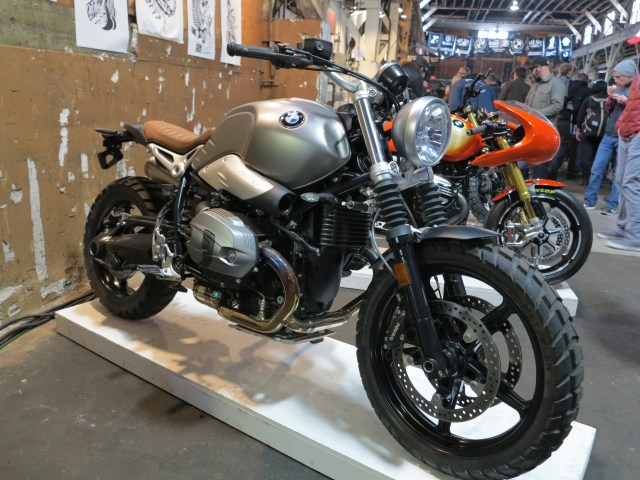
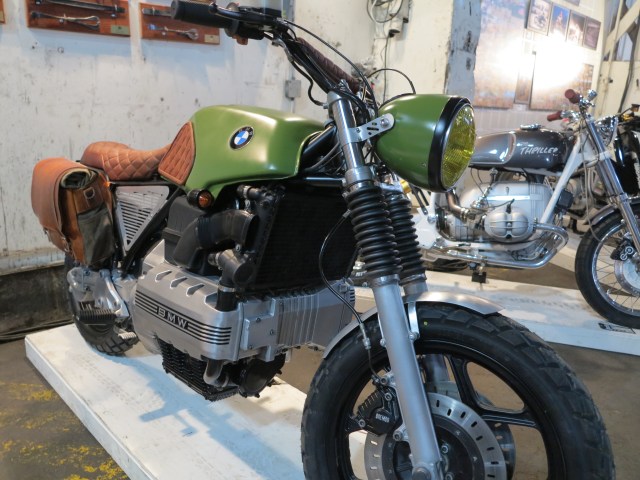
 Another view of this beauty.
 And then you could find the most outrageous creations, just like last year. Check this turbo-charged 1982 Harley Davidson beast. By the way, notice the crowds, I could see see some beards and some flannel shirts, but less of them together. I suppose we are past the peak of the flannel and bearded hipster movement.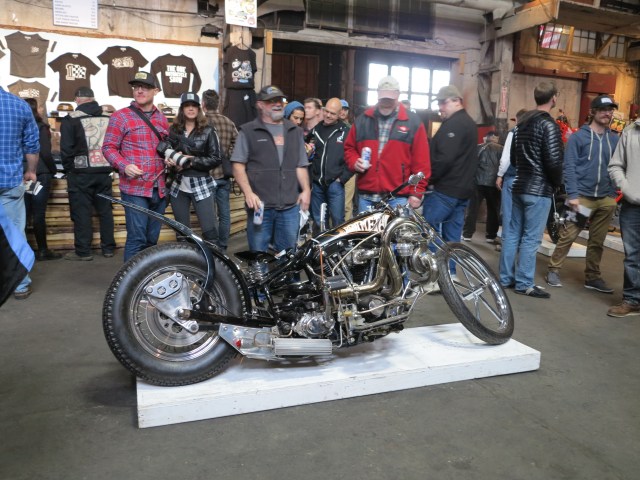

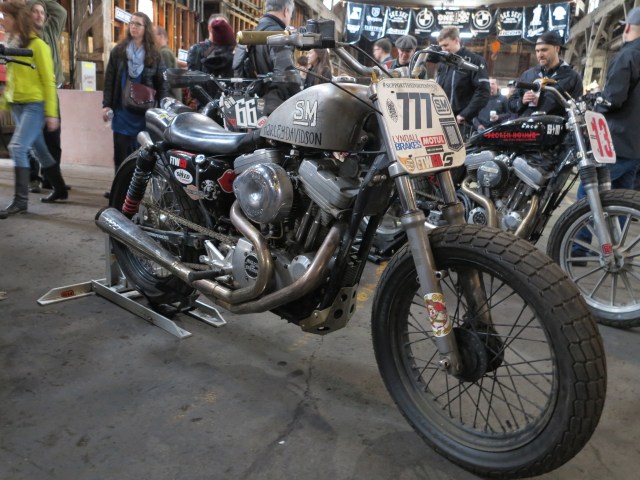
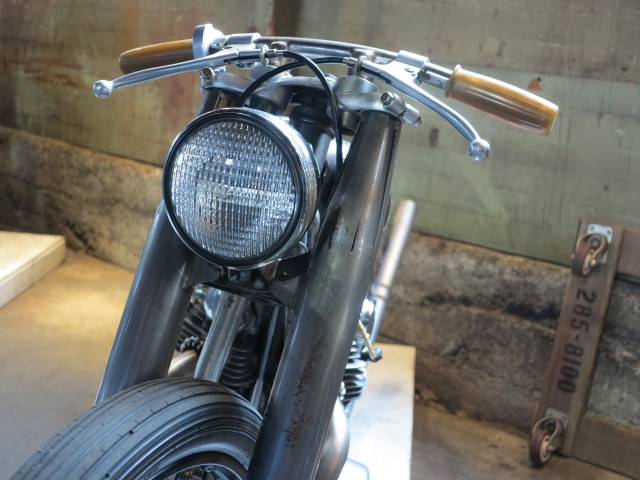
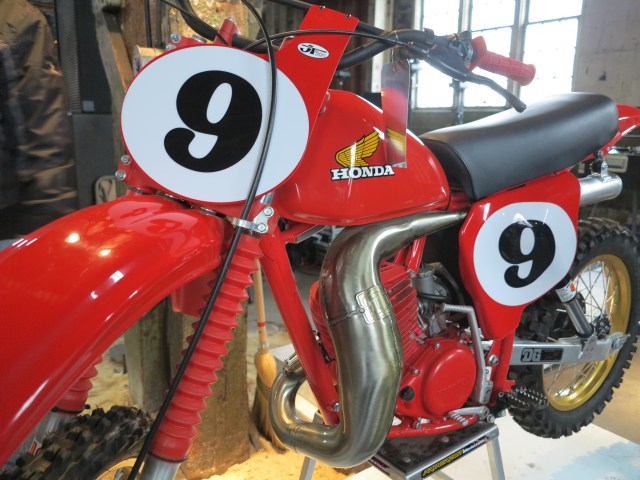 What about a 1965 Ducati 250 from before the L-twin motors.
 Motorcycles having this old building as a backdrop, a perfect match.
 Whatever this building was, this new temporary use seems perfect.
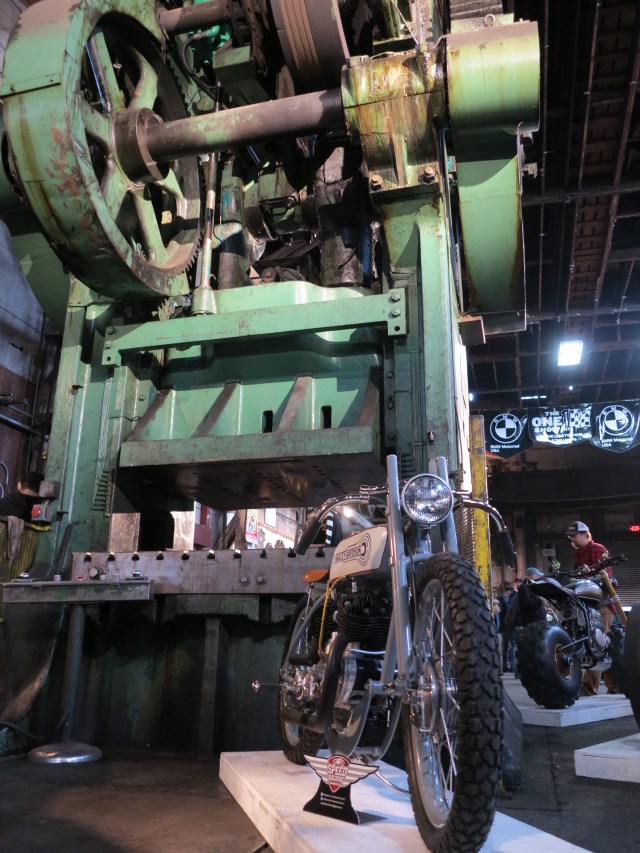 Good crowds too. I arrived Saturday, at about 11am, and got in right away – no lines. By the time I left, about an hour later or so, there was a line going around the block.
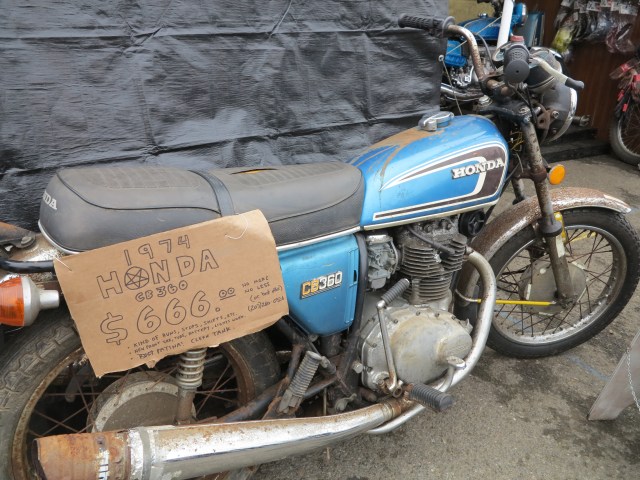
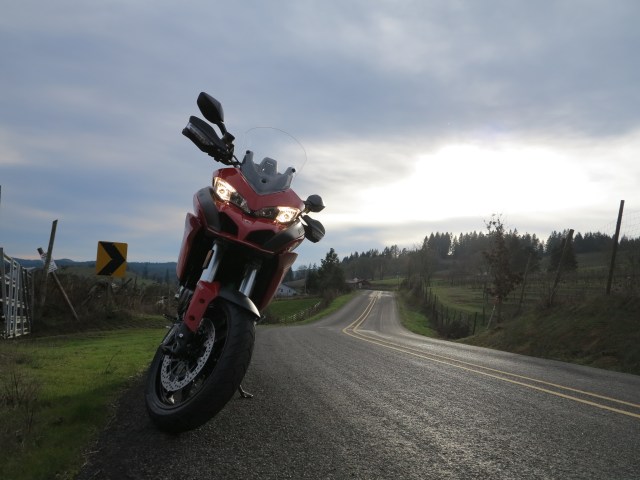
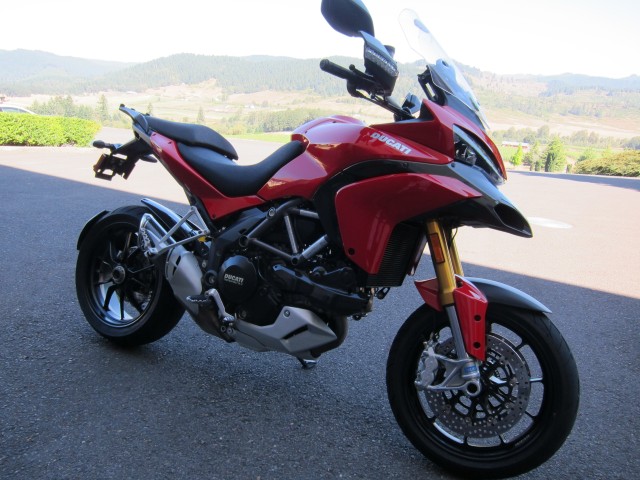


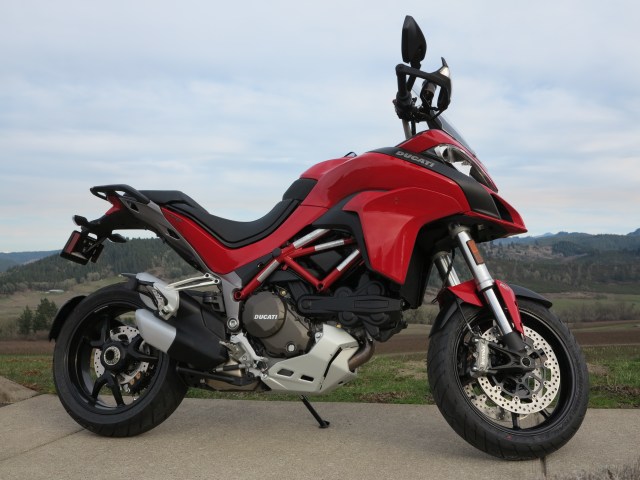
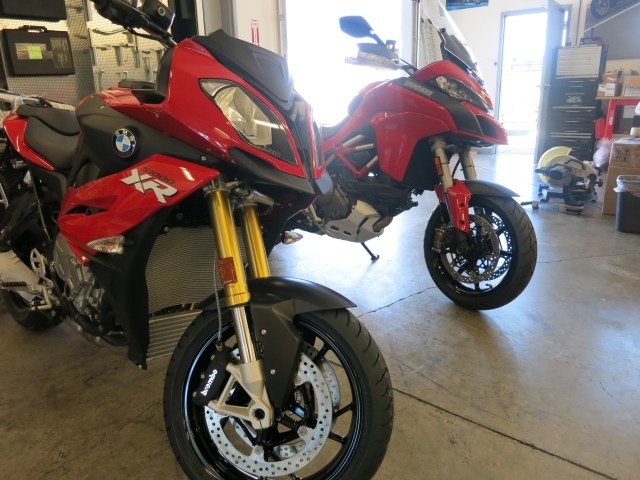

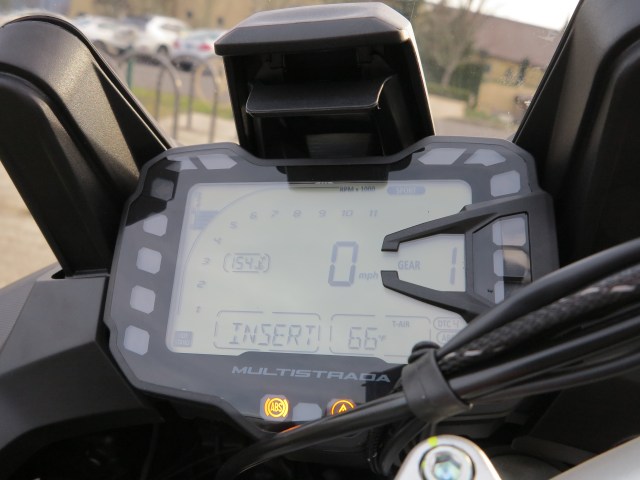
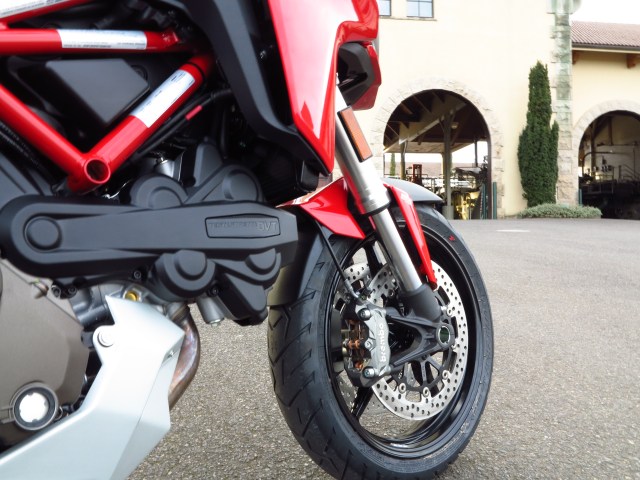


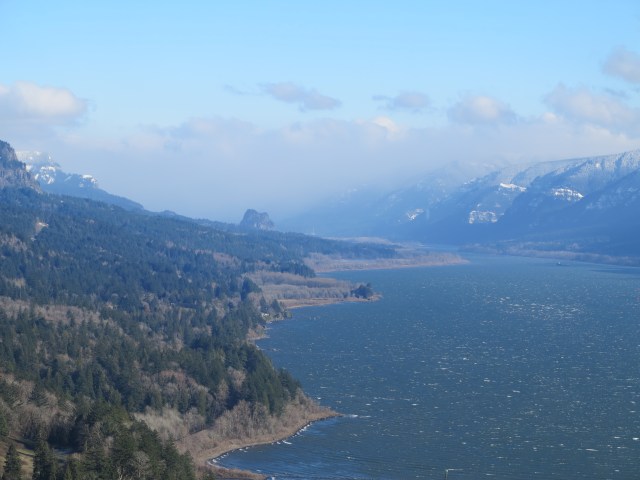

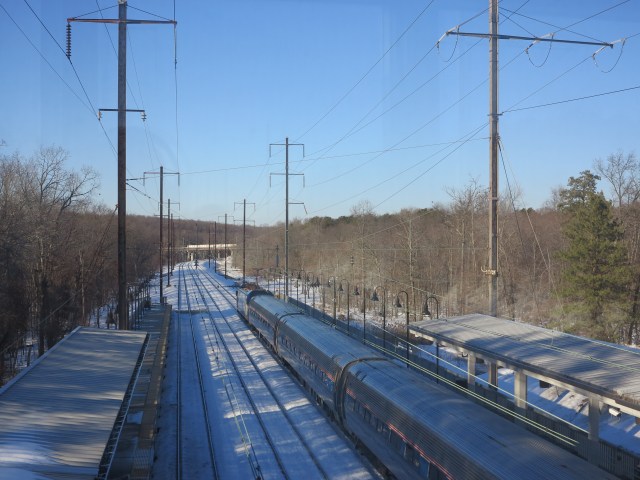

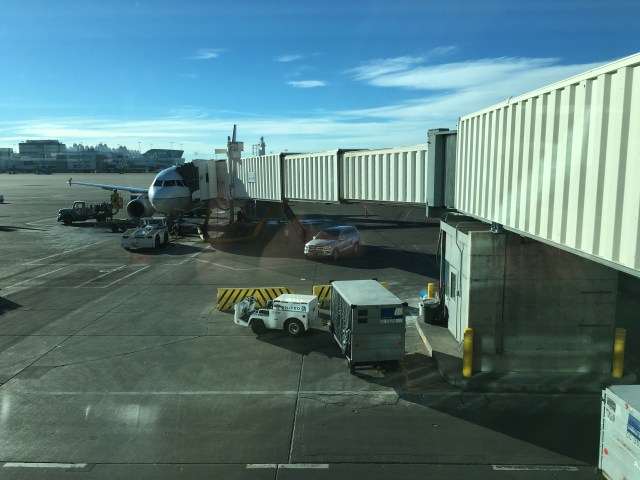





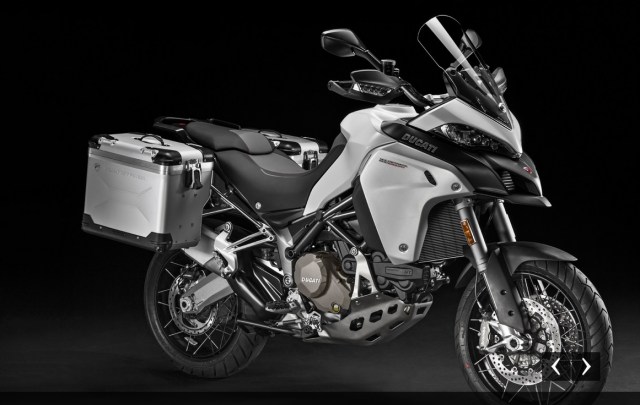
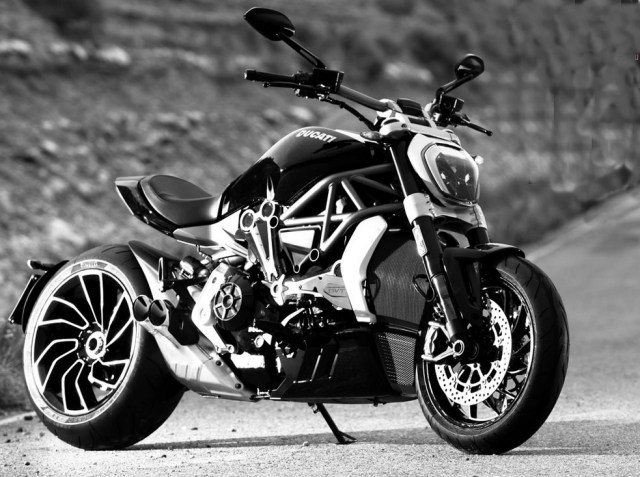

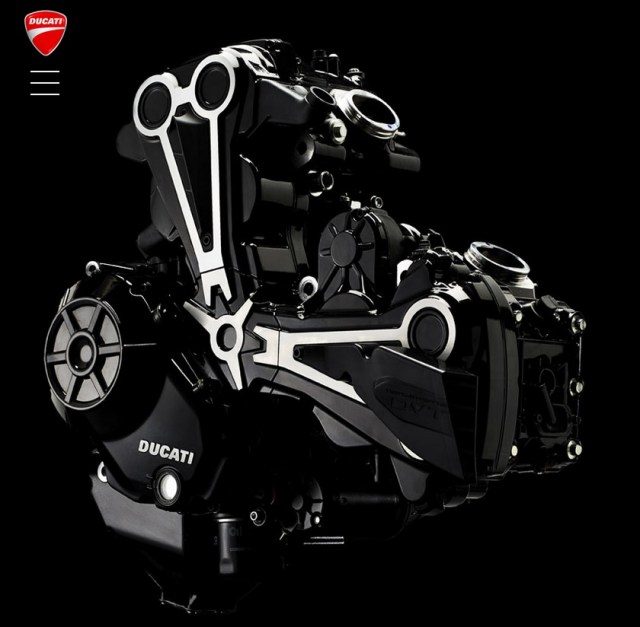
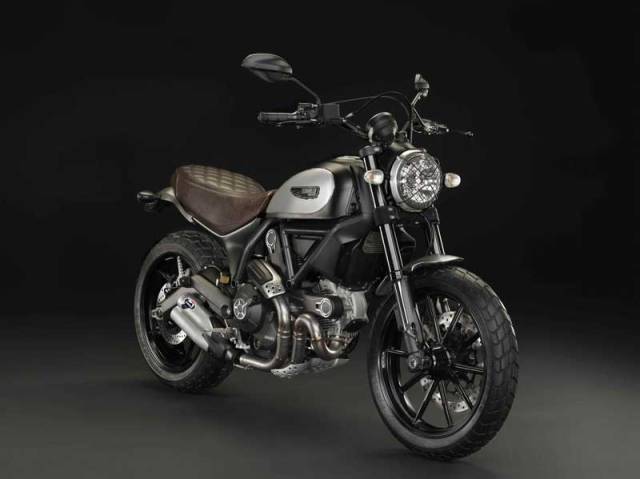
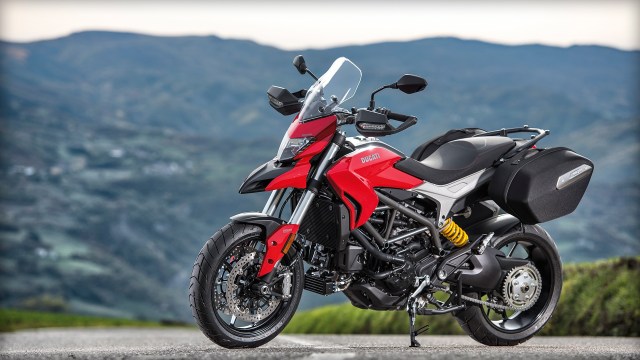
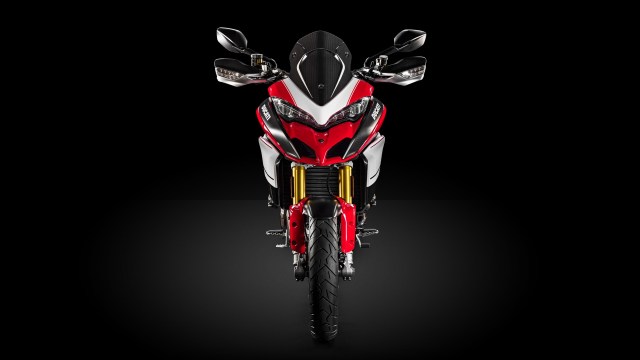
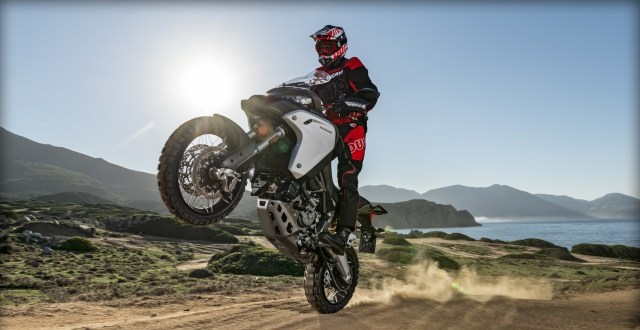
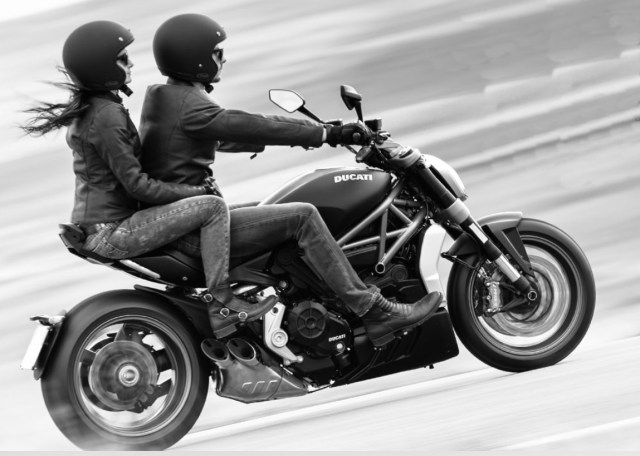


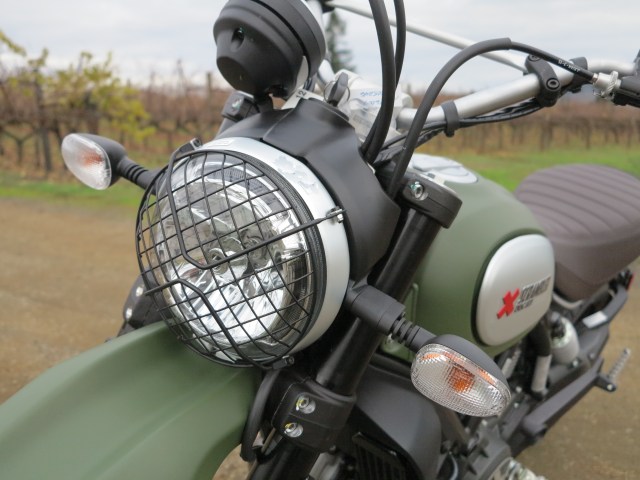

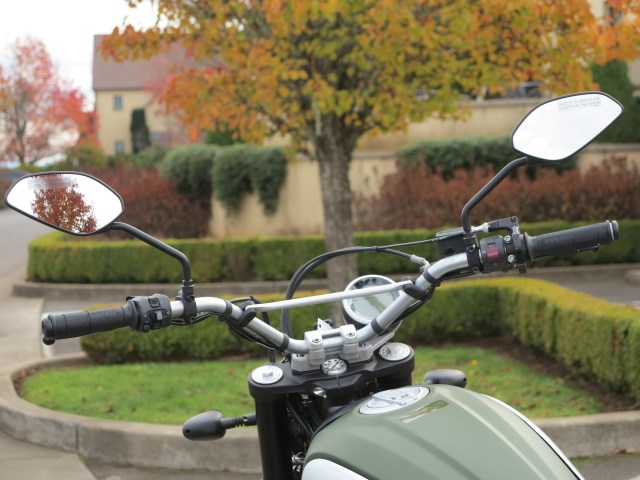
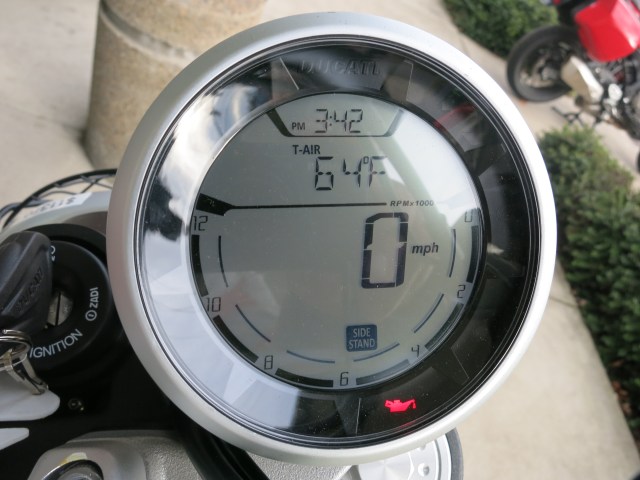


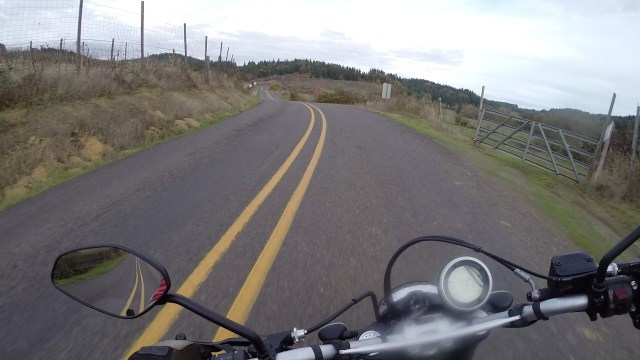

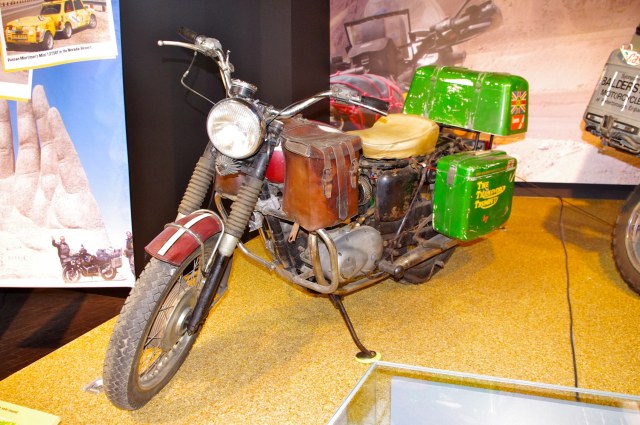
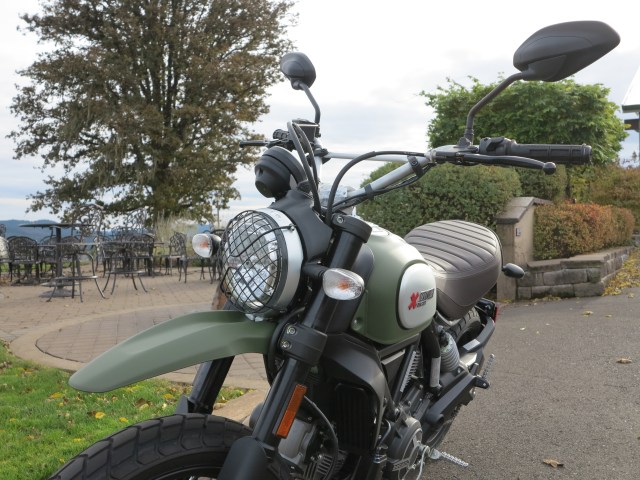
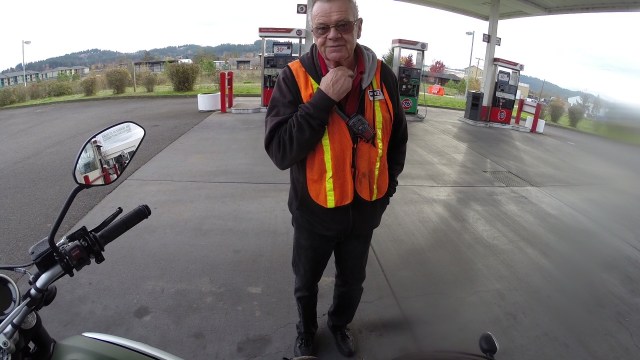

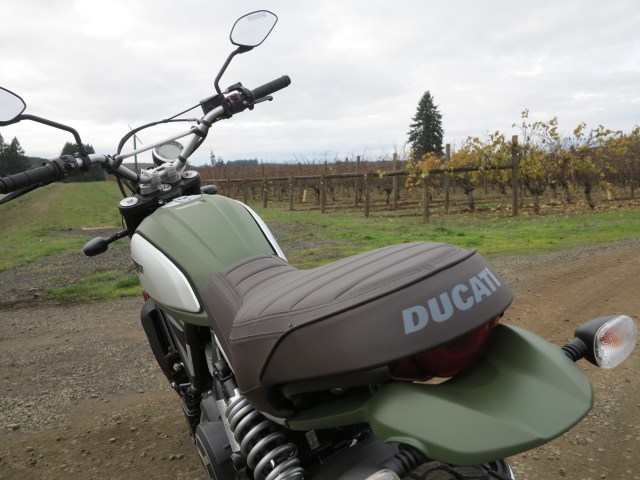


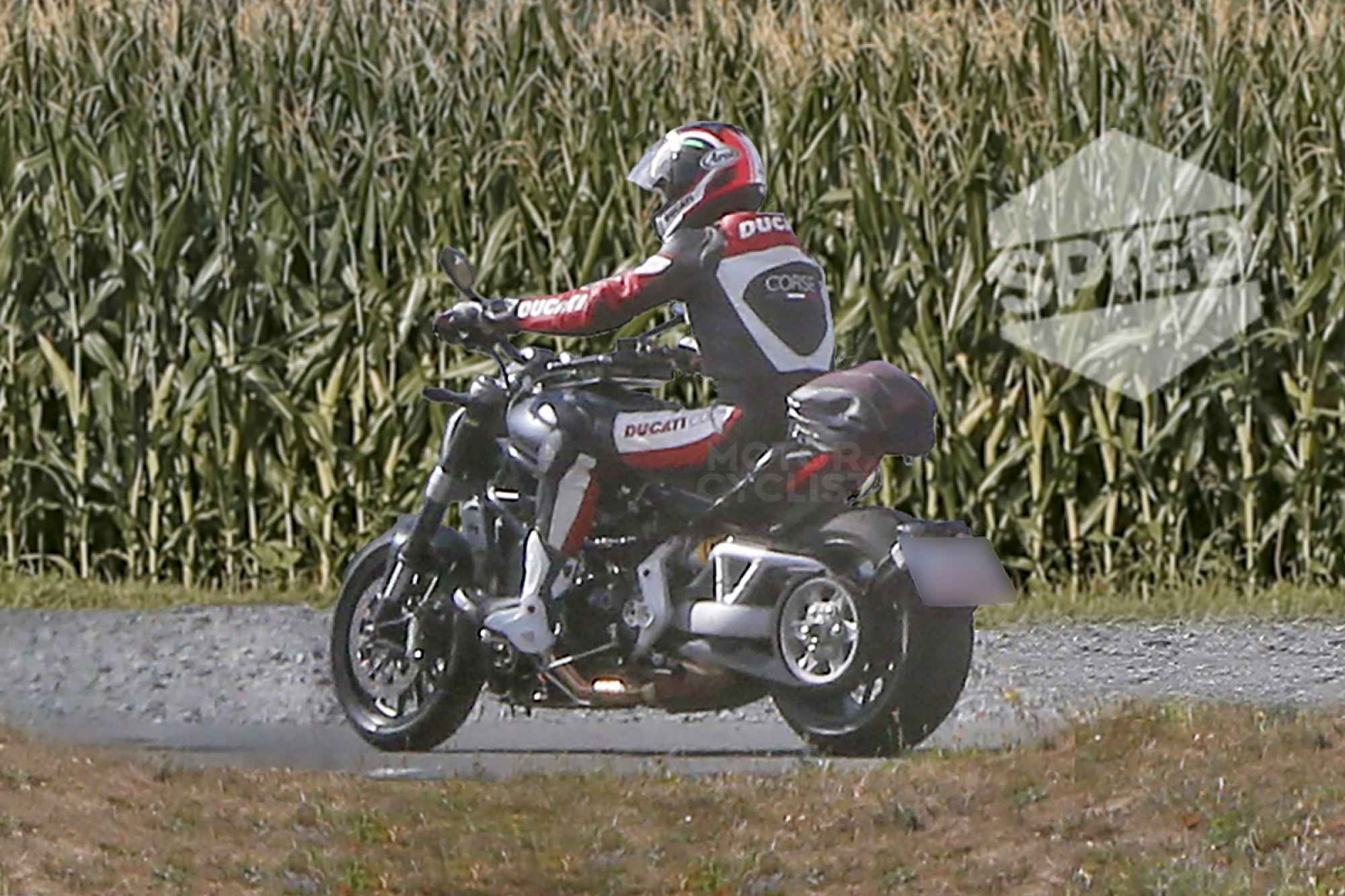


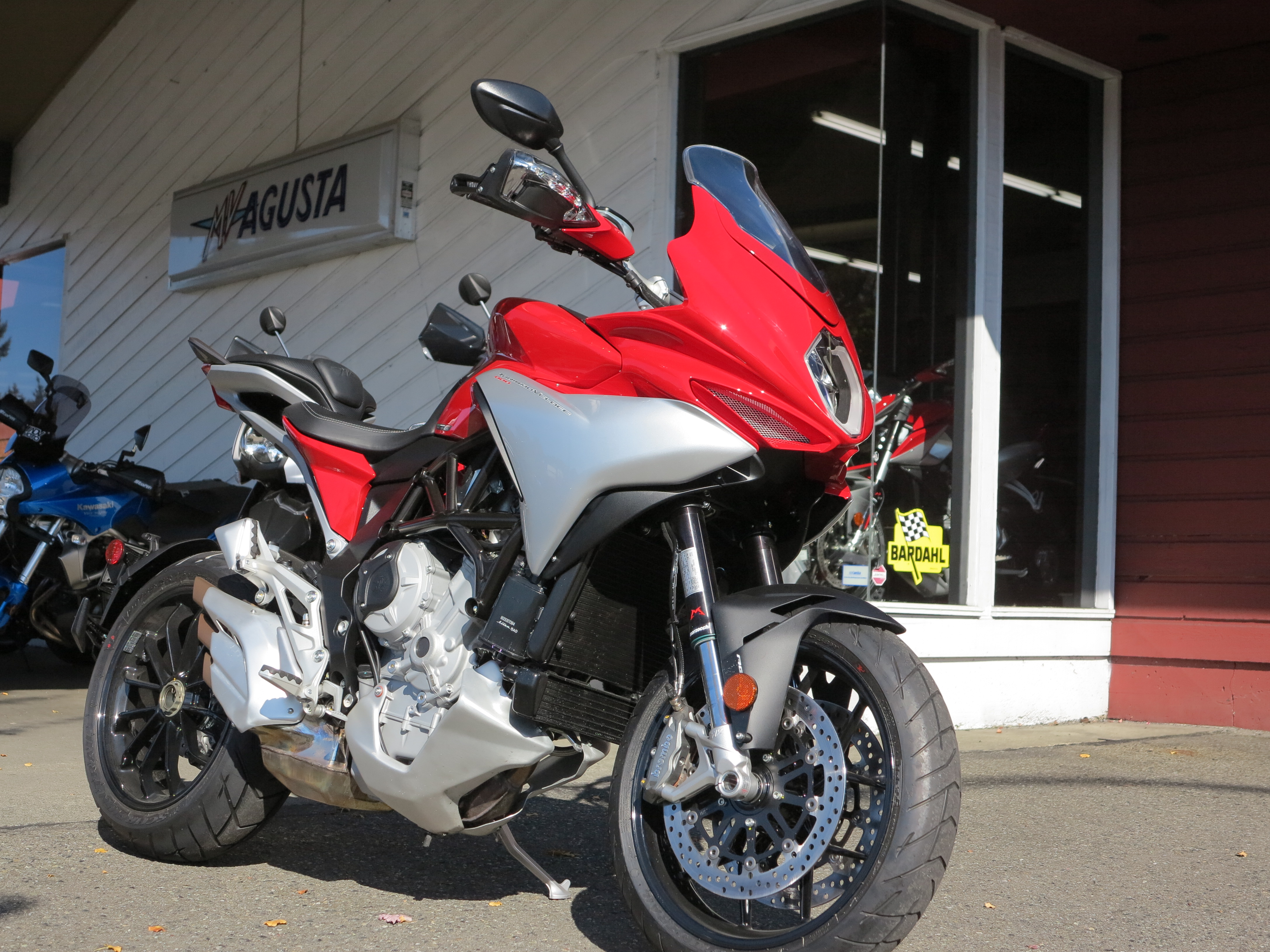


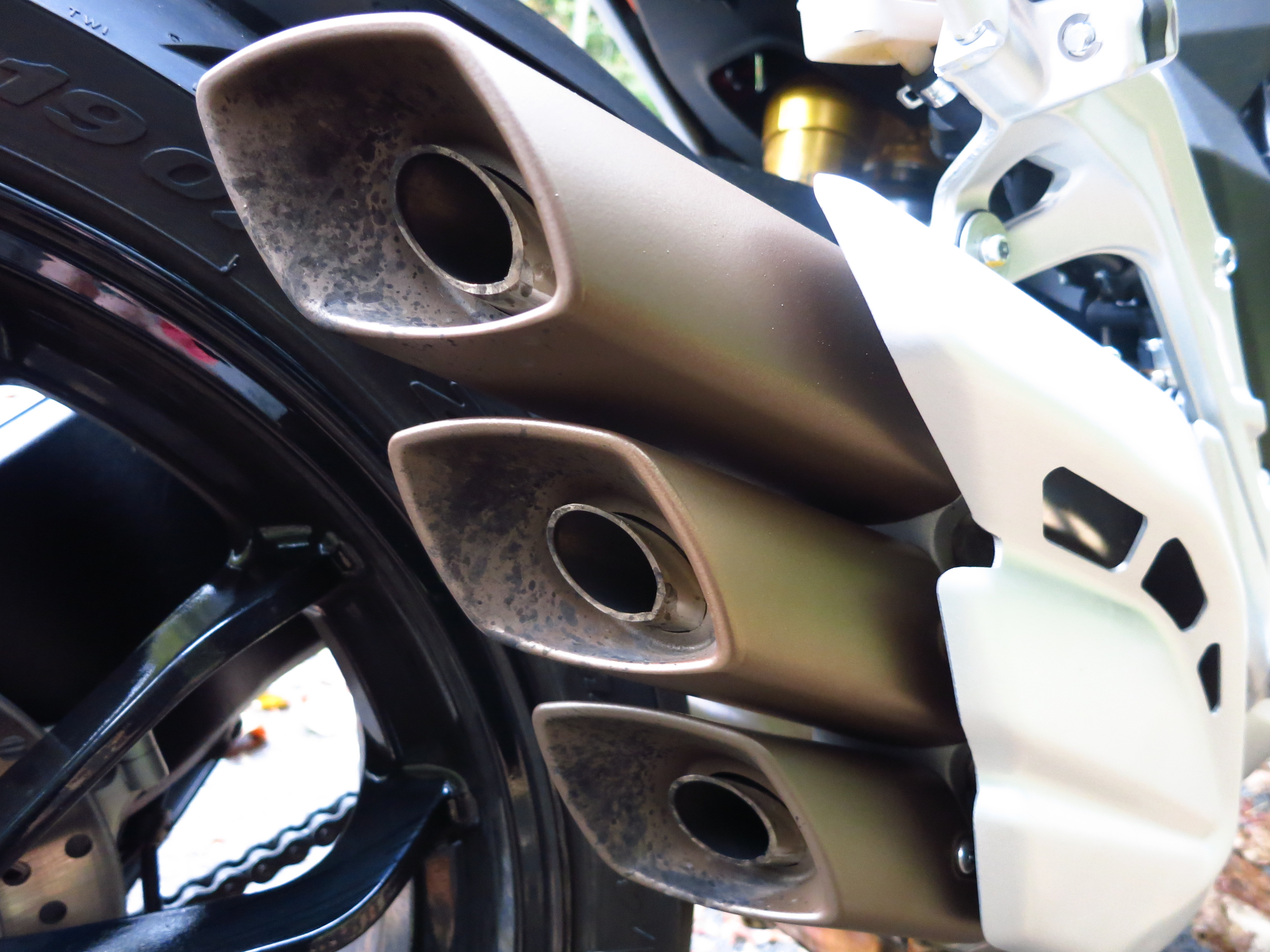
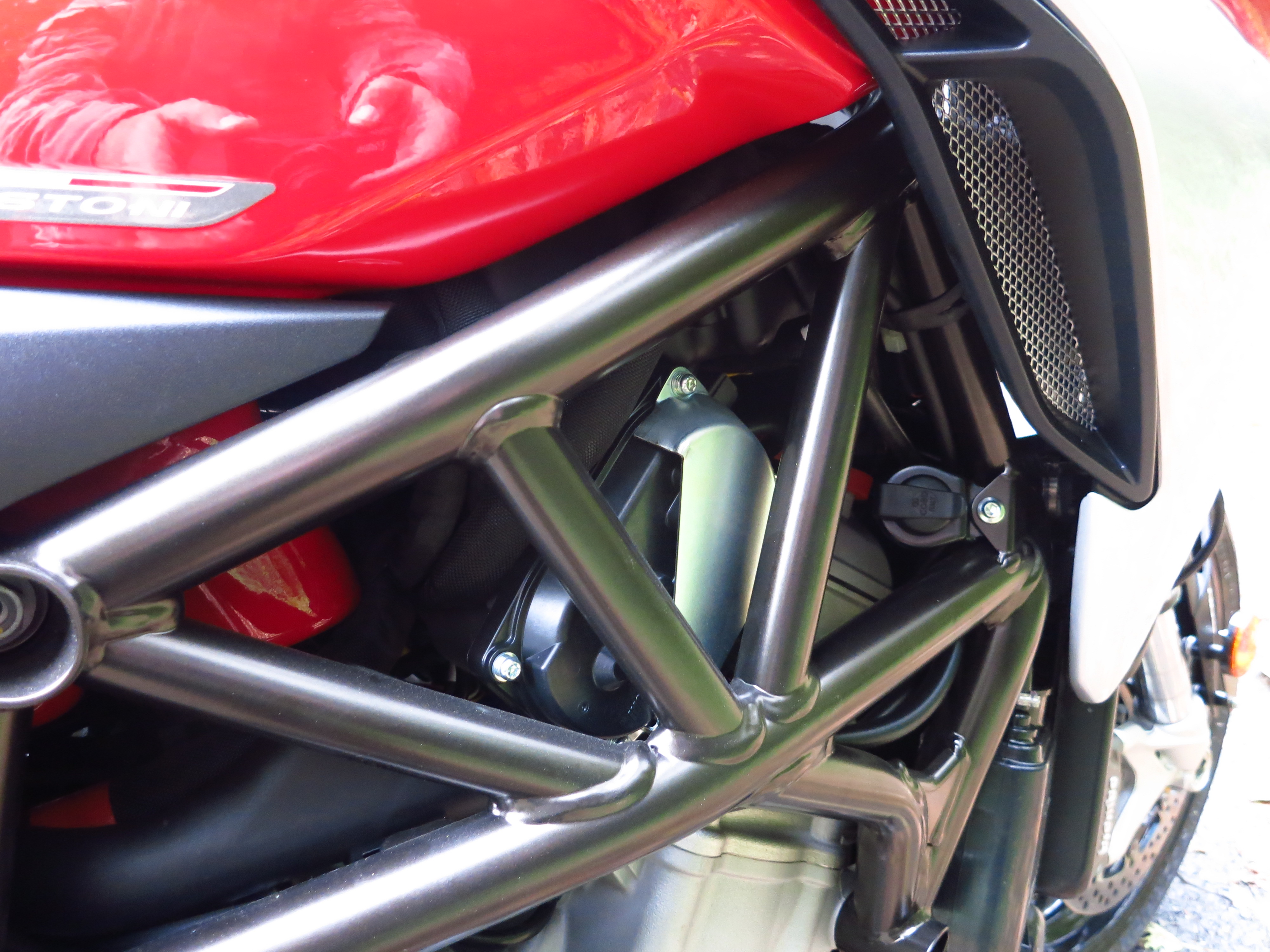


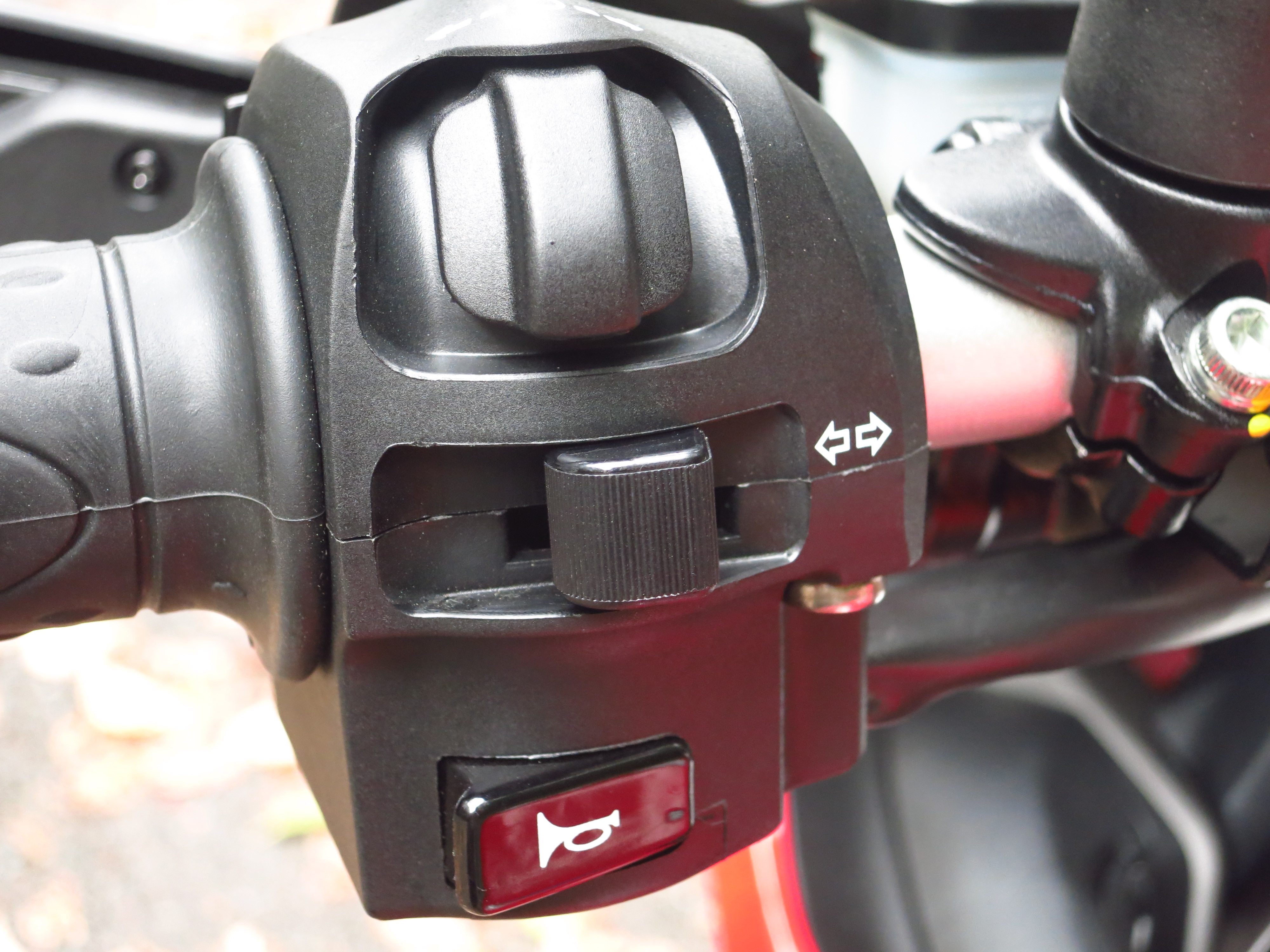


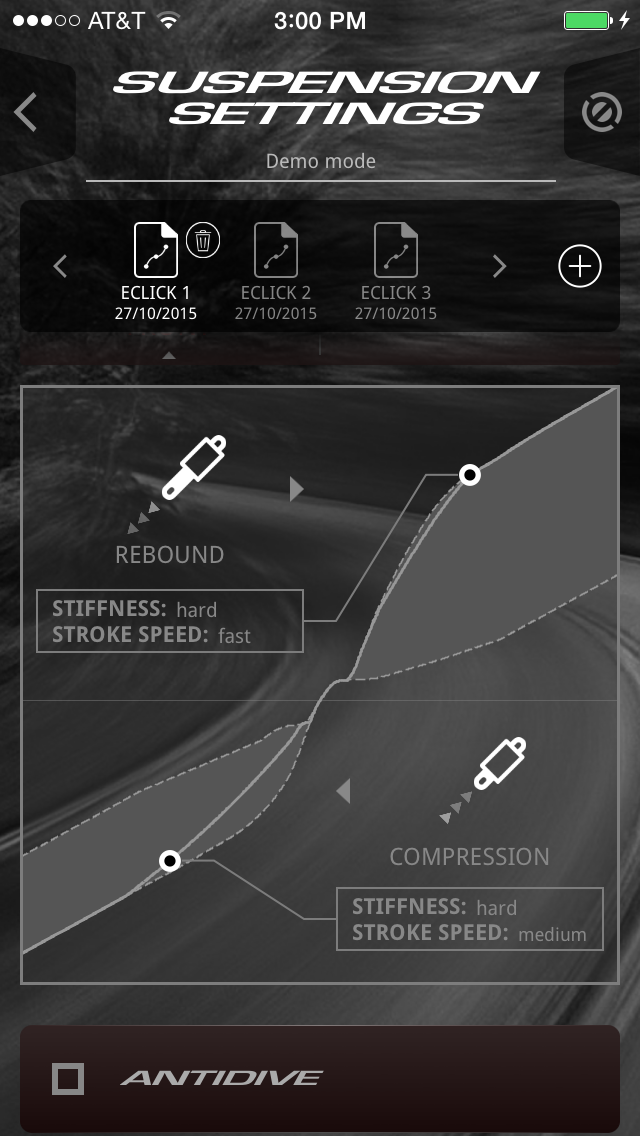
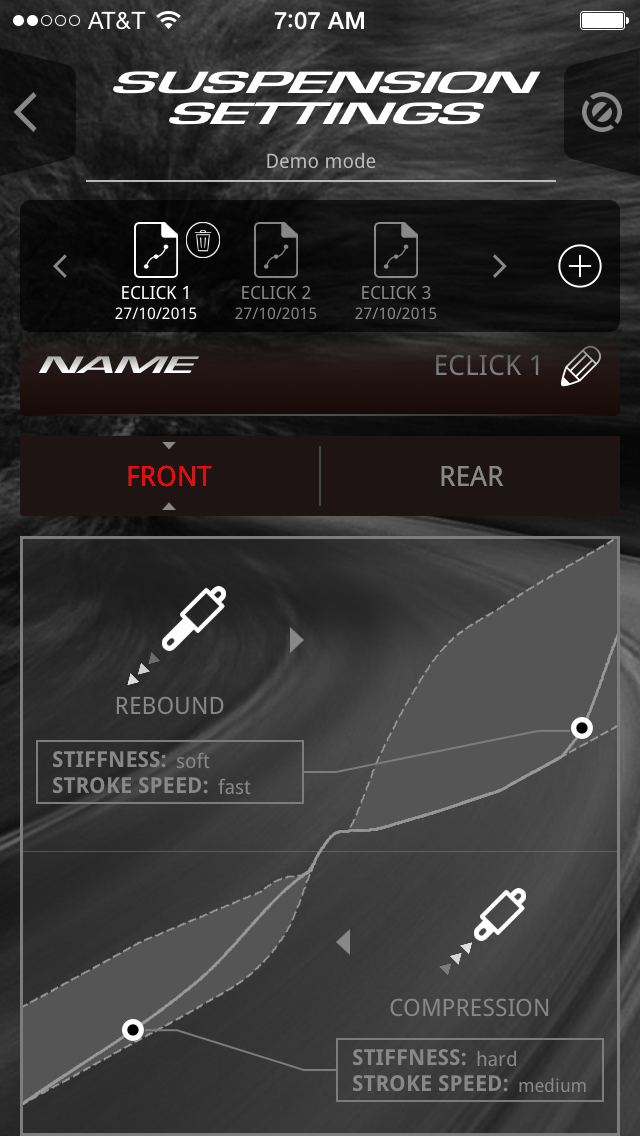

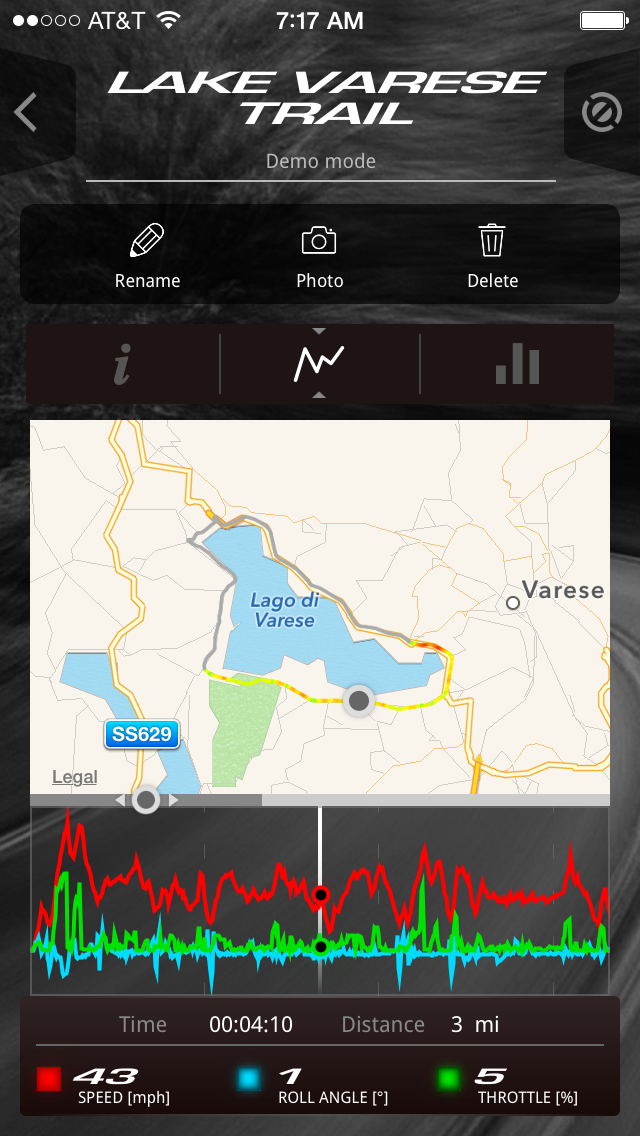


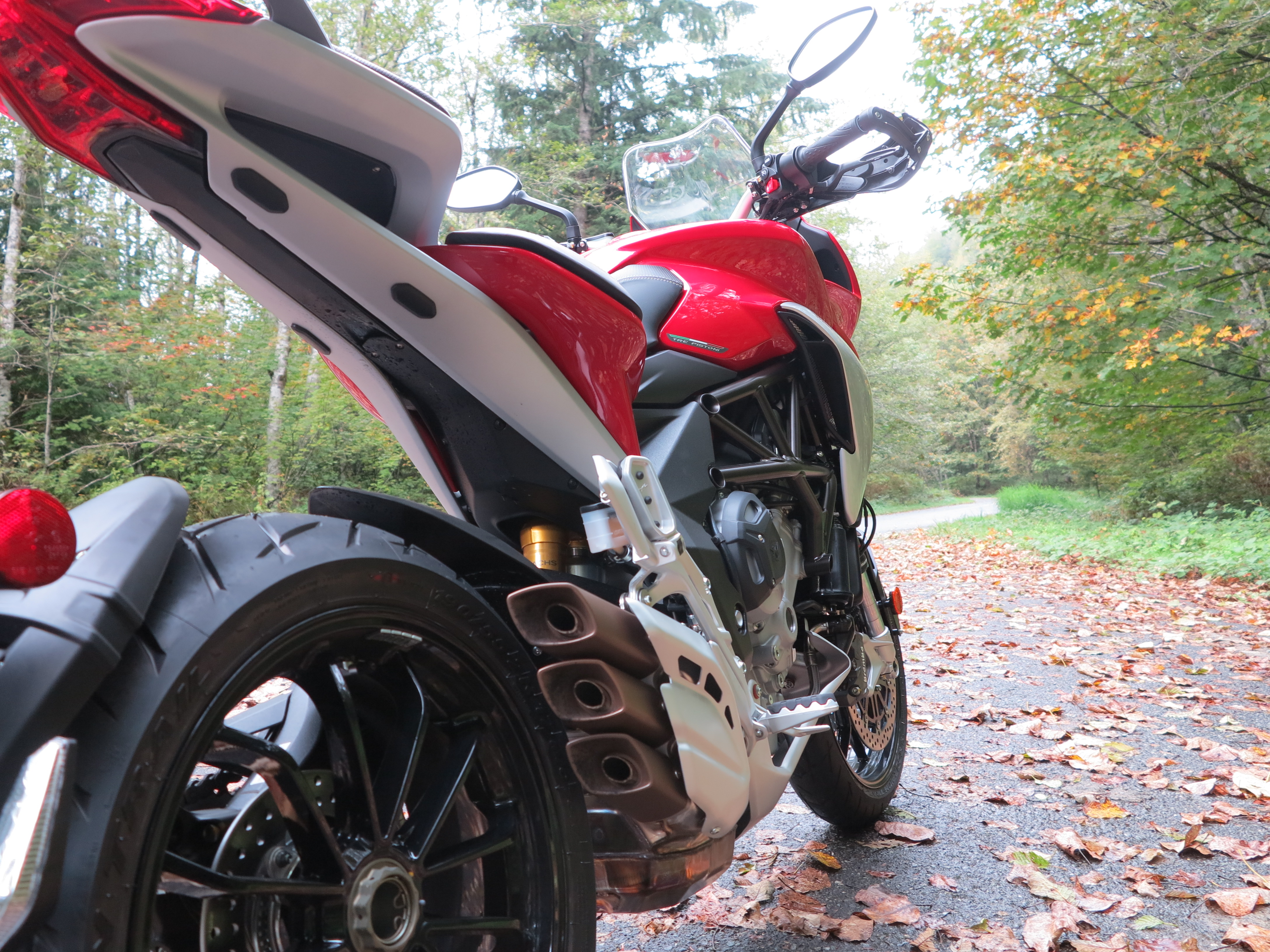


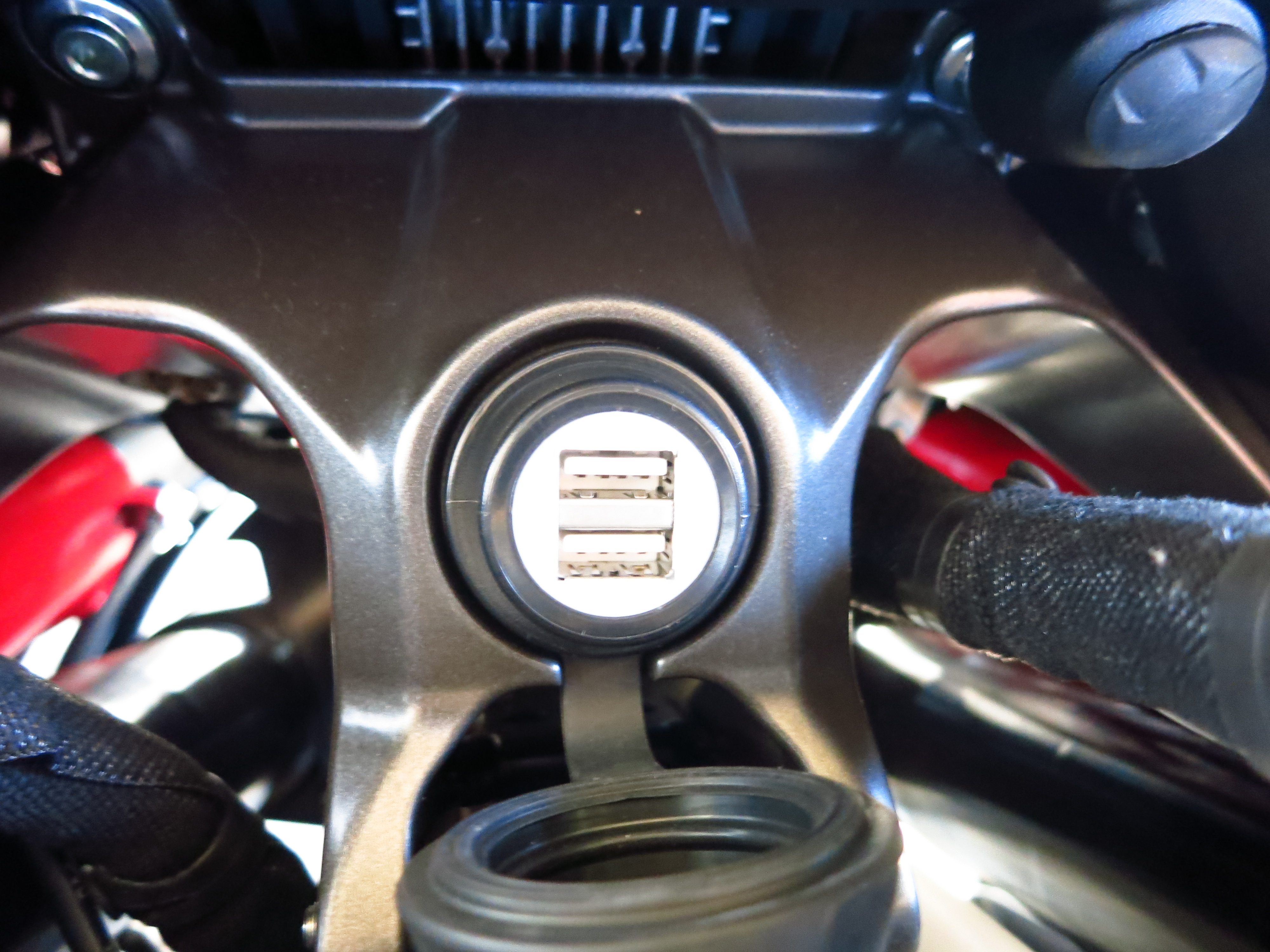


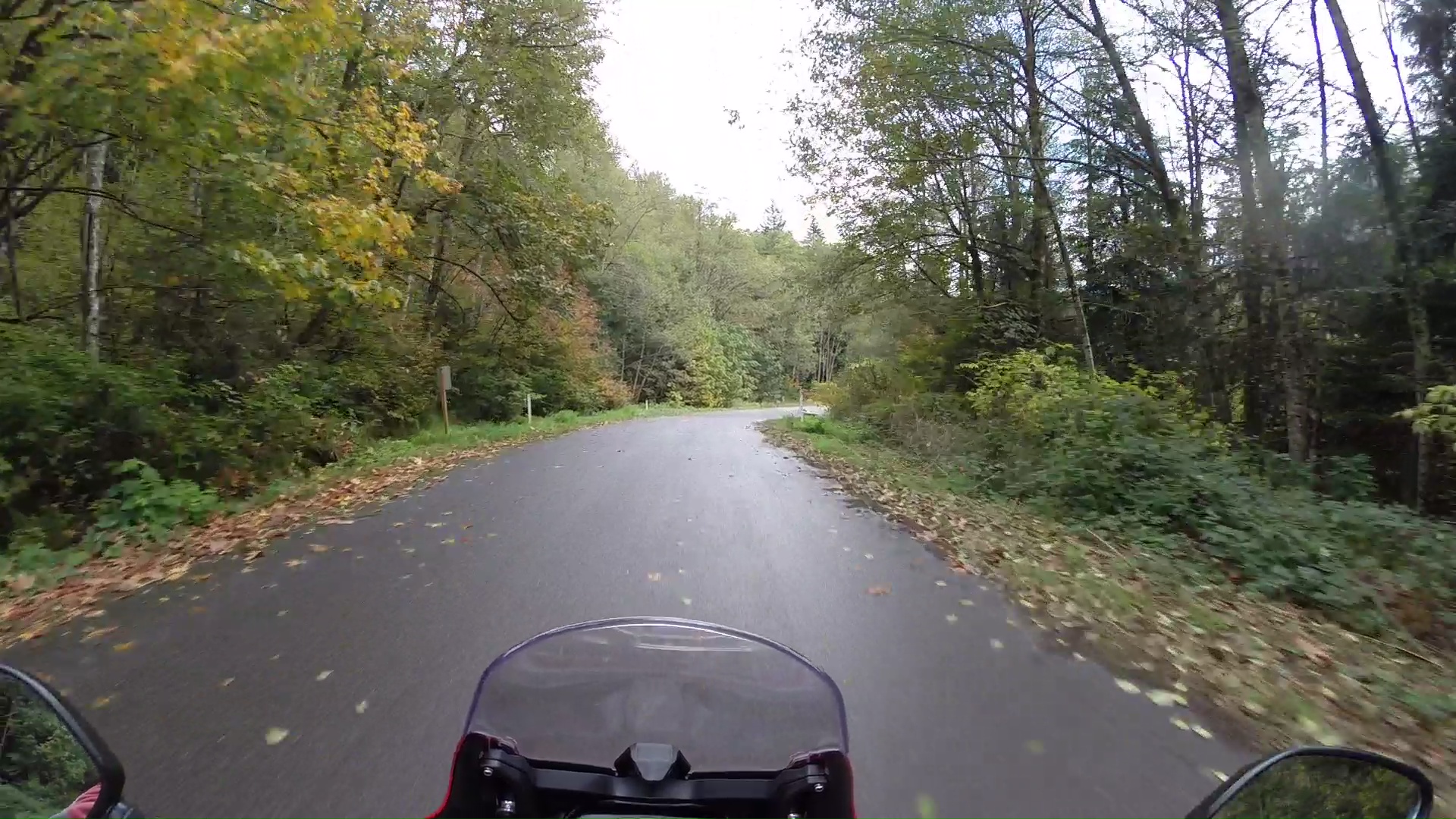

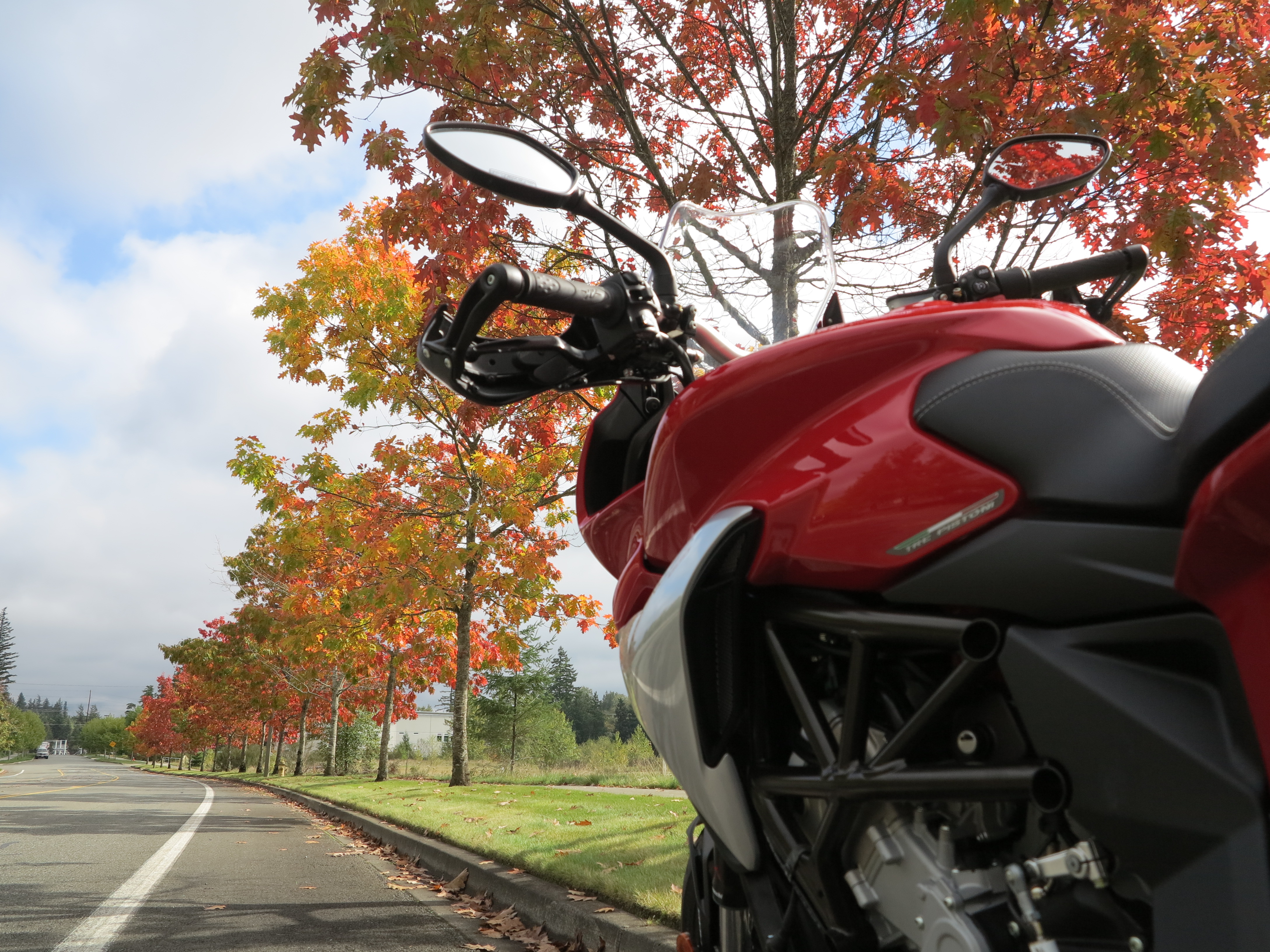
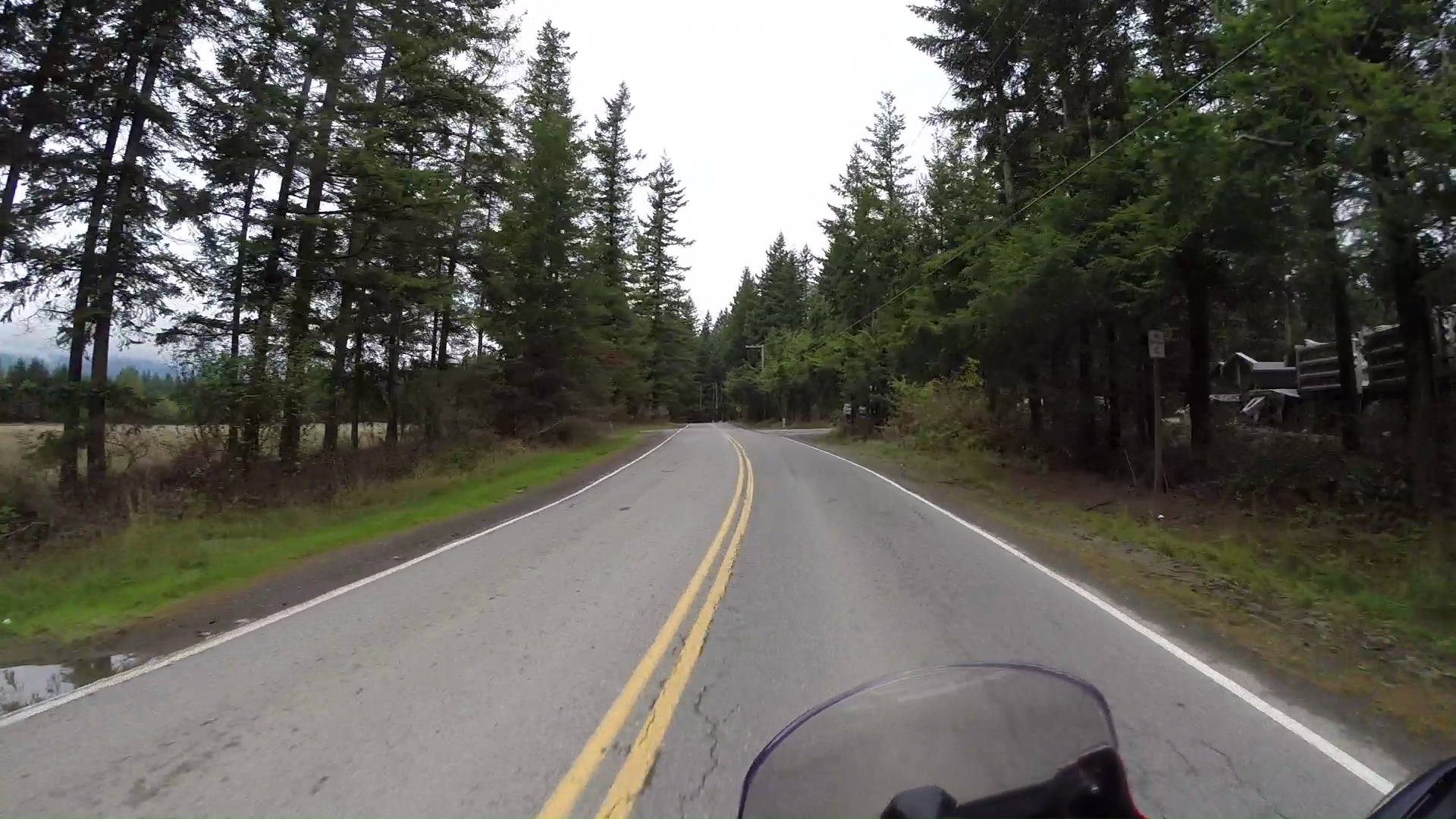
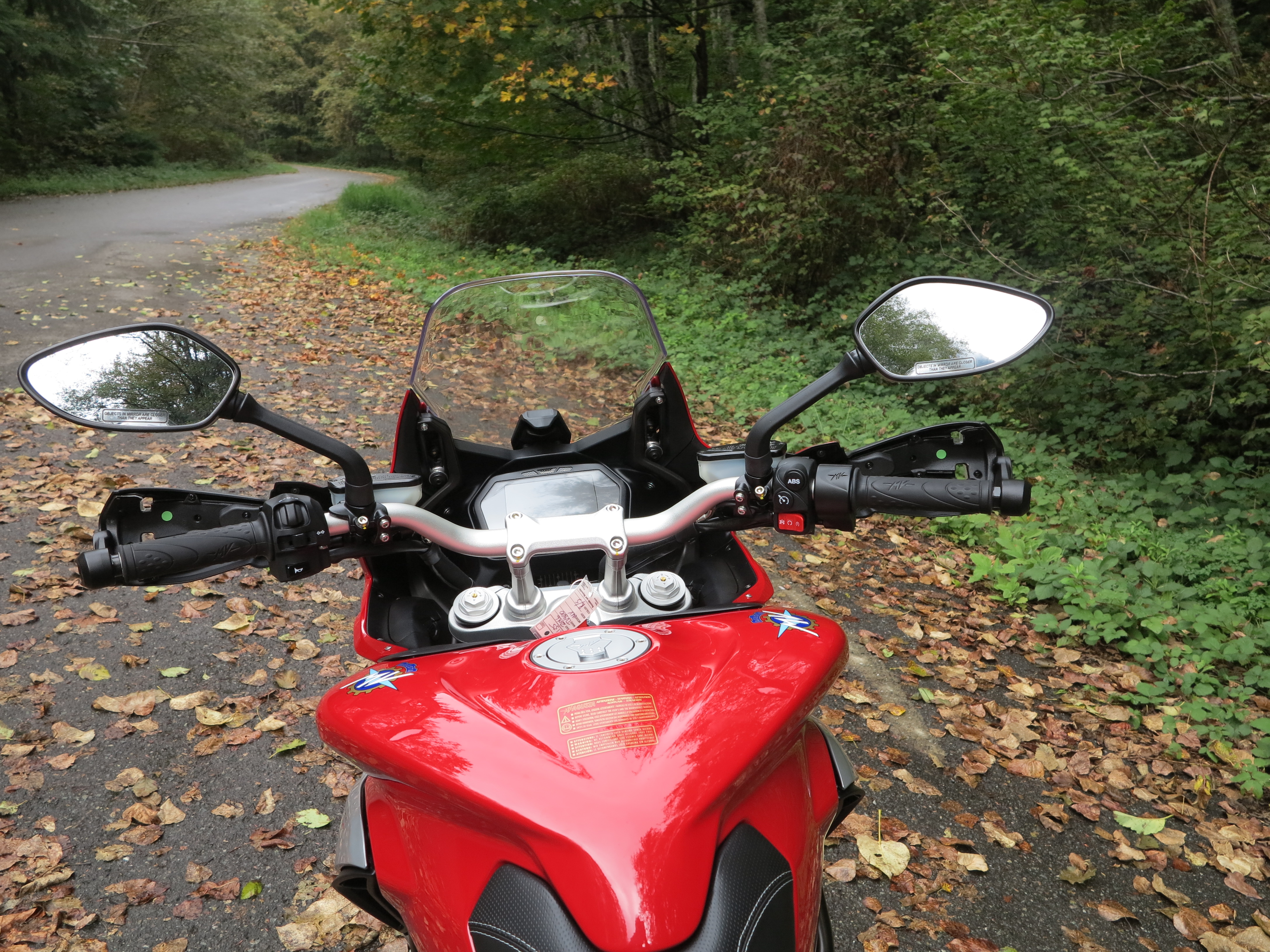

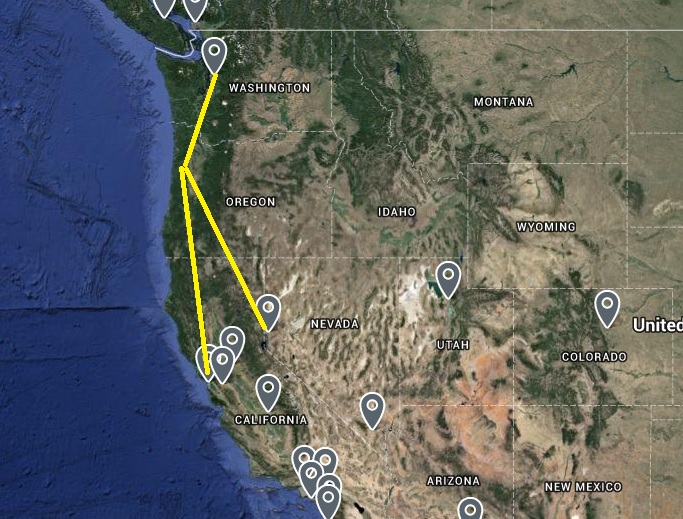
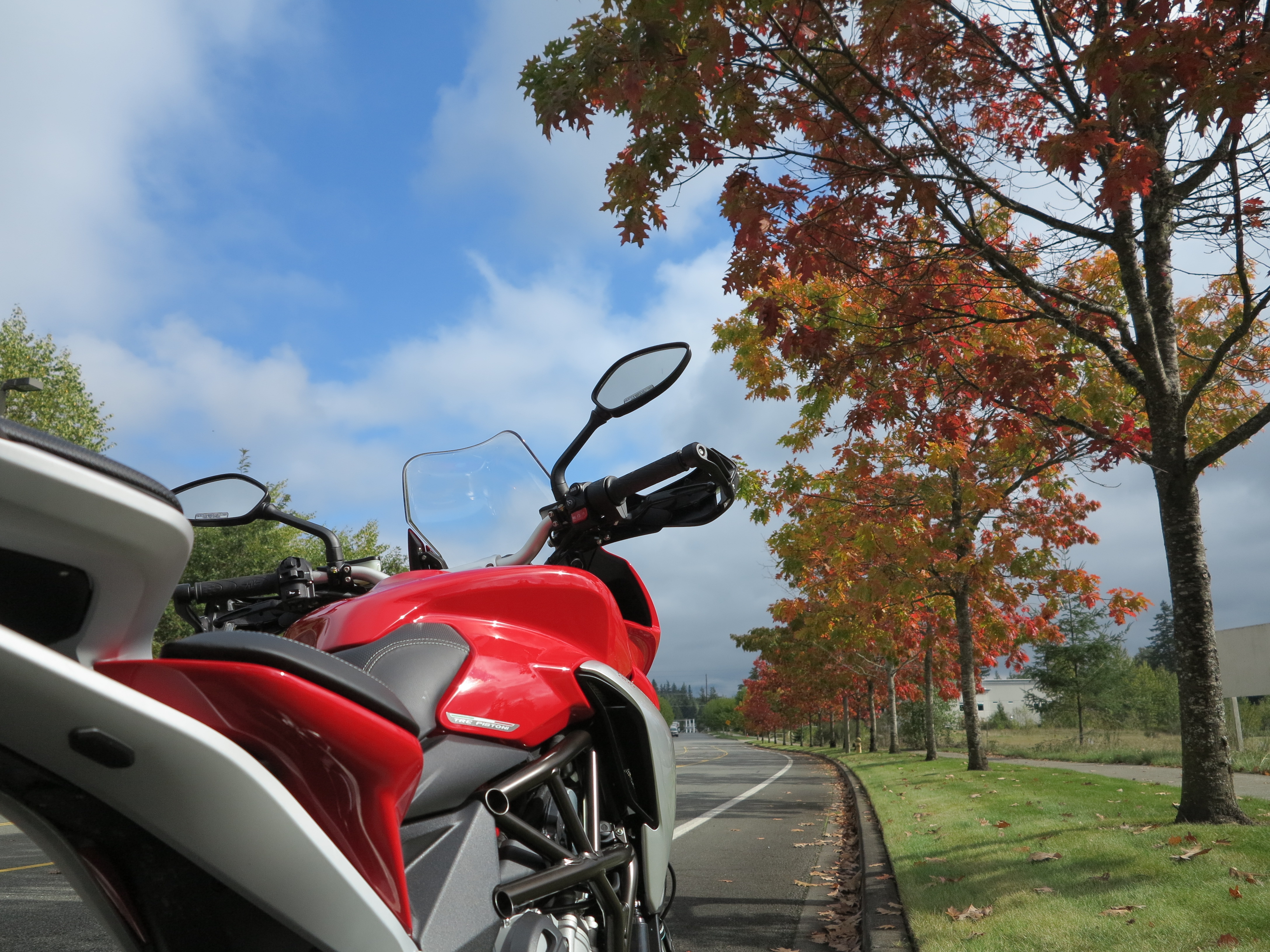

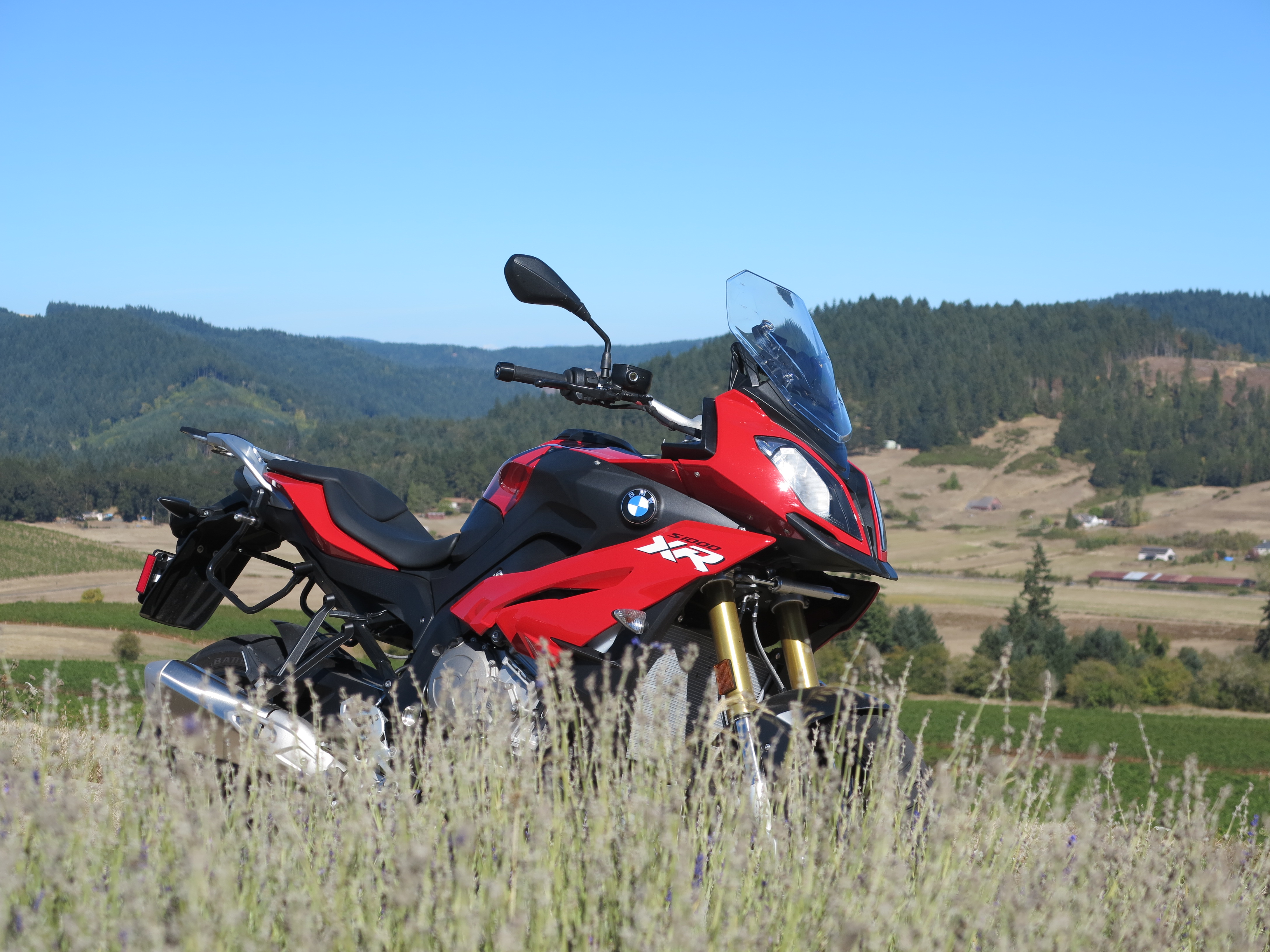
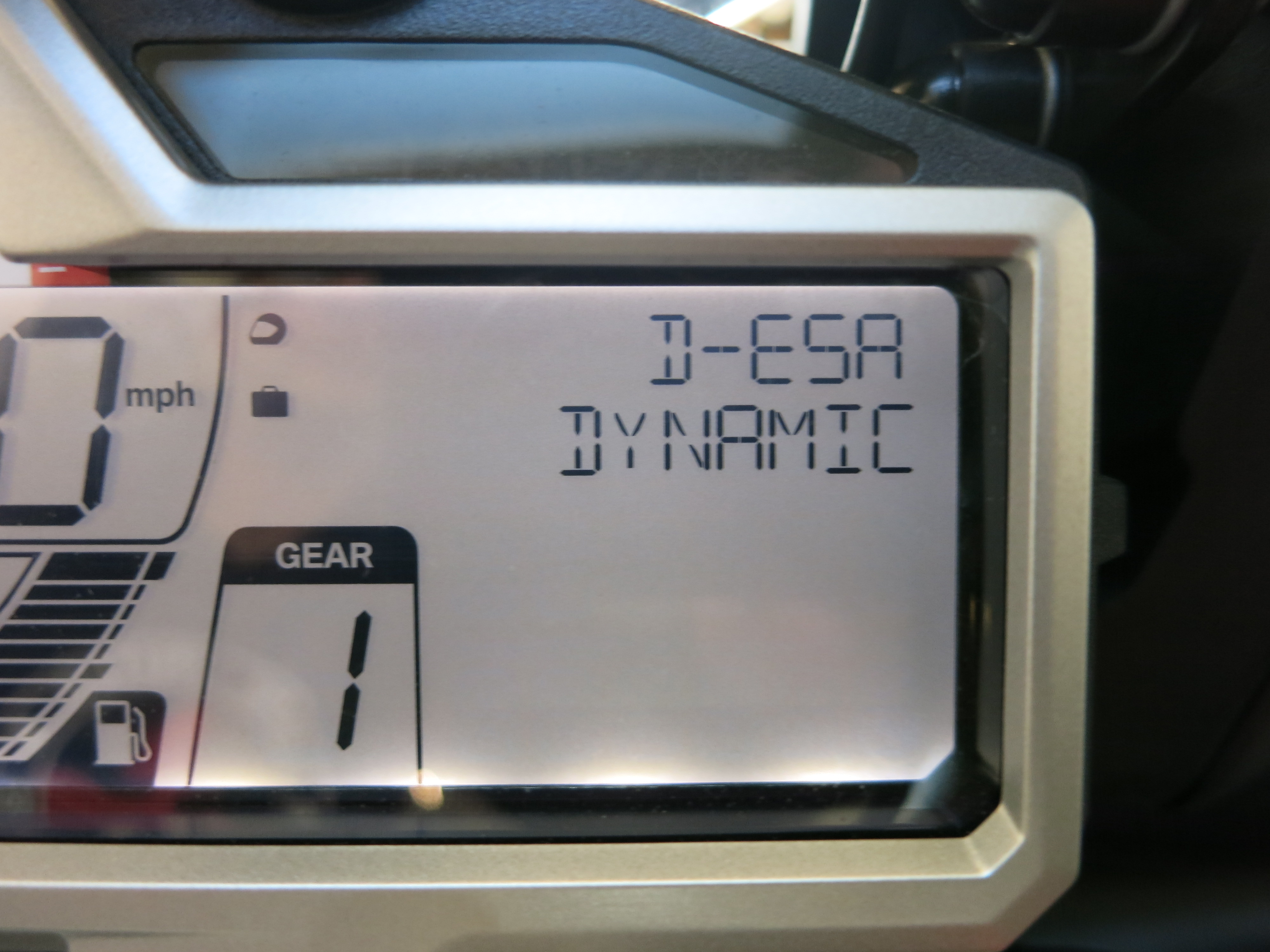
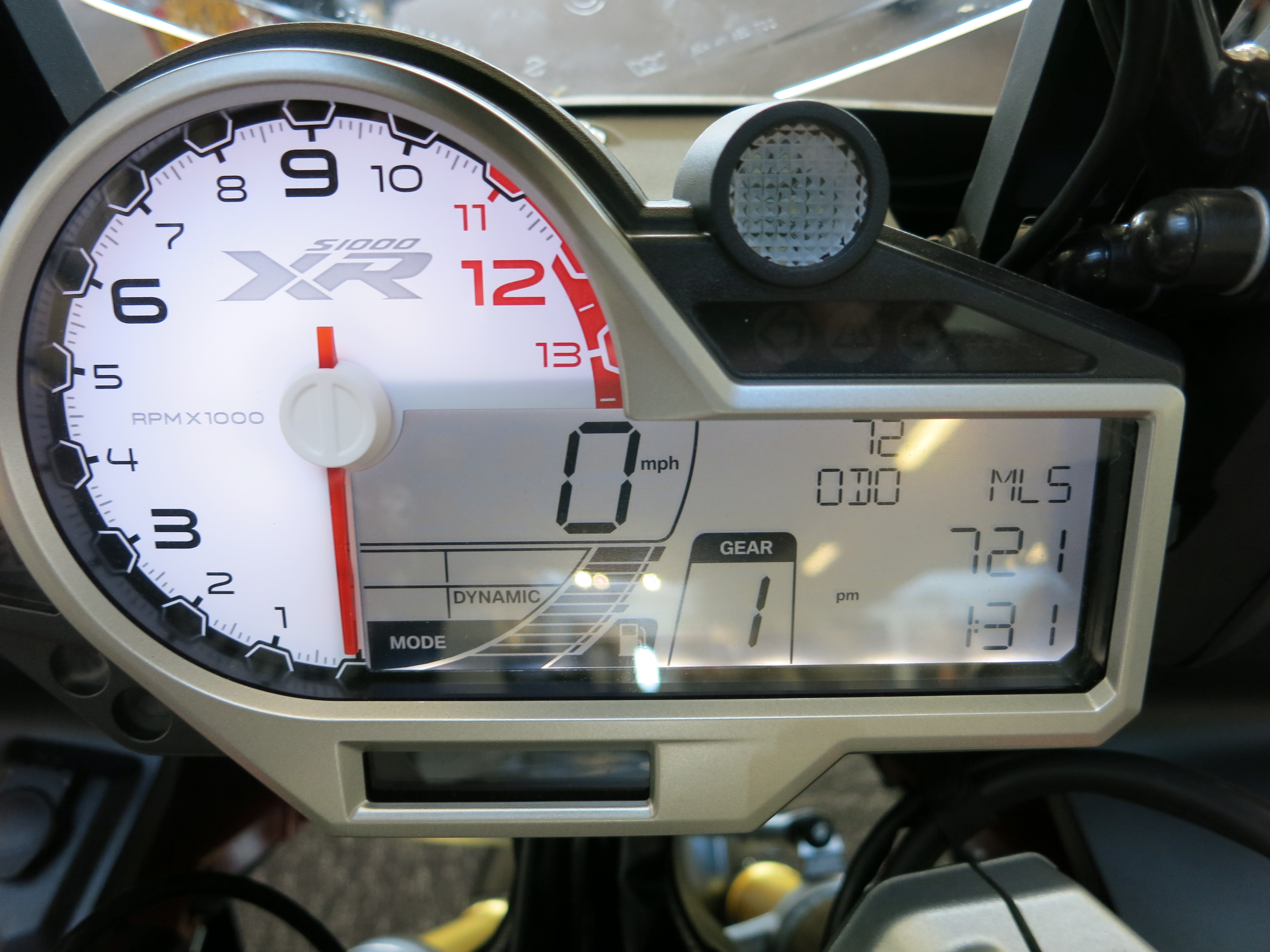
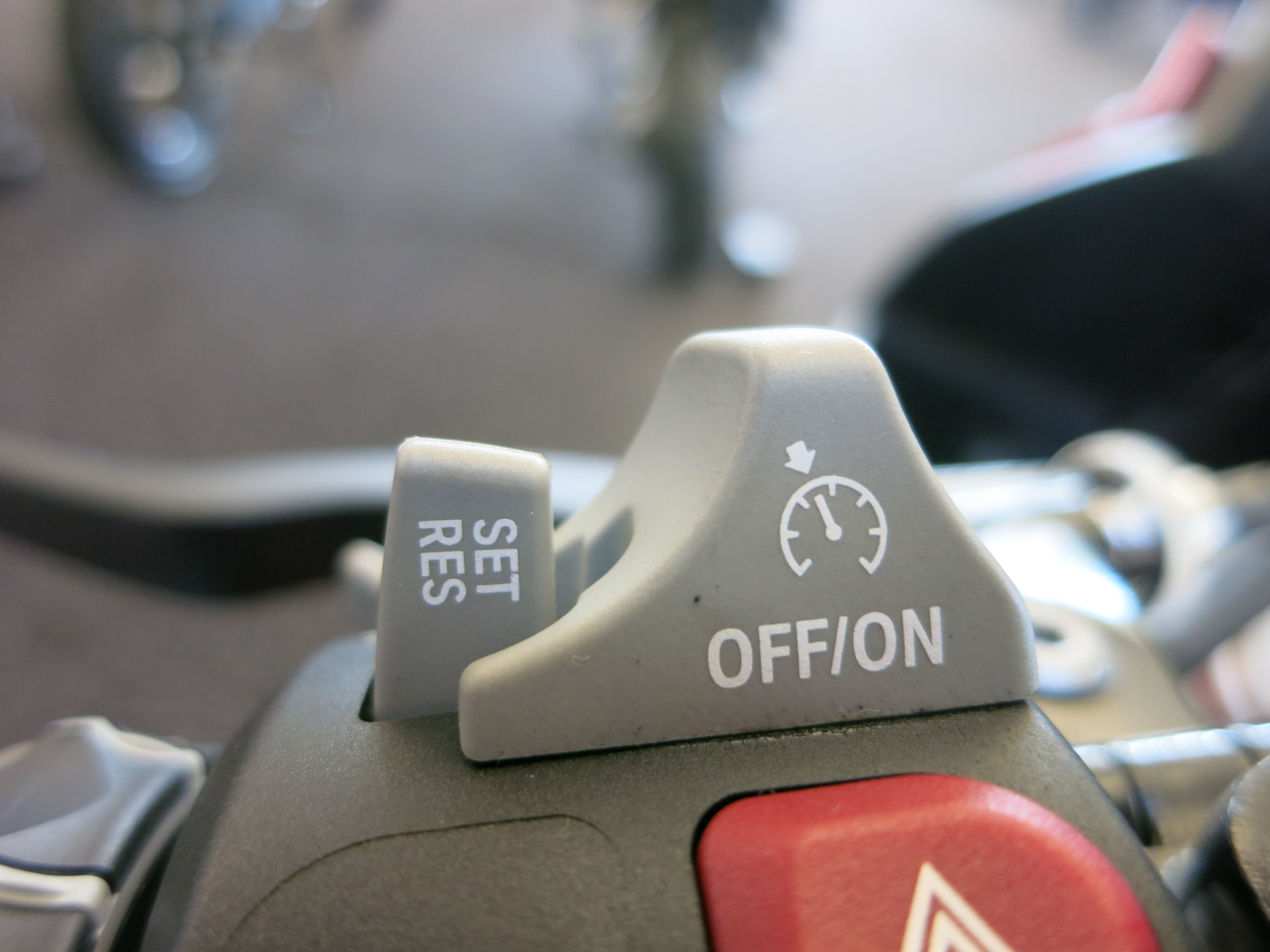
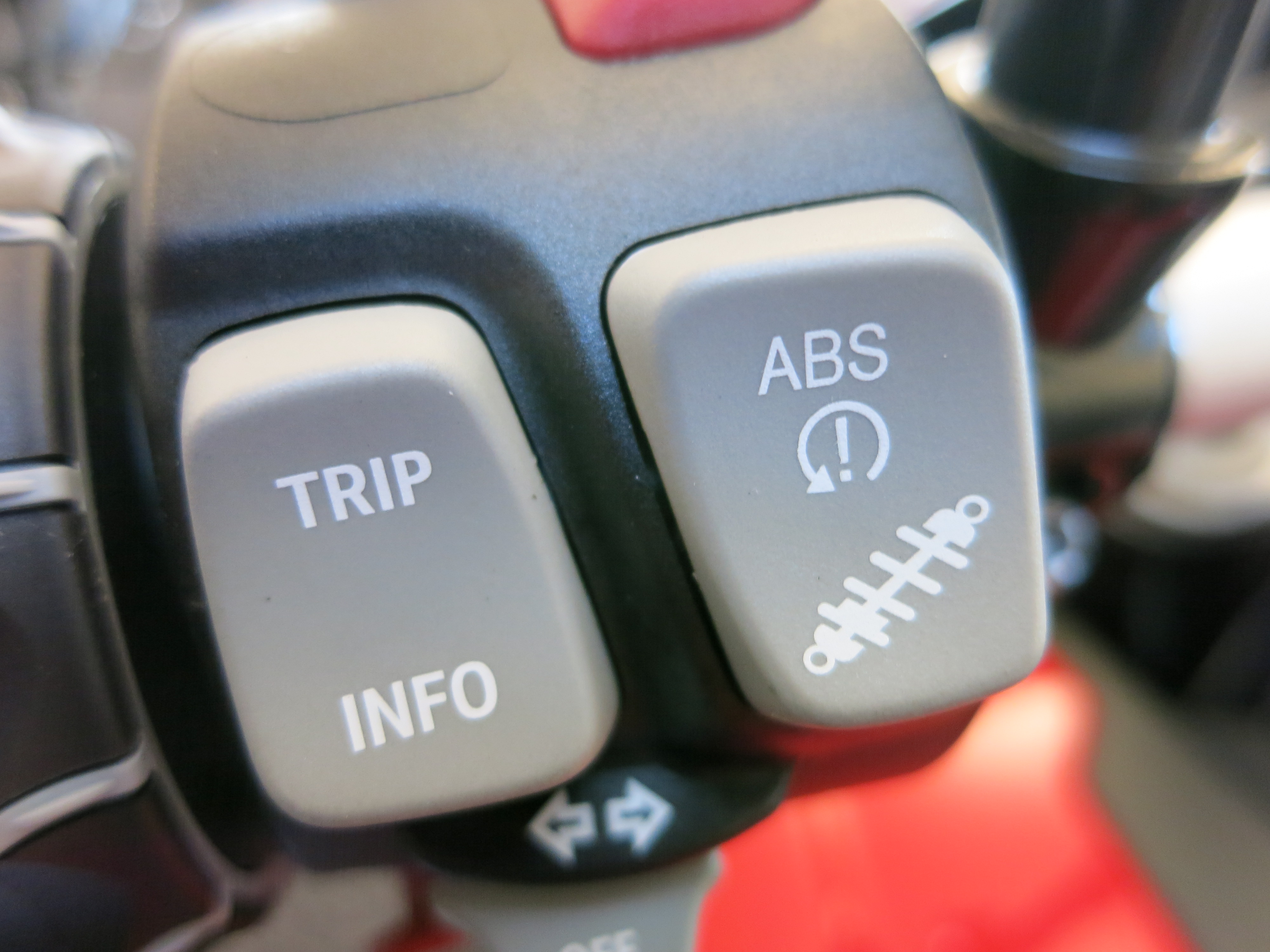
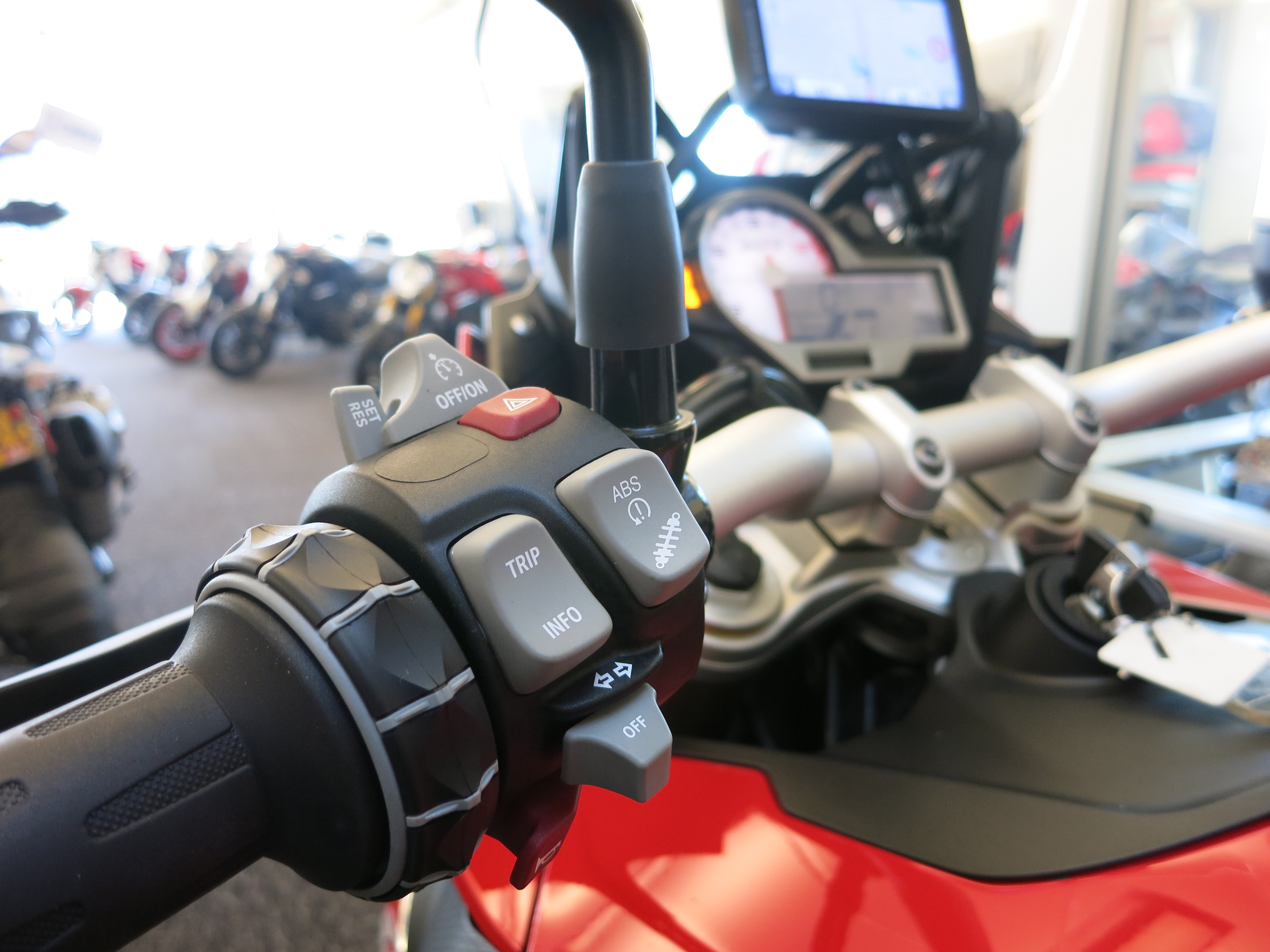
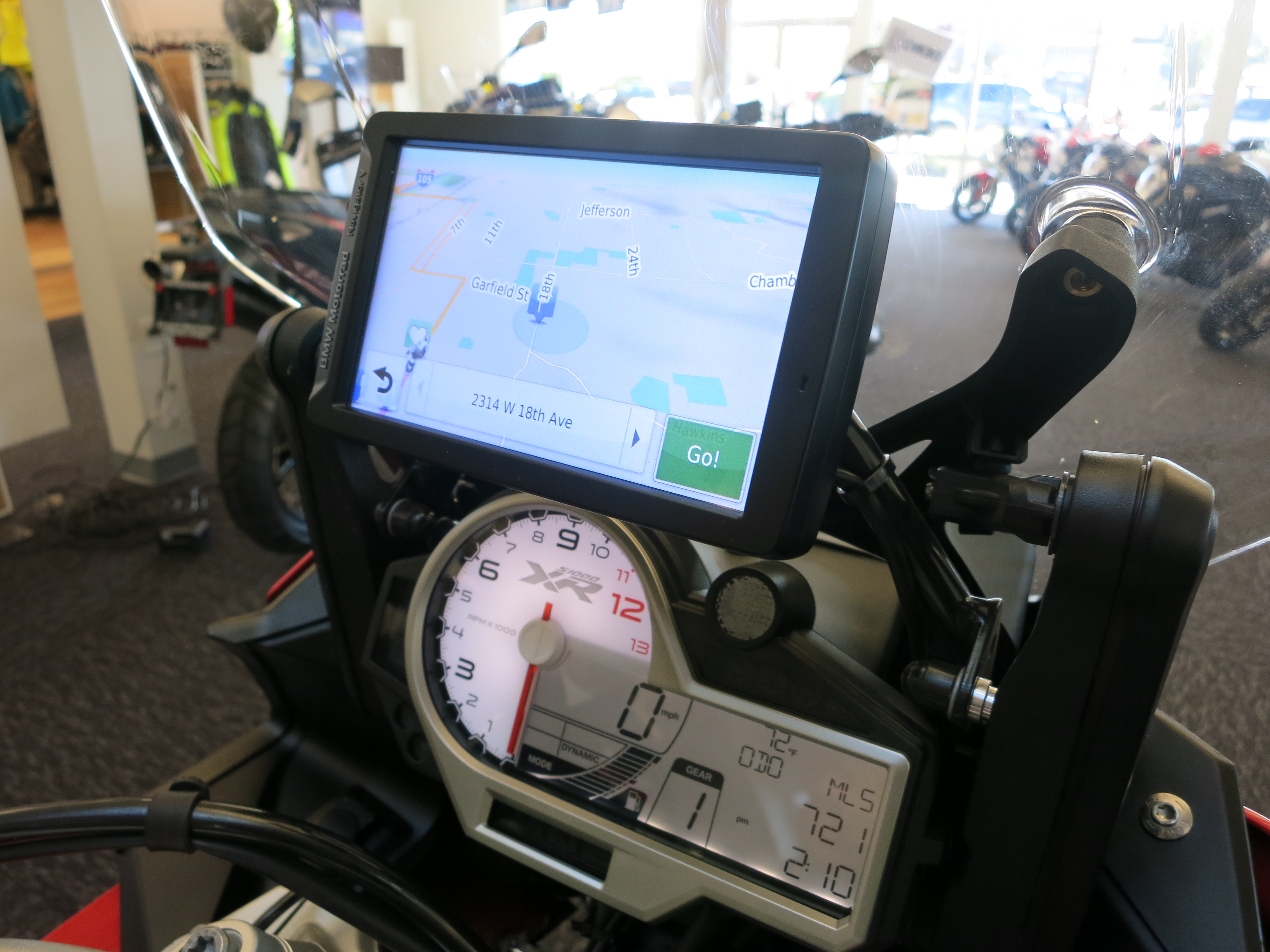
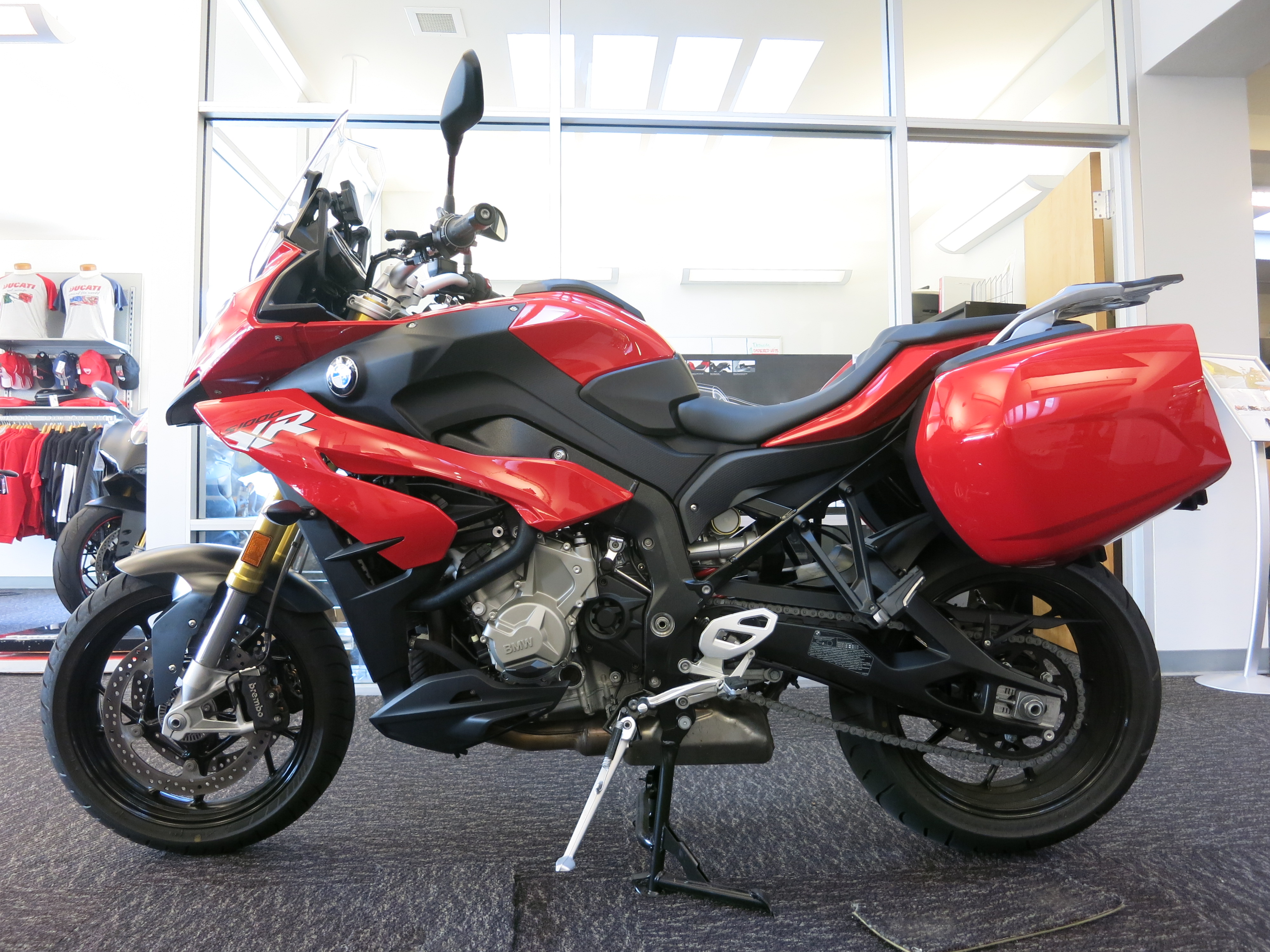
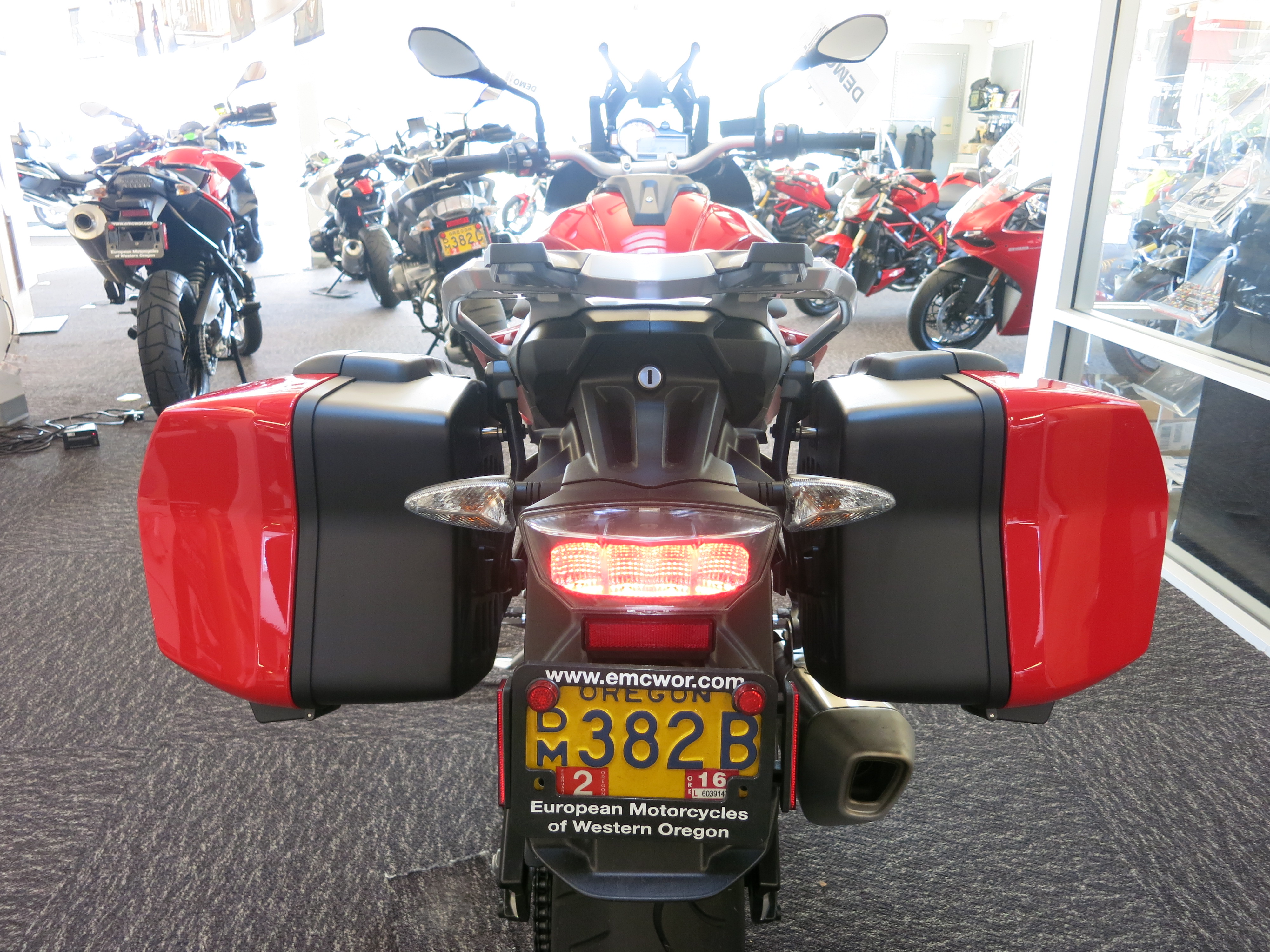
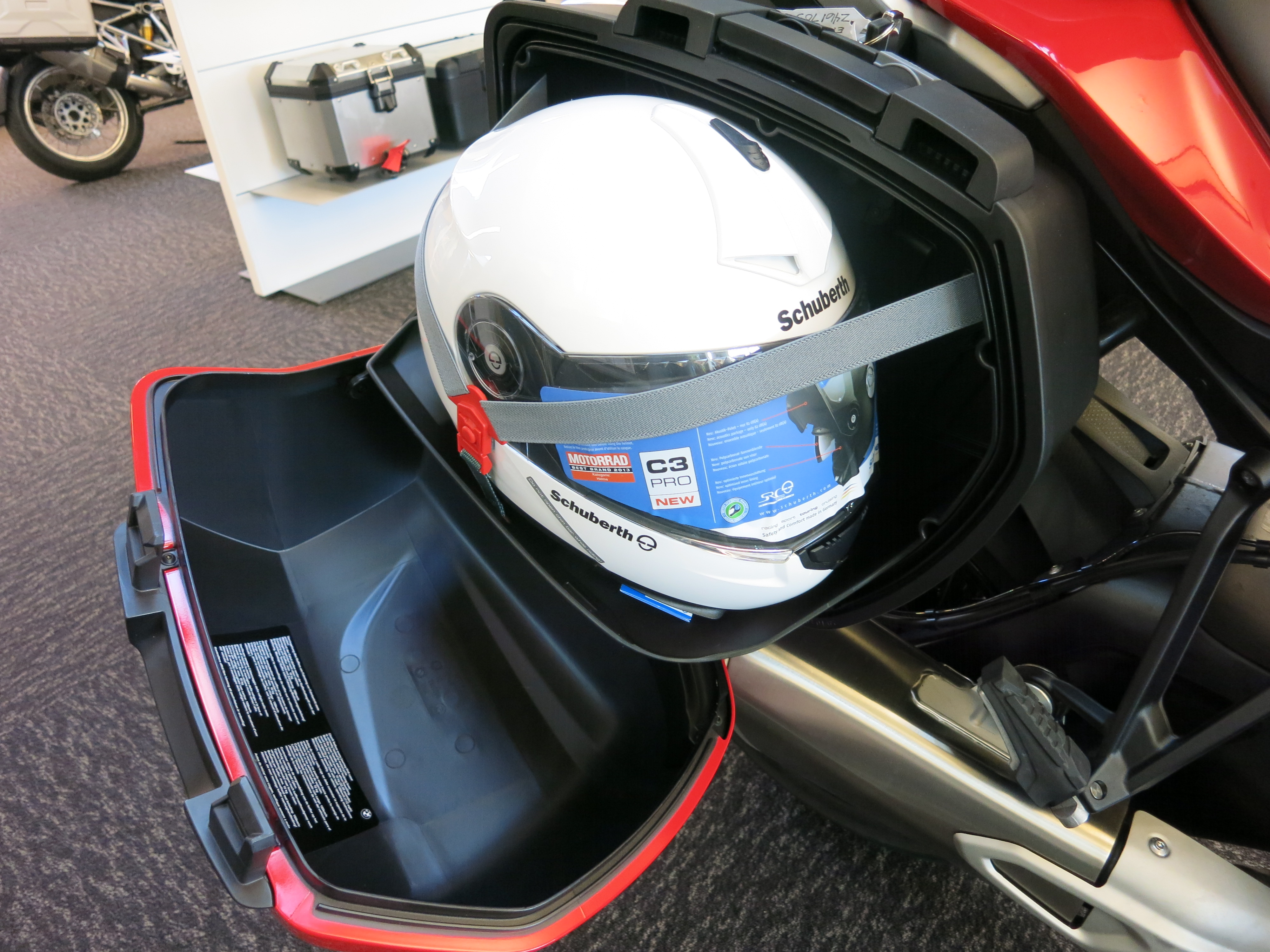
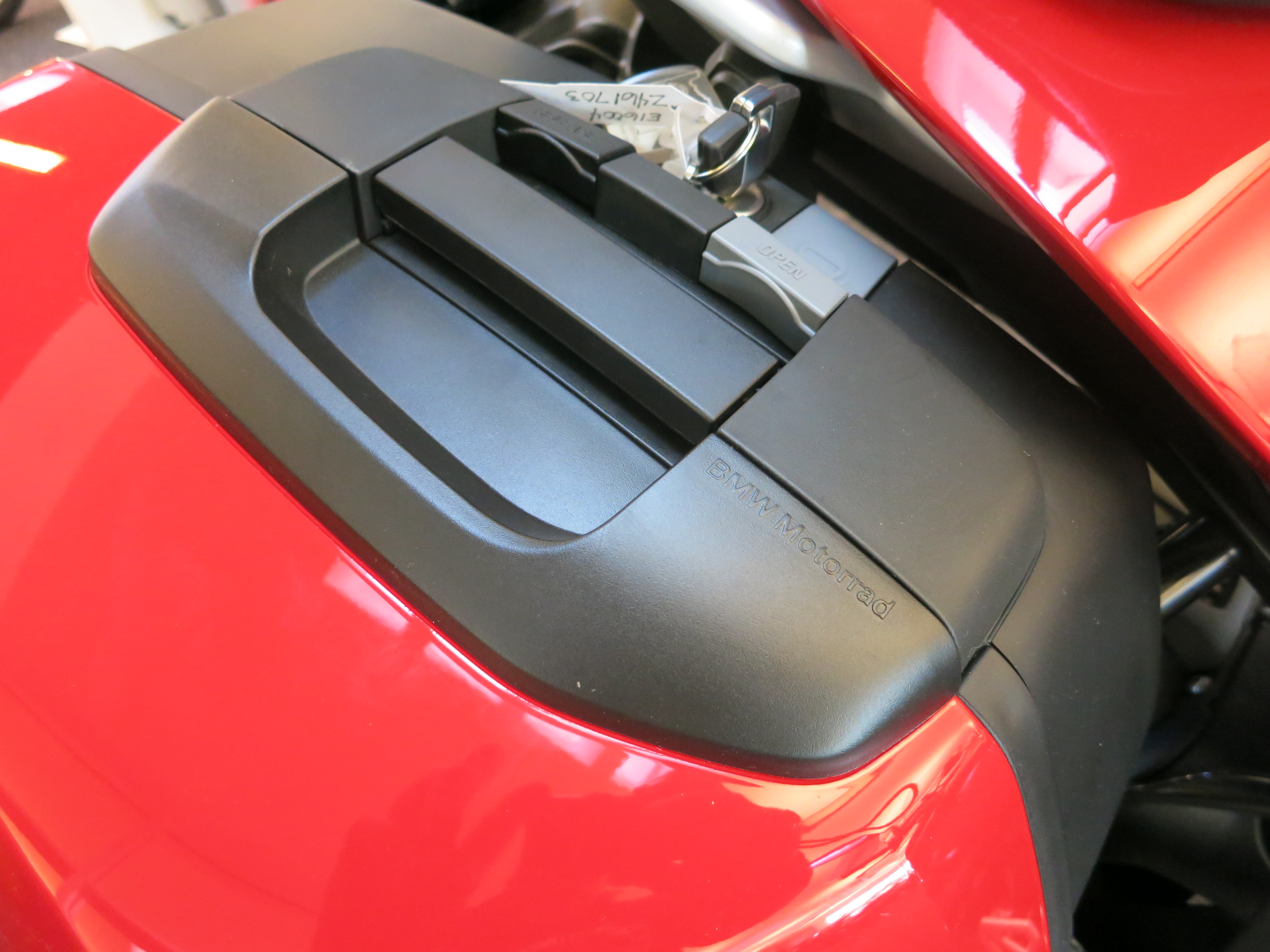
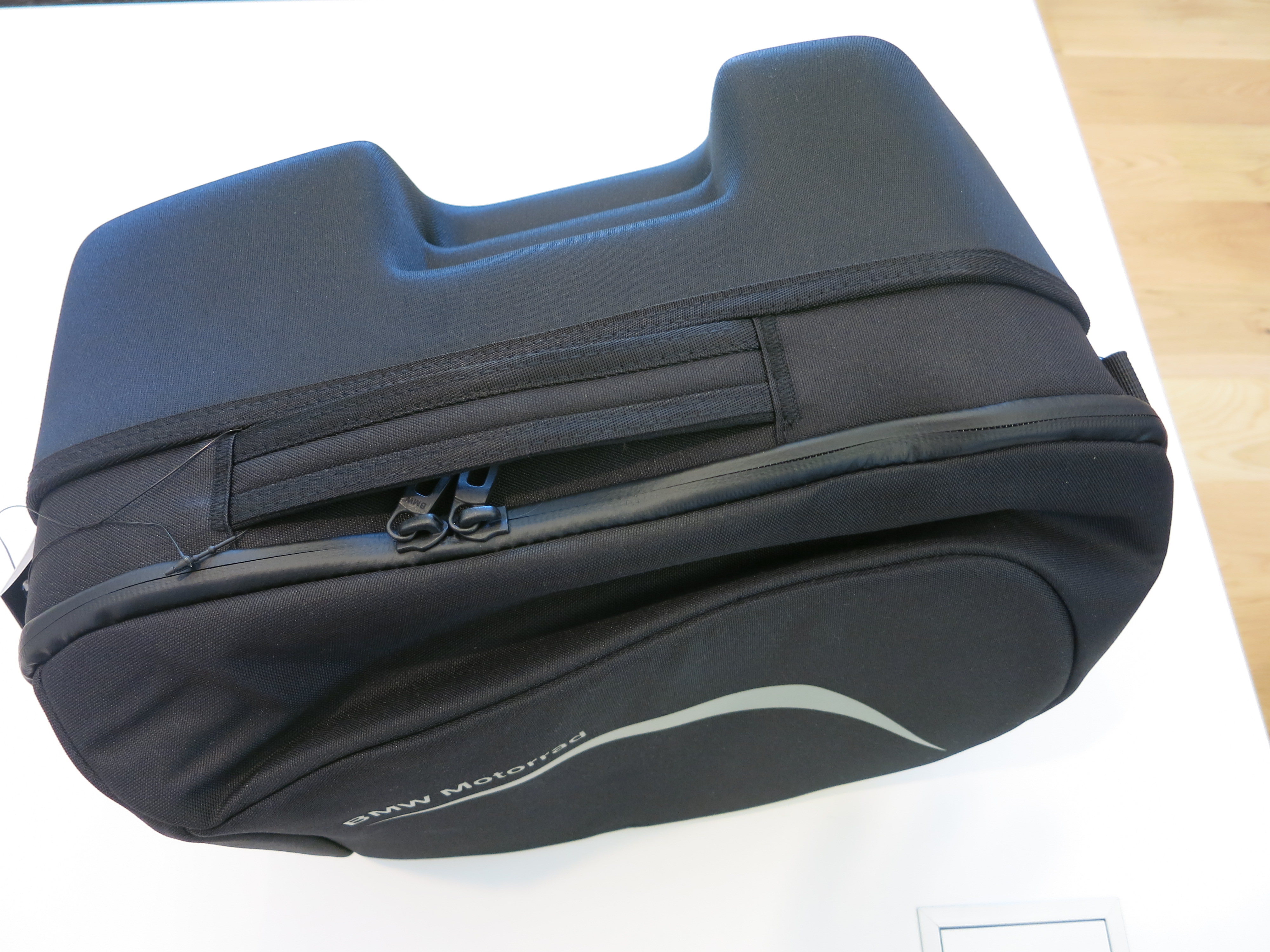
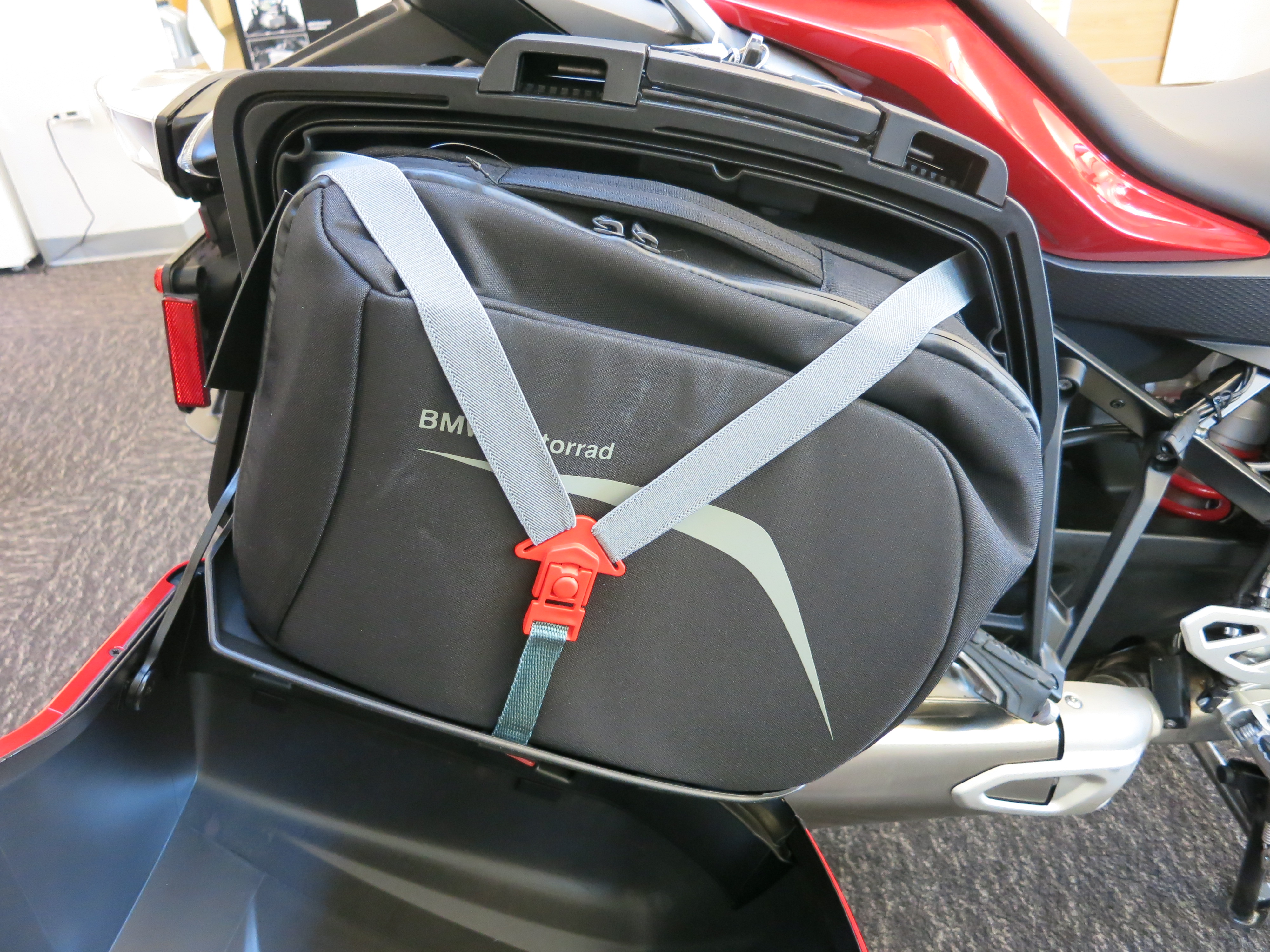
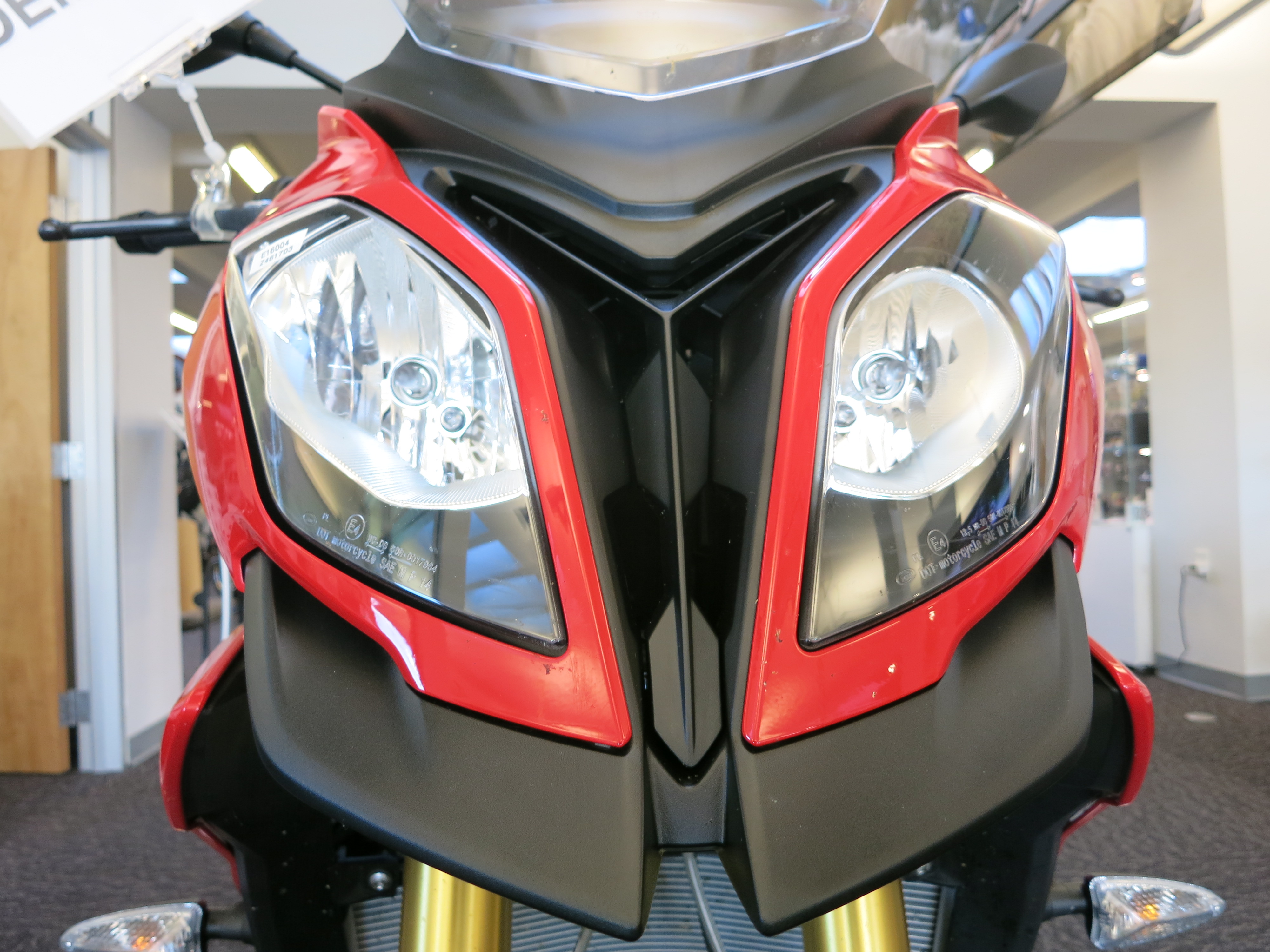
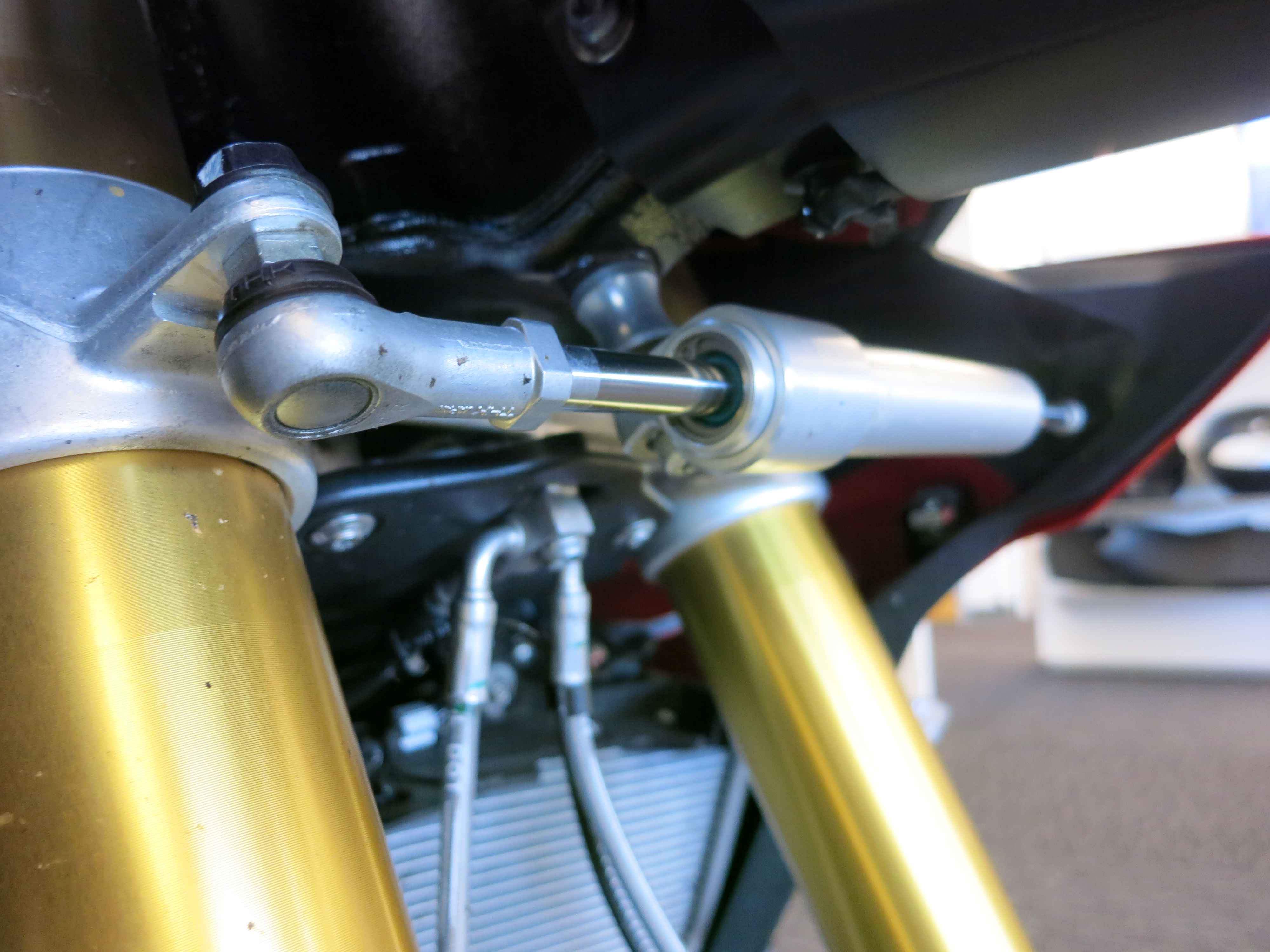
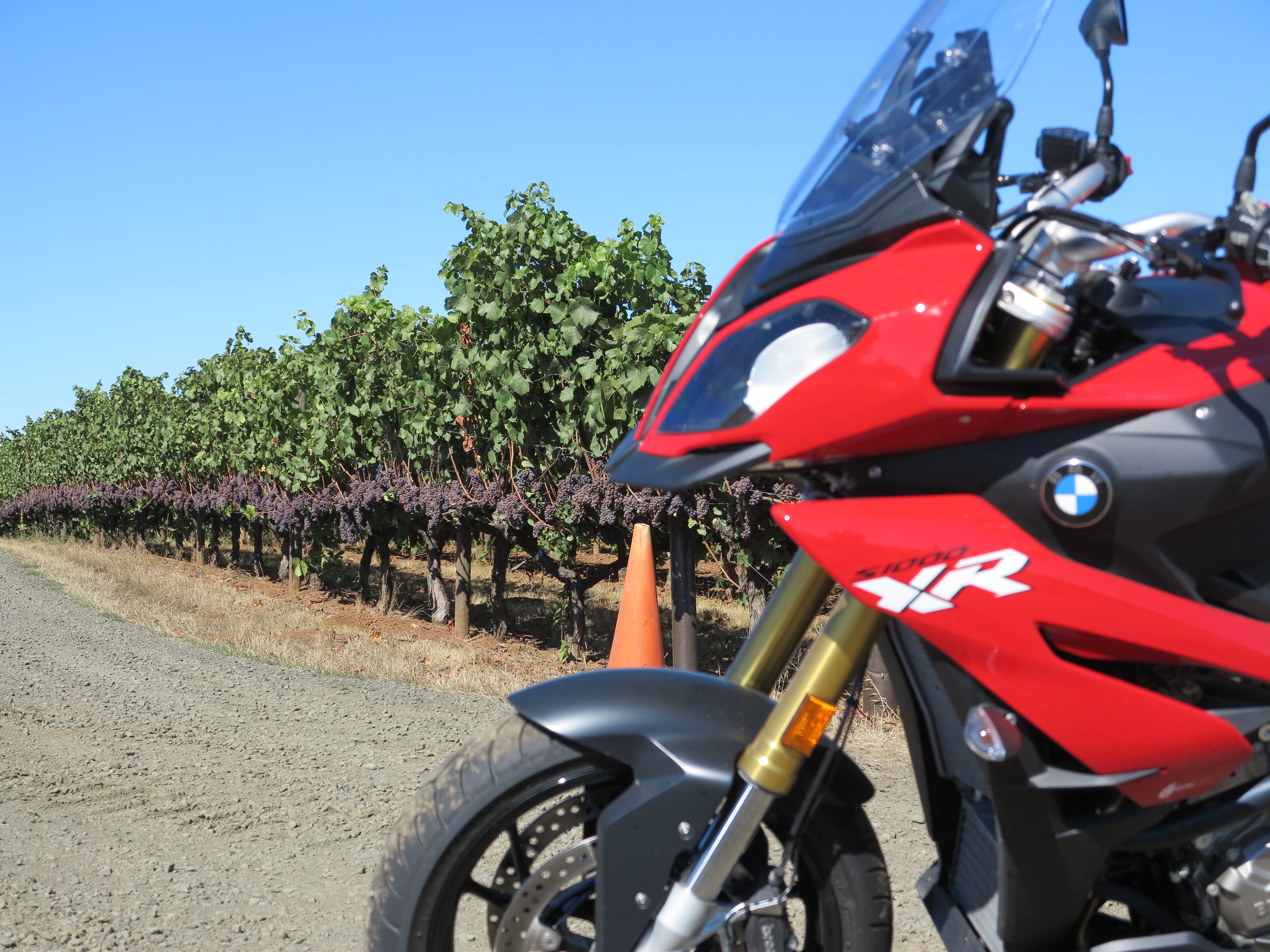
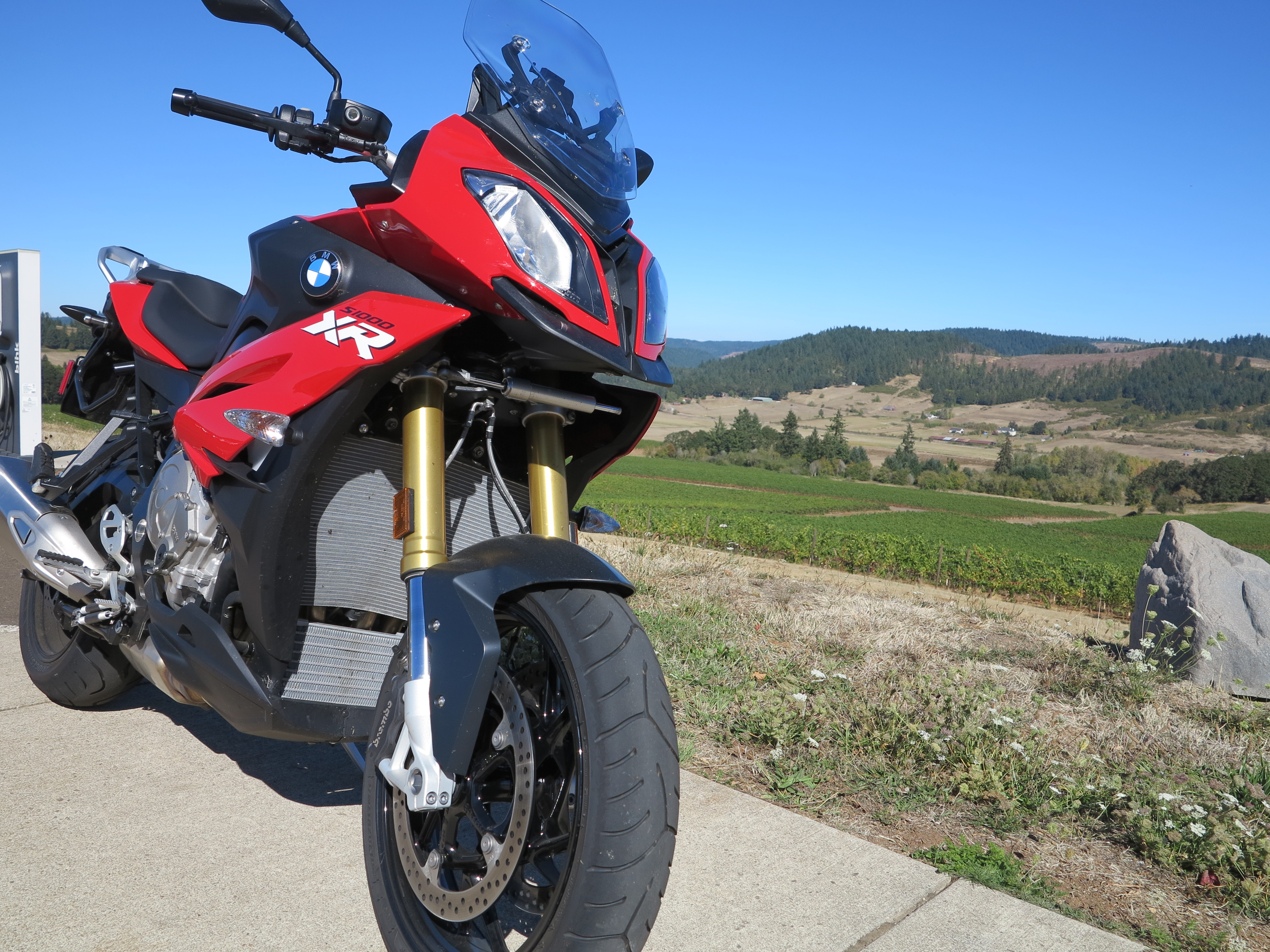
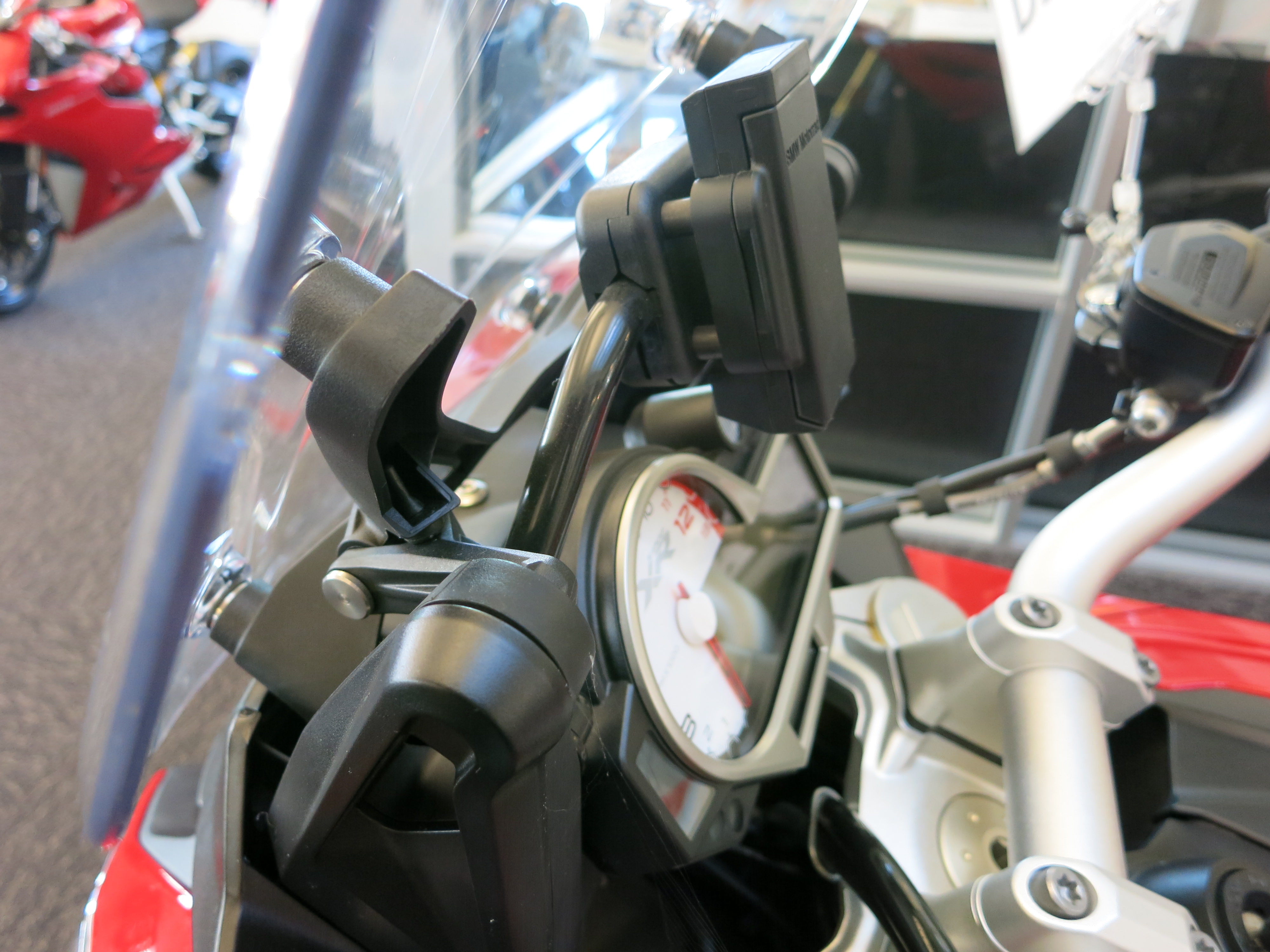
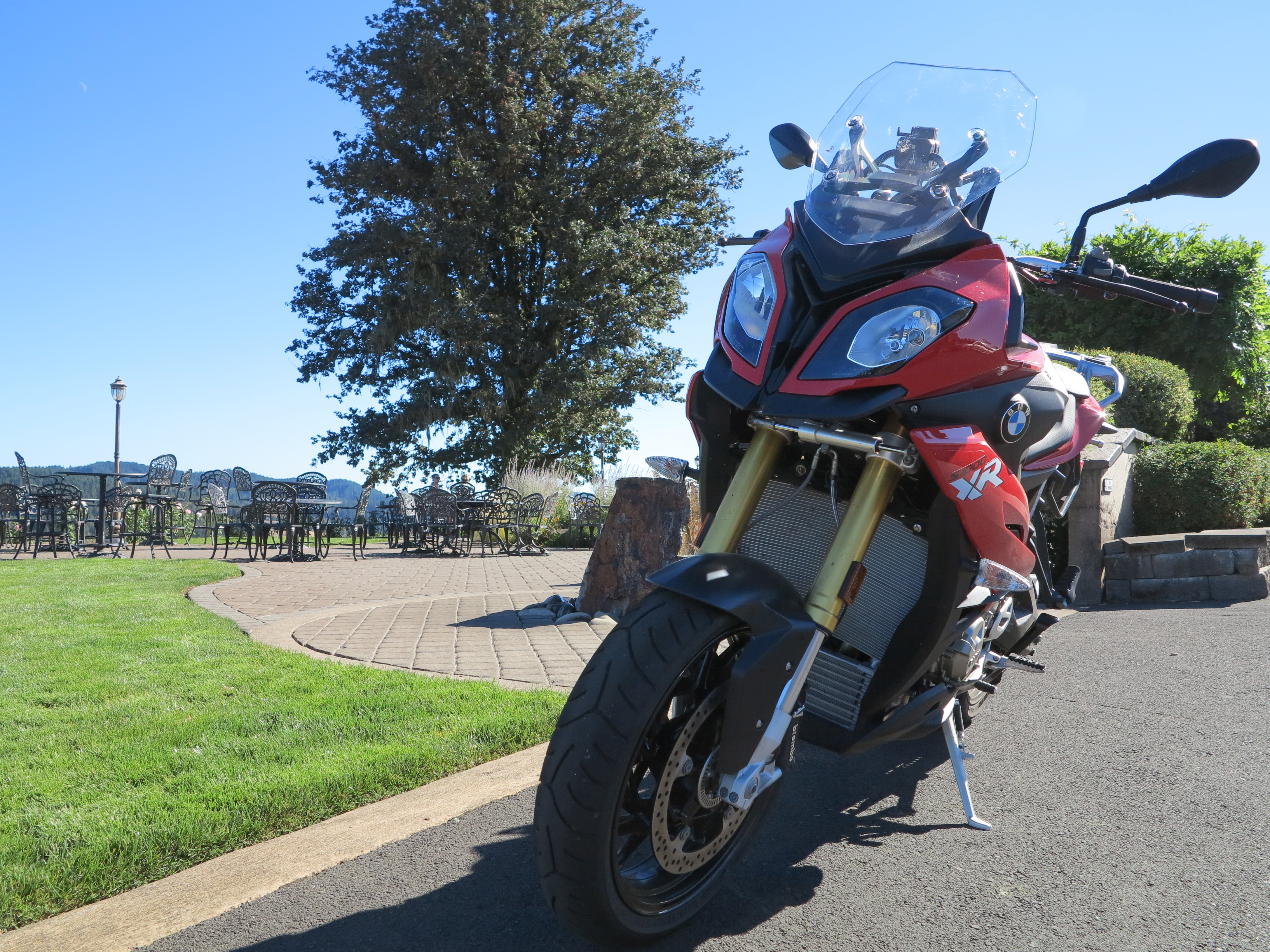

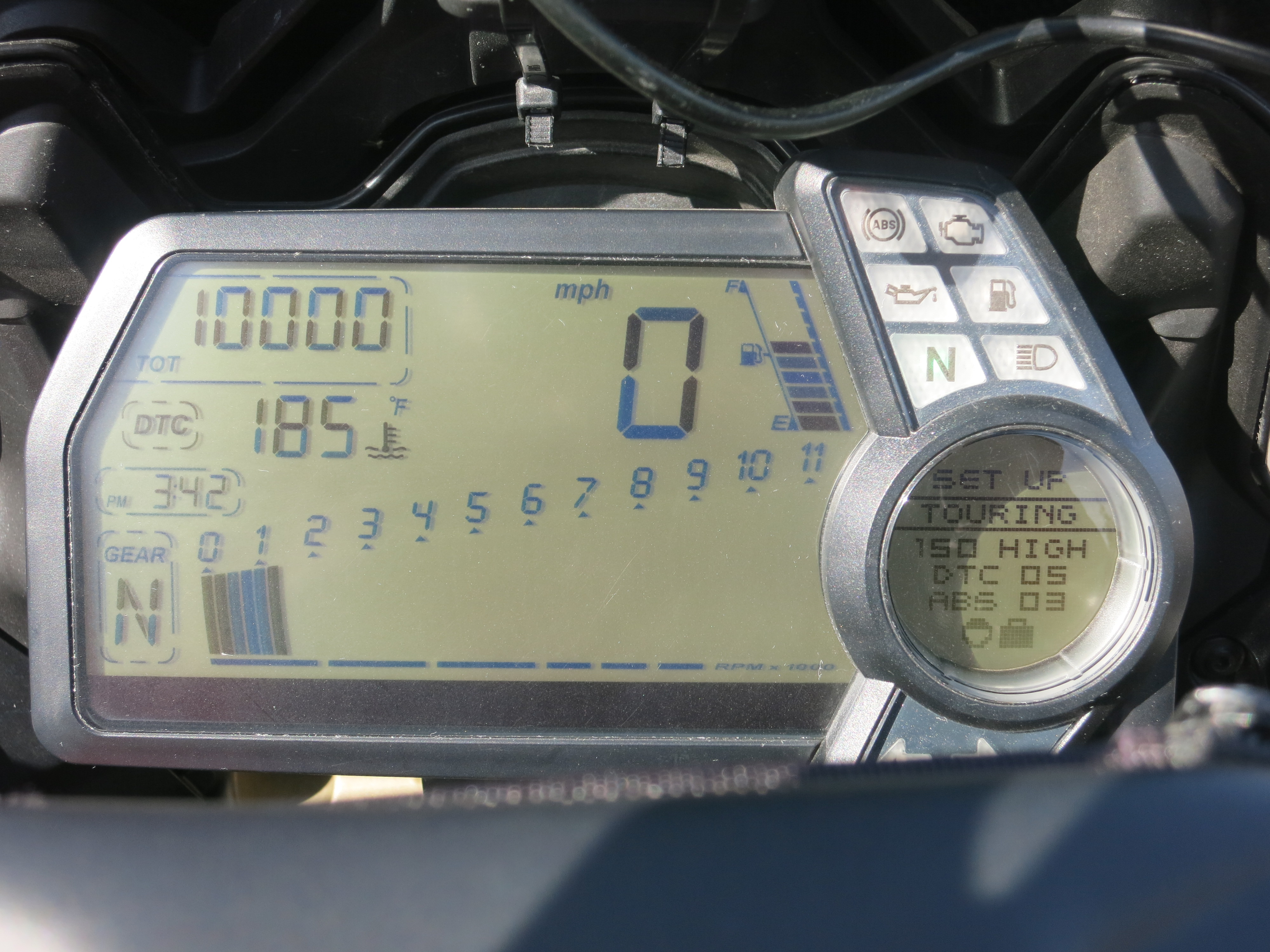


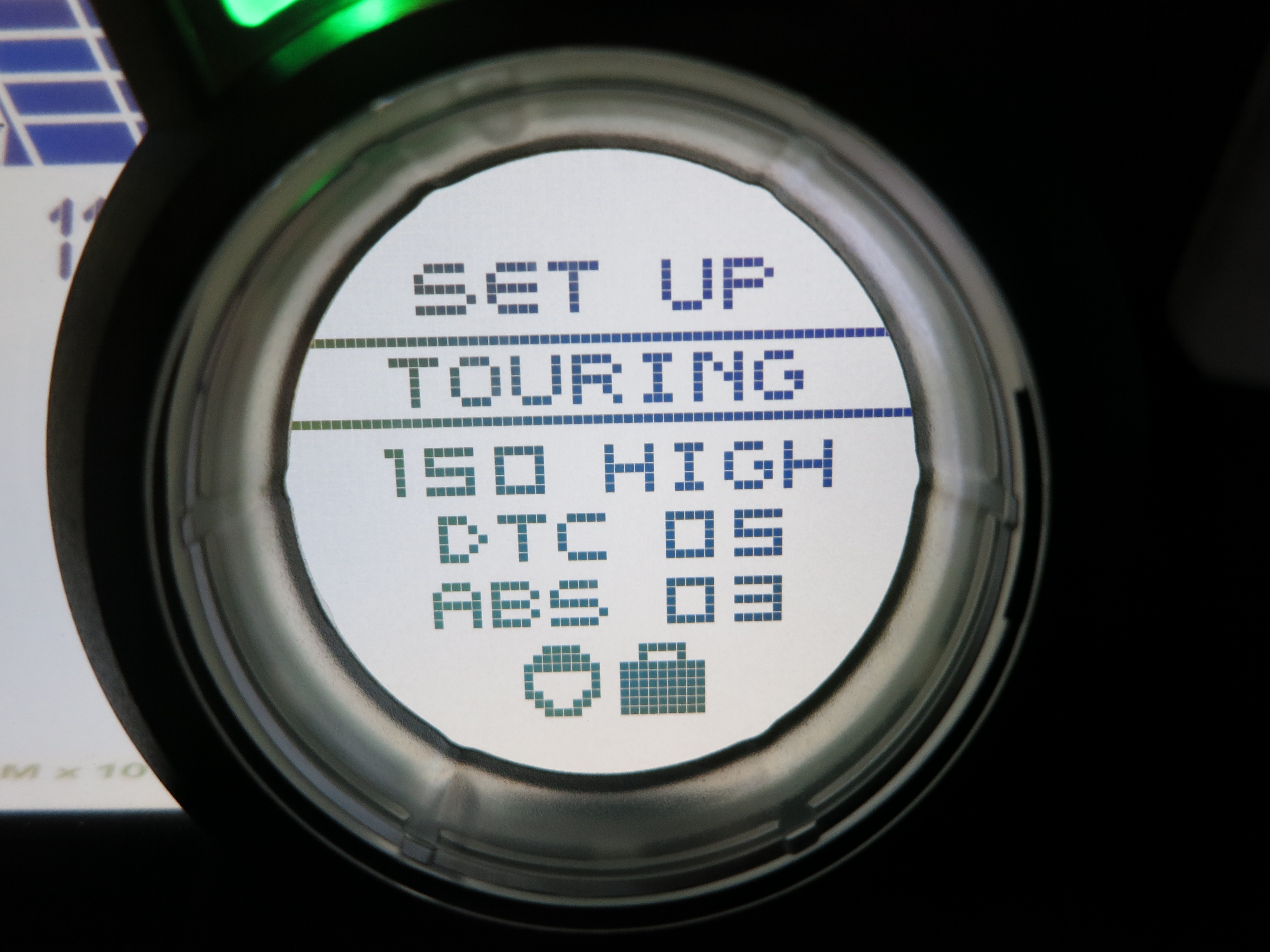

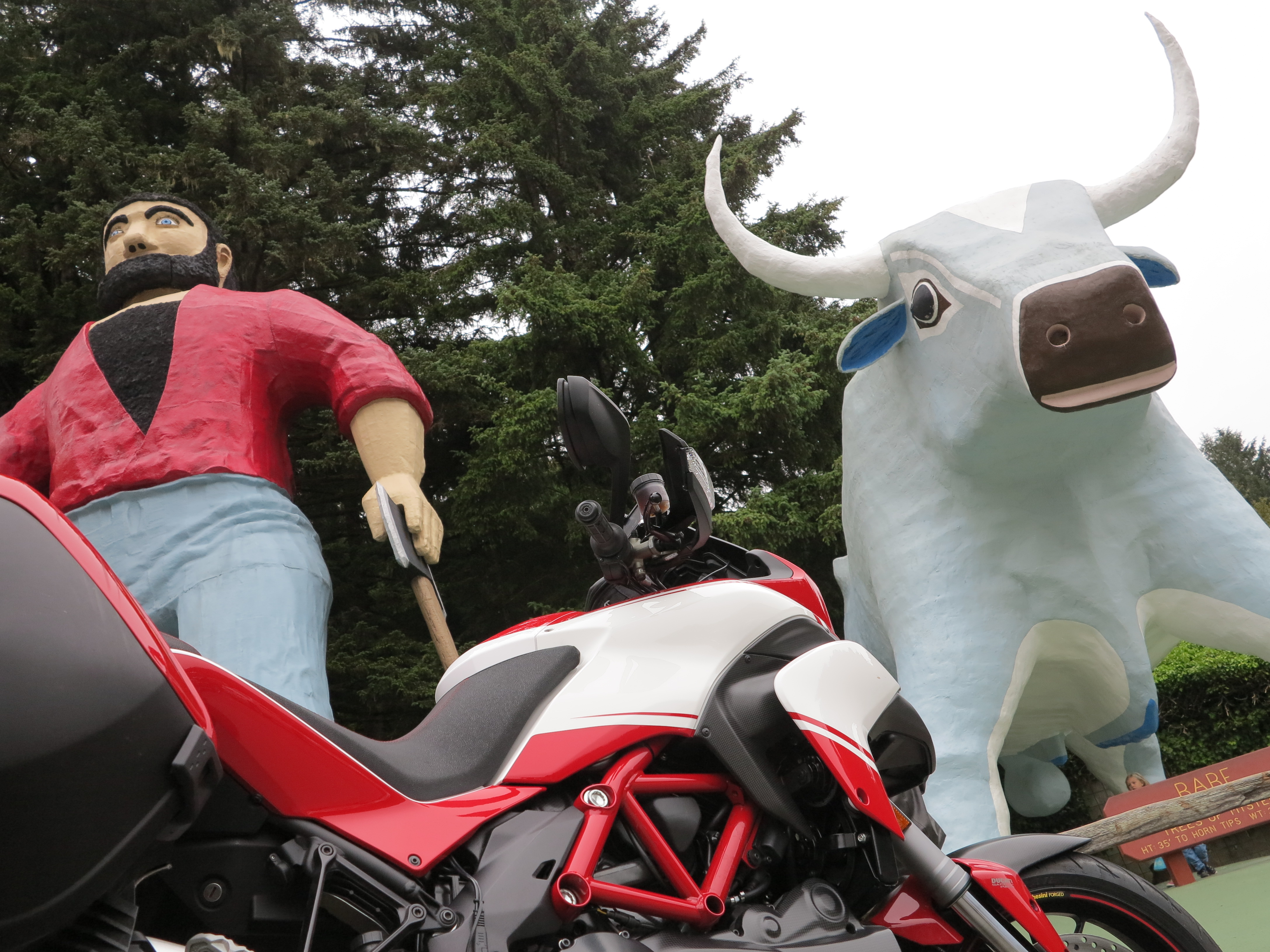


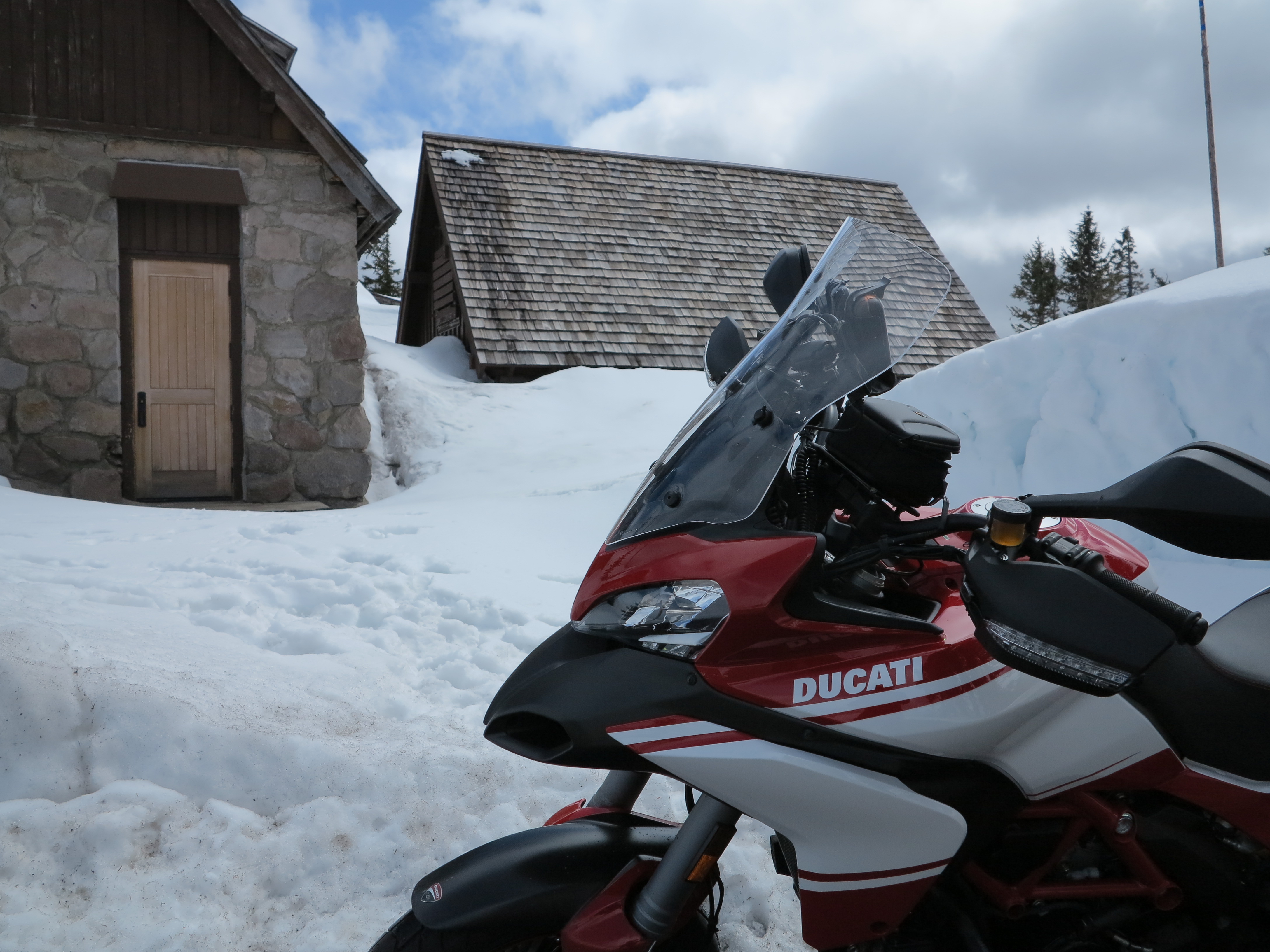
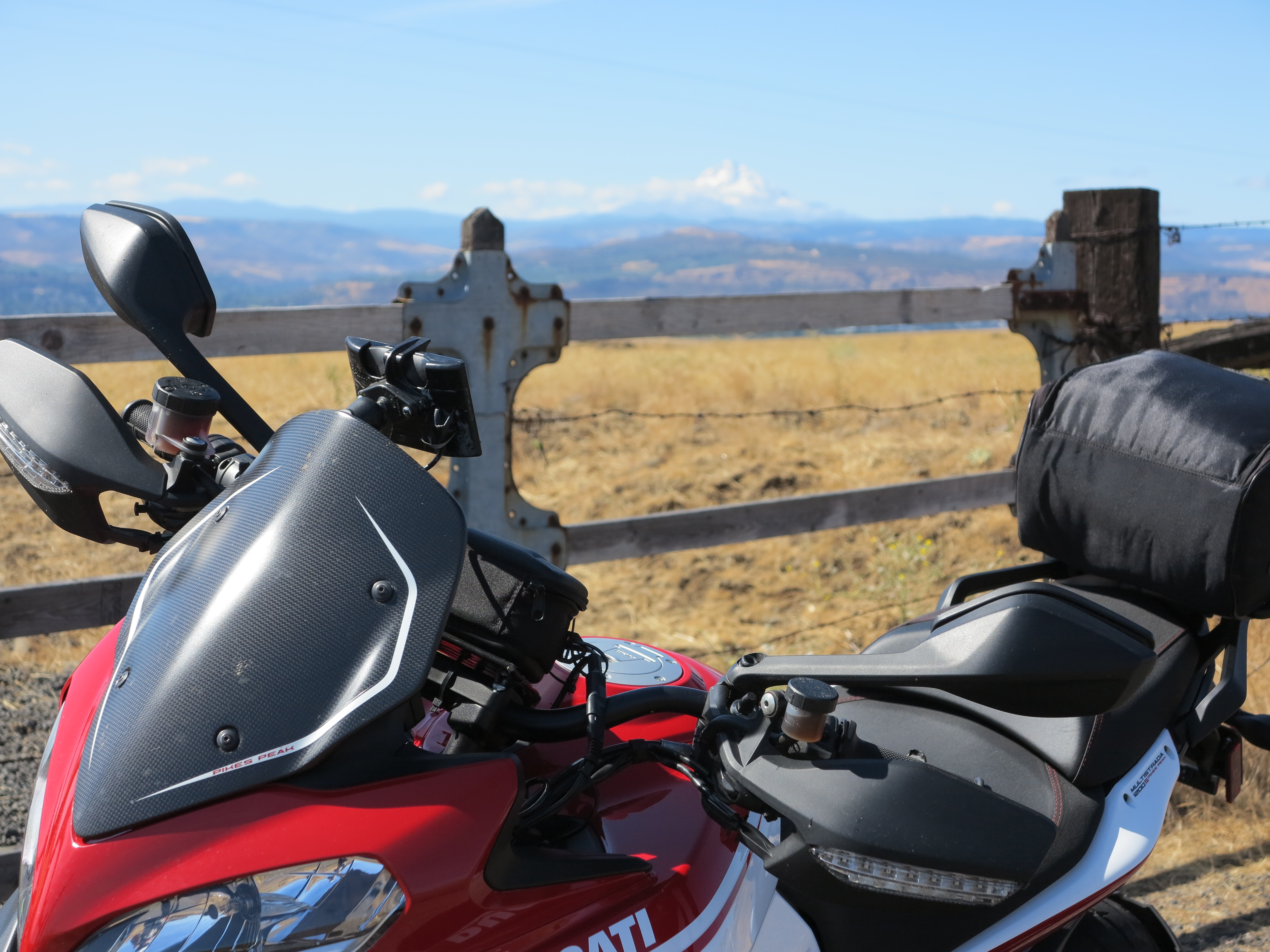


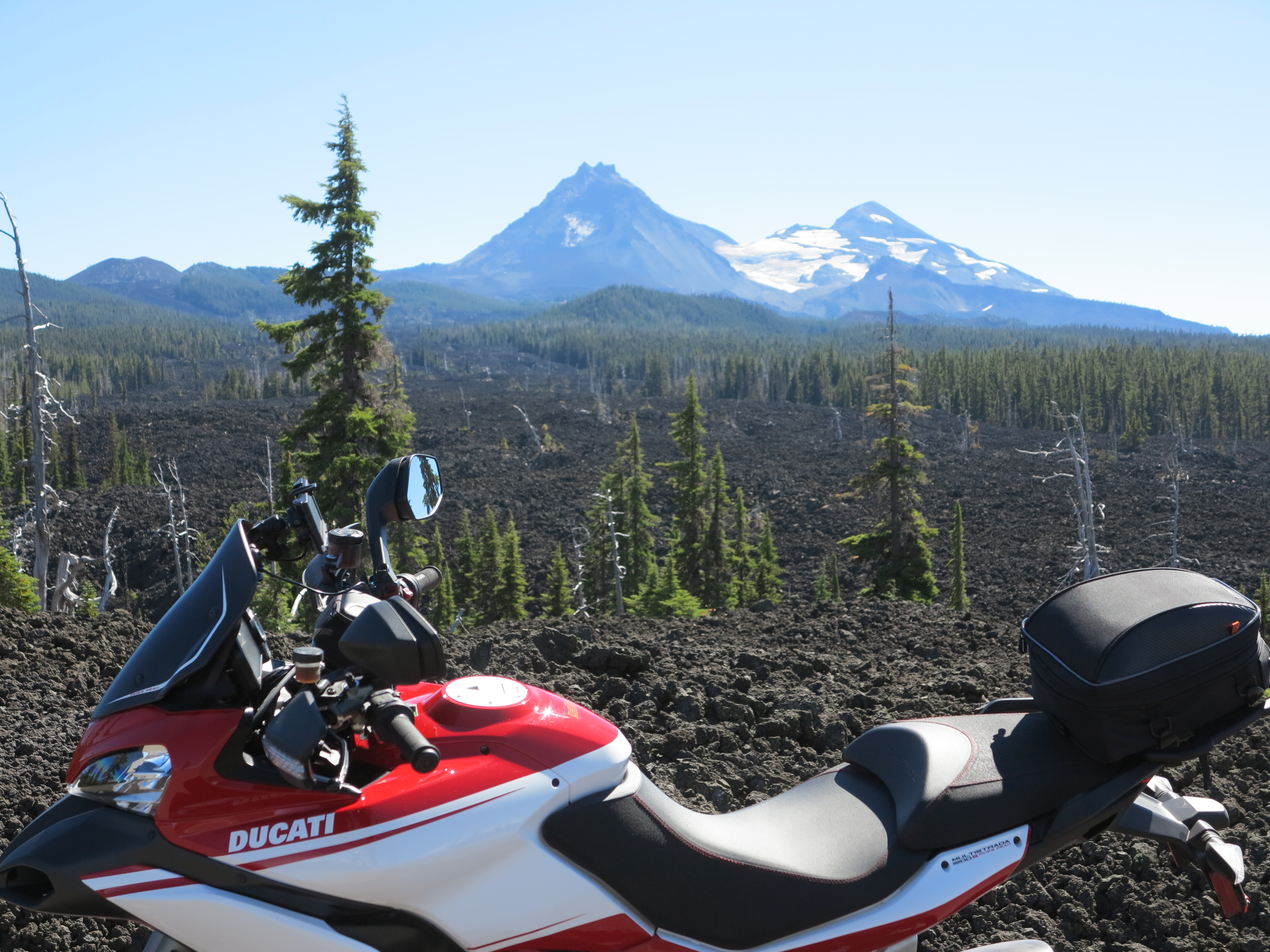

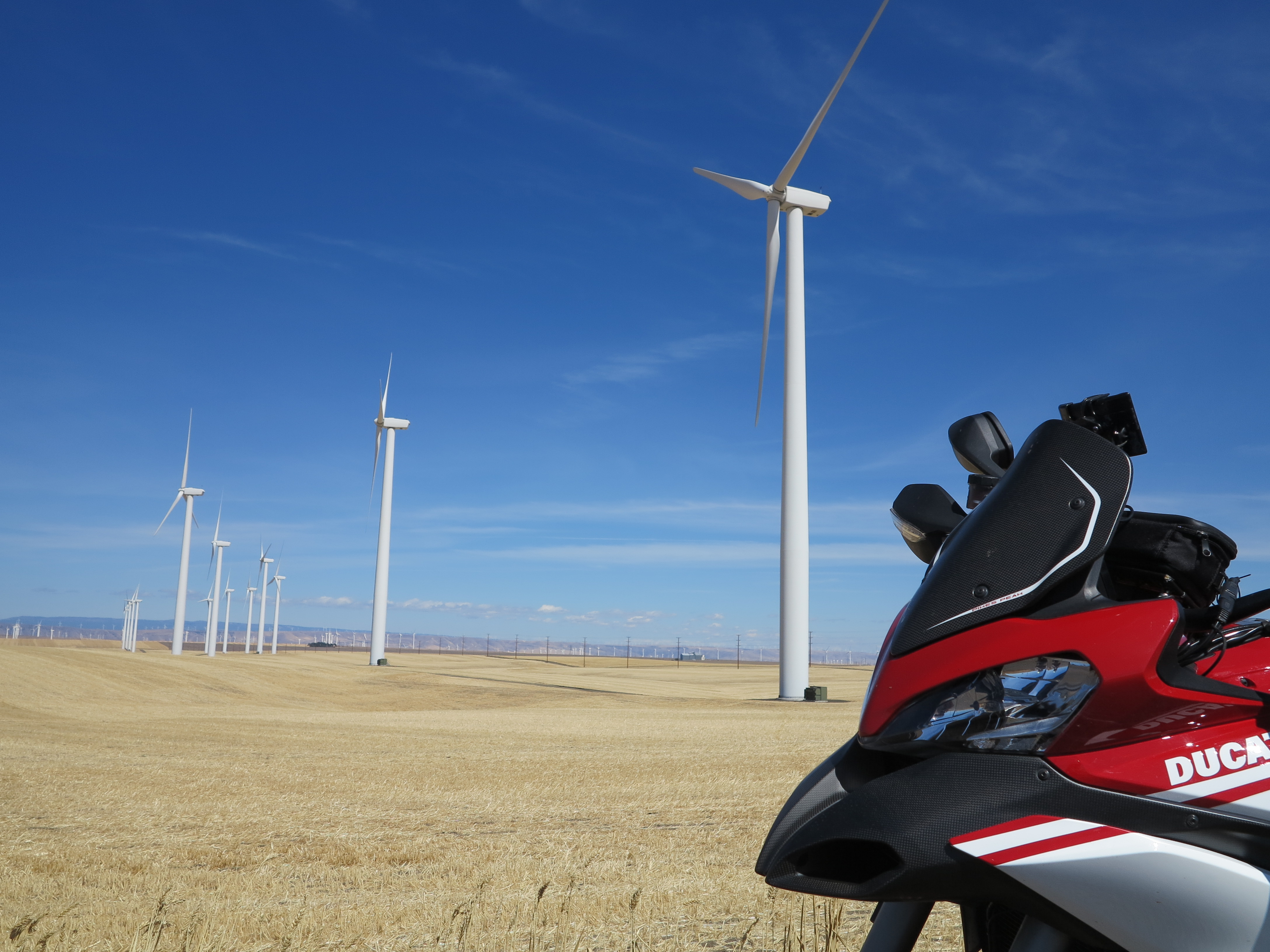


 I'd rather be riding...